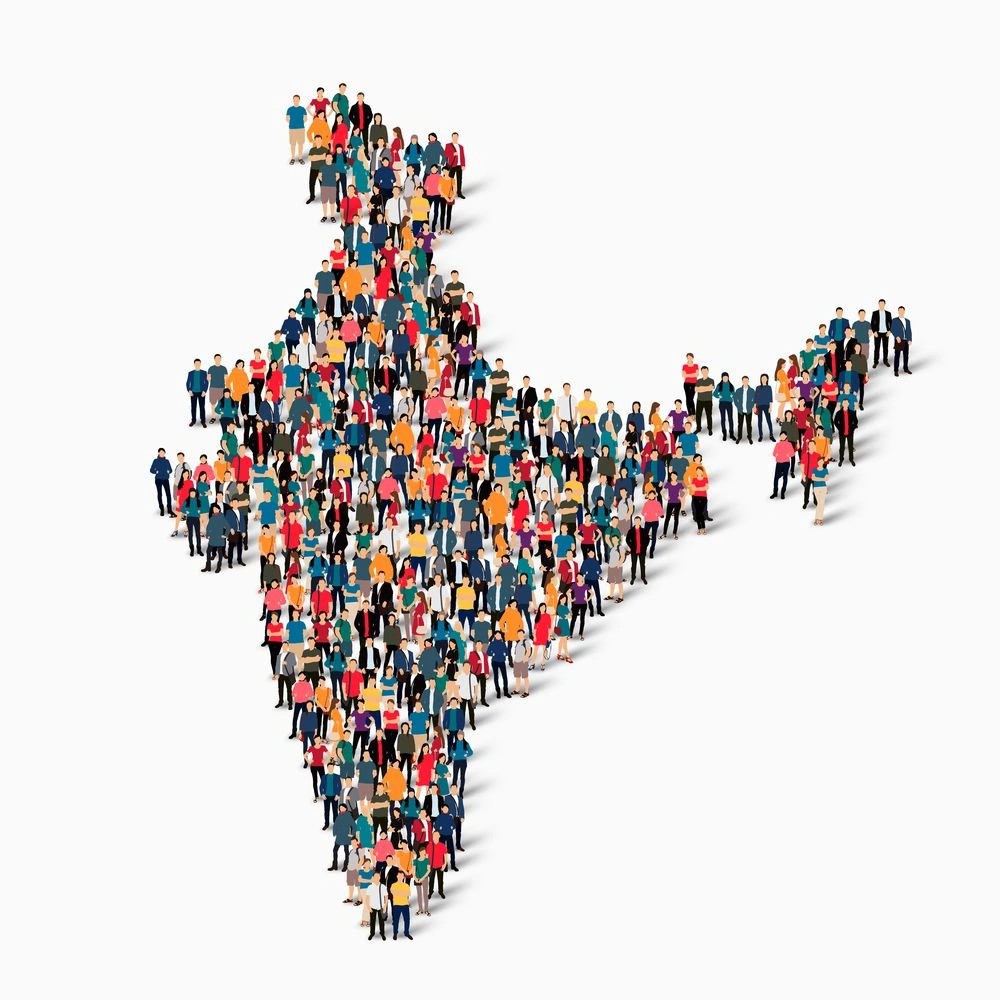
A huge project that people in India are used to is ready to start on the streets, in villages, and in busy cities. The government started its long-awaited population census on April 1, 2026. This was the first full headcount since 2011. This isn’t just about numbers; it’s a glimpse of a changing India, showing changes in demographics, migration patterns, and economic realities. More than 3 million officials will be spread out across the country. The 2026 population census is approaching at a very important time for India, which is dealing with urbanization, an aging workforce, and big aspirations like becoming a $5 trillion economy. The epidemic and logistical problems have pushed it back. Why is this important right now? As the globe moves near 8 billion people, knowing about India’s 1.4 billion people could have an impact on policy about jobs, housing, and even climate resilience for a long time.
A Big Step After Years of Waiting
Imagine this: India last did a thorough census in 2011, when the population was 1.21 billion. For 15 years, such information has been used to make decisions about everything from assistance programs to voting districts. COVID-19 lockdowns, problems with the supply chain, and lengthy arguments about adding a caste census all pushed down the 2021 census. The government has finally done it in 2026. They sent out an incredible 3.2 million enumerators—teachers, local officials, and volunteers trained to knock on homes from the frigid peaks of Ladakh to the coastal hamlets of Kerala.
The size is hard to believe. India is 3.287 million square kilometers big and has 28 states and 8 union territories. For the first time on this scale, officials will visit more than 300 million homes and use both paper forms and digital tablets. “It’s like herding cats across a subcontinent,” said a senior census official in Delhi at a recent briefing. The operation costs roughly ₹12,000 crore (about $1.4 billion), and some of the money comes from digital savings that cut down on printing and logistics.
This census is based on test runs that took place in 10 states last year, where tech fixes fixed problems. Early results from those studies indicated accuracy rates of 98%, which is a big improvement over prior efforts that had trouble counting people in remote places.
Tech Makes a Big Entrance
No more writing in notebooks and entering data for hours on end. The 2026 population census uses a lot of technology, combining old-fashioned door-to-door visits with the latest capabilities. Enumerators are armed with Android tablets, all loaded up with the Census of India app. This application leverages GPS technology to determine precise locations. It then employs biometric verification for every household, ensuring a high level of security. Furthermore, all data is synchronized with the central servers instantaneously.
In 2011, it took two years to process data. Now, it could take only a few months to get the first numbers. But there are still problems ahead. Because there are internet dark spots in rural areas, offline modes are very important, and teaching 3 million people on gadgets isn’t easy. In Nagpur, Maharashtra, when the lights went out, local teams practiced their response using simulated iPads.This shows that India’s digital divide is still very real.
Privacy concerns have also surfaced. Detractors are uneasy about potential data misuse, given that linking Aadhaar is technically voluntary, though strongly suggested.
The government wants strong encryption and anonymity, but will people trust the system? This tech-driven count has a doubt hovering over it.
What’s going on? Following a Changing Country
This census does more than just count heads. It goes into caste data for the first time since 1931, which is a politically fraught step that opposition parties and social justice groups have been calling for. Expect queries on your level of schooling, your job status, your history of moving, and even your access to disability-friendly facilities. This is in line with India’s goal of inclusive growth.
Other new points of view:
Housing and Amenities: Information about access to water, sanitation, and renewable energy use, which are all part of Swachh Bharat and green efforts.
Economic Profiles: Breakdowns of jobs to see how the gig economy is growing and where there are skill gaps.
Women and Children: Rates of fertility, engagement in the workforce, and child nutrition are all going down as birth rates go down.
In big cities like Mumbai and Bengaluru, the focus is on those who live in slums and people who move there. For example, Nagpur’s population has grown by 20% because of people moving there from rural areas, which has put a pressure on the city’s infrastructure. Nationally, forecasts suggest that Uttar Pradesh would be the most populous state, with more than 240 million people. Smaller states like Sikkim, on the other hand, want to expand at a steady rate.
This fits with the UN’s Sustainable Development Goals around the world, which include information on health, poverty, and gender equality. India’s numbers could have an effect on World Bank funding and climate aid, especially if extreme weather is forcing people to move.
The People Behind the Numbers
The 3.2 million officials are at the center of it all. They are daily heroes who make a bureaucratic beast become reality. Teachers leave their classes, gram panchayat workers walk through muck, while city volunteers find their way through tall buildings. Over the course of three months, they learned skills at training camps in 700 districts. These skills ranged from how to handle violent responses to how to interview someone with empathy.
A good example is Priya Sharma, a schoolteacher from rural Bihar. “I’ve counted my village before, but this time it’s the whole country.” She said in a local report, “Families sometimes conceal because they are afraid of taxes.” In places like Manipur where there is strife, security escorts protect teams, which shows how tough logistics can be.
Incentives help: enumerators get ₹1,000 for every 100 families they count, plus extra for being accurate. There are a lot of risks, though, such heatwaves in Rajasthan and monsoons in Assam. The census board said that more than 5,000 health kits and insurance policies have been given out. Still, there are stories of devoted people walking 20 km every day, which is what makes India’s social fabric.
Obstacles on the Way to Completion
No census goes off without a hitch. Some people are very skeptical. After the restructuring, tensions in Jammu and Kashmir could lead to boycotts. The states in the northeast have trouble with their land and with insurgents. And counting castes? It might make things worse, as parties are already selecting and choosing data for surveys.
Migration is another beast. India’s 450 million internal migrants, including workers who move from Bihar to Gujarat, make it hard to tell where people live. The census asks about “usual place of residence,” but it doesn’t count short-term workers. COVID sped up reverse migration. Will this count show that change?
Budgets are also hurt by logistics. It’s not cheap to print 500 million forms (in case of digital failures) and send out 100,000 automobiles. Delays in tablet deliveries hurt Kerala a lot, which led to the creation of hybrid devices.
But pilots’ triumphs give us hope. Jammu’s trial reached 99.5% of the people, thanks to community outreach. How can the rest of India do the same thing? Radio, WhatsApp, and local influencers are all tools used in engagement programs designed to build trust and encourage people to remain in their homes during enumeration week.
What the Numbers Will Show Us in the Future
India is about to find out a lot of things when the census comes to a finish in May 2026 and data processing continues until the end of the year. This census isn’t just a bunch of papers; it’s a reflection of hopes and pains. Expect new district maps, better social programs, and better city planning. Bihar might ask for more seats in Parliament, while Kerala might talk about its aging problem.
What is the true win? Choices based on facts. These numbers show the way, from raising women’s literacy (which is stalled at 70% in some areas) to figuring out how many electric vehicle charging stations are needed to reach net-zero goals. There are still problems—full caste release could take years because of sensitivities—but the momentum feels right.
What if this count starts a data revolution that makes India a role model for the Global South? Time and those 3 million officials will tell. For now, the country is counting down to the future, one household at a time, as iPads beep and forms fill.
India Launches Monumental 2026 Population Census: 3 Million Officials Gear Up for Historic Count