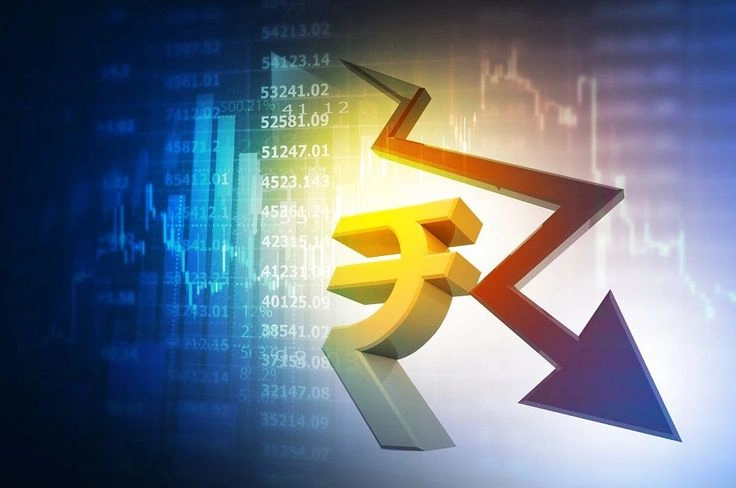
The Indian rupee has hit a new low, falling past 87 against the US dollar this week, a clear sign of the impact of global events on emerging markets. On Monday evening in Mumbai, the USD-INR exchange rate was around 87.45, a drop of more than 2% in just a month. This isn’t a minor fluctuation; it’s putting pressure on importers, increasing fuel prices for the average person, and presenting a challenge to the Reserve Bank of India’s (RBI) strategies.
With crude oil prices climbing toward $90 a barrel amid escalating Middle East conflicts and foreign investors pulling out billions, the pressure is mounting. Why does this matter now, when India’s economy was supposed to be the bright spot in a shaky world?
The Sharp Drop: What Triggered the Rupee’s Fall?
It started picking up steam in late March. Brent crude, the global benchmark India watches closely, jumped 8% in a week, hitting $88.50 per barrel. India, the world’s third-largest oil importer, guzzles over 5 million barrels a day. Every dollar spike translates to roughly ₹10,000 crore in extra annual import bills—money that drains foreign reserves and weakens the rupee.
Add to that the foreign institutional investor (FII) outflows. Data from the National Securities Depository Limited shows FIIs yanked out a net $4.2 billion from Indian equities and debt in the first quarter of 2026. That’s the highest quarterly exit since the 2022 Ukraine shock. These investors, mostly from the US and Europe, are fleeing to safer havens like US Treasuries, where yields have climbed to 4.8% on the back of Fed rate cut delays.
Global conflicts are the hidden hand here. Tensions in the Red Sea, sparked by Houthi attacks on shipping lanes, have forced oil tankers to reroute around Africa. Freight costs are up 40%, and supply chains are choking. Then there’s the Israel-Hamas war spilling into Lebanon, with Iran flexing muscles—pushing Brent futures even higher. For India, this isn’t abstract; it’s petrol at ₹110 a liter in Delhi and diesel crossing ₹95, hitting truckers and farmers hard.
Traders in Dalal Street aren’t mincing words. “The rupee’s in a pressure zone like never before,” says Mumbai-based forex analyst Rajiv Singh, who’s tracked USD-INR for two decades. “Oil’s at multi-year highs, FIIs are hitting the exit, and geopolitics is the wildcard.”
Crude Oil Prices Rise: India’s Achilles Heel Exposed
India’s oil addiction is no secret. Over 85% of its crude needs are imported, mostly from the Middle East—Russia fills some gaps with discounted Urals, but that’s not enough. When OPEC+ sticks to its production cuts and geopolitical frictions disrupt the flow of oil, prices are bound to climb.
This week’s rally took Brent from $82 to $89 in days, a level not seen since late 2023.
The ripple effects are brutal:
Inflation creep: Higher oil feeds into everything from transport to plastics. CPI inflation, already at 5.2% in February, could touch 6% by May, per economist estimates.
Trade deficit ballooning: India’s current account deficit widened to 2.1% of GDP last quarter. A weaker rupee makes imports pricier, worsening the gap.
Corporate squeeze: Airlines like IndiGo are burning cash on jet fuel hedges gone wrong; refiners like Reliance face margin erosion.
Remember 2013’s “taper tantrum”? The rupee crashed to 68 then. Today’s 87 feels eerily similar, but with oil as the amplifier. What if Brent hits $100? Could households brace for ₹120 petrol?
Foreign Capital Outflows: The FII Flight from India
FIIs have been India’s growth fairy godmother, pumping $25 billion into markets last year. But 2026 tells a different story. Equity outflows hit $2.8 billion in March alone, with debt seeing another $1.4 billion exit. Why the rush?
Safe-haven chasing is key. US 10-year yields at 4.75% look juicy compared to Indian 10-year G-Secs at 7.1%—but currency risk and global jitters tip the scales. Trump’s re-election buzz in the US adds uncertainty; investors bet on pro-growth policies inflating the dollar further.
Then, global conflicts amplify the fear. Ukraine’s grinding war keeps energy volatile, while Middle East flare-ups rattle portfolios. Emerging markets like India, Brazil, and South Africa are bearing the brunt—EM currencies down 3-5% year-to-date.
Domestic factors aren’t helping. India’s Q4 GDP growth slowed to 6.8%, below expectations, spooked by weak manufacturing and rural slowdown. High valuations—Nifty at 24x earnings—make it easy to sell.
Yet, not all outflows are panic-driven. Some FIIs are rotating into China, where stimulus promises cheaper valuations. India’s FPI ownership in equities has dipped to 17.5% from 20% a year ago.
RBI’s Balancing Act: Interventions and the Road Ahead
The RBI isn’t sitting idle. Governor Shaktikanta Das’s team has been active, selling $15 billion in dollars since the start of the year. This has helped maintain reserves at a robust $650 billion, which is sufficient to cover nearly eleven months’ worth of imports. To combat speculation, they’ve increased forex margins and restricted offshore rupee trading through NDF curbs. Furthermore, they’ve leveraged swap lines with central banks globally. These moves are intended to steady the USD-INR exchange rate in the short run, providing a degree of cushioning amid periods of volatility.
But tools are limited. Rate cuts? Unlikely with inflation lurking. A weaker rupee boosts exporters like IT firms—TCS and Infosys could gain 5-7% on earnings—but importers suffer. Auto giants like Maruti face costlier parts; pharma sees margin hits.
Analysts eye a repo rate hold at 6.25% in the April meeting. Das might signal more interventions if 88 breaches.
Broader Economic Ripples: From Mumbai Streets to Global Stages
This rupee rout hits home. A Mumbai cabbie’s diesel bill just climbed by ten percent, and guess who’s footing the bill? The passengers. Over in Pune’s tech centers, expat paychecks aren’t going as far. Gold, a wedding season essential, now carries a 15% premium.
This is a real-world challenge for Modi’s “Viksit Bharat” aspirations. Though exports saw an 8% increase last year, the dollar’s strength is dampening the impact. Remittances, totaling $125 billion each year, offer some relief, as Indians abroad send more dollars back home.
India’s not alone. The Turkish lira’s down 12%, South African rand 6%. But as the fastest-growing major economy, Delhi has leverage. Fiscal discipline—deficit at 5.1%—and capex push via ₹11 lakh crore budget keep ratings intact.
What does this mean for your wallet? If you’re traveling abroad, book now. Investors: Gold and debt funds might shine; equities, tread light.
Looking Ahead: Can the Rupee Steady?
The rupee’s record low pressure zone feels precarious, but history offers hope. It clawed back from 83.20 in 2022. Oil prices might ease if Red Sea calms or US drilling ramps up. FII flows could reverse on earnings season—Q4 results start this week.
Yet risks loom: Escalating global conflicts could push crude to $100, forcing RBI’s hand. A US recession might paradoxically help by crashing oil, but dollar strength persists.
India’s story isn’t doomed. Strong services exports, digital economy boom, and RBI vigilance provide anchors. As one veteran trader put it over chai in Nariman Point, “Rupee’s tough—it bends but doesn’t break.” The question is, how much pain before the rebound? For now, buckle up; this forex rollercoaster has more twists.
Indian Rupee Hits New Low as Global Factors Weigh