
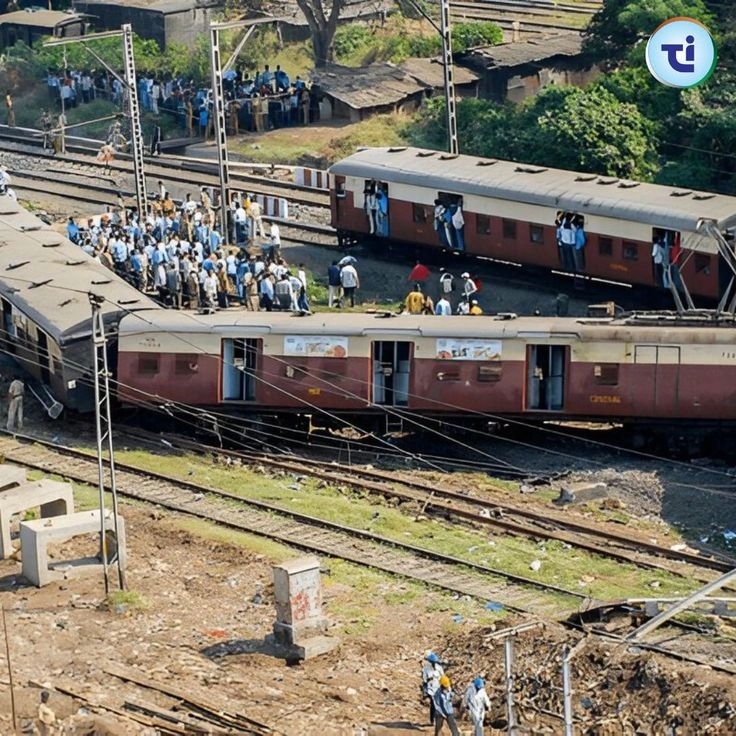
In a country where trains move more than 23 million people every day, even a small problem on the tracks can be quite bad. Indian Railways, which has the fourth largest rail network in the world, today showed off its newest tool for preventing accidents: AI-based safety monitoring systems. These clever instruments don’t simply keep an eye on the tracks; they also look for small symptoms of danger on the tracks and signals and predict when something may go wrong. This move couldn’t have come at a better moment, especially since recent derailments are still vivid in people’s minds. It’s a brave move toward making travel safer, especially because the number of passengers is growing.
The Indian Railways has long grappled with challenges stemming from outdated infrastructure and the whims of weather. Stretching across more than 68,000 kilometers, the railway’s tracks snake through a remarkable variety of landscapes. They cut through the dry reaches of Rajasthan and then climb into the fog-drenched hills of the Northeast.
Signals fail, tracks bend in the heat, and people sometimes miss things. The network reported more than 40 serious incidents last year, many of which were caused by difficulties with the track or signals.
Enter AI. The new devices use machine learning algorithms that have been trained on years of data, such as weather logs and vibration patterns. Sensors along the tracks send information to central centers in real time, where AI models do the math. The system immediately flags a track that is under exceptional stress or a signal that flickers in a strange way. Engineers get warnings on their phones, and the brakes can automatically kick in if they need to. Data is doing the hard work, not magic.
This isn’t just a test project. Railways has already put it into use on busy routes like the Delhi-Mumbai route. Early studies reveal that 30% fewer failure forecasts turned into real accidents. At the launch, one official joked, “We’ve gone from reacting to crashes to stopping them in their tracks.” And with India’s rail budget reaching ₹2.62 lakh crore this year, this kind of technology receives real money.
How the AI Magic Really Works
Imagine a Vande Bharat going 160 km/h. Every few seconds, hidden cameras and IoT sensors built into the tracks take pictures and record vibrations. AI software, which uses computer vision, can find flaws that the naked eye can’t see, such a hairline fracture that got bigger during the monsoon season.
Here is a quick summary of the main parts:
Predictive Analytics: By looking at past data, models can predict failures up to 48 hours in advance. For instance, the system recognizes that certain railway tracks are more susceptible to damage during rapid summer temperature increases in Uttar Pradesh.
Real-time signal monitoring is in place, with over 15,000 signals undergoing computerized inspections. The AI is adept at identifying issues such as faulty relays, which were implicated in 20% of recent accidents.
Thermal imaging-equipped drones are used in areas that are hard to reach, sending data back to the artificial intelligence system.
This new AI system works in tandem with Kavach, the anti-collision technology, which adds another layer of safety.While the technology draws on global concepts, it has been specifically adapted for optimal performance in India.Unlike the well-maintained networks in Europe, our networks must deal with the challenges of elephant crossings in Assam and landslides in the Himalayas.The training data includes specific local features, such as how the red soil in Maharashtra changes when it rains.How accurate? The first tests got 92% right and less than 5% wrong. One derailment can kill scores of people, which changes the game.A Shift in India’s Rail Safety
The statistics paint a stark picture. Between 2015 and 2024, track failures were responsible for more than 150 accidents, leading to hundreds of deaths. The 2024 Balasore disaster, a devastating event that took 296 lives and continues to resonate, was triggered by a signal failure that caused a three-train collision.
The mourning continues, and the questions linger: Could this have been prevented with technology?This AI implementation is a direct response.Railways wants to cover 2,000 locomotives and 5,000 stations by 2027. It’s part of a bigger plan. For example, by next year, all electrified lines should have automatic block signaling.But why now?After the epidemic, passenger traffic shot up 15%, reaching 8.4 billion trips in FY25. Freights that carry coal and commodities that are important to the economy can’t afford to be late.It’s getting attention all across the world. China’s rail AI can foresee problems with 95% accuracy on its bullet trains. The US utilizes comparable technology on Amtrak. India, on the other hand, scales it up because of the huge amount of freight it moves each year—1.2 billion tonnes. Local engineers at RDSO in Lucknow changed the algorithms to function better in tropical settings, showing that domestic innovation works.What does this entail for people who commute every day? Fewer cancellations and shorter delays. A worker in Mumbai could be able to cut 20 minutes off of their commute. For commodities, it’s rupees saved—fresh fruits and vegetables from Nashik farmers get to markets faster, which cuts down on wastage by up to 10%.Obstacles on the Way
There are always problems when new technology is sent out. Critics say that putting sensors on 1 lakh km of railroads might cost more than ₹10,000 crore. Battery backups and satellite links are necessary because rural areas don’t have reliable power or internet. Training 1.3 million workers? That’s a big ask.One union head remarked, “AI is amazing, but it can’t take the place of people who have been there and done that.”There are also issues with data privacy.There are cameras everywhere. Who is watching the people who are watching? Railways promises that the data would be anonymous and just about infrastructure. Then there’s upkeep; sensors in Rajasthan need to be cleaned after dust storms.Still, pilots in Tamil Nadu and Odisha lowered the number of signal failures by 40%. What we learned: work with companies in Bengaluru’s AI center for speedy fixes. The government’s ties to IITs make sure that the latest changes are made.Have you ever thought about if AI could run the whole network?It’s closer than you think, but for now, people are still in the loop.Real Stories from the Train
Look at Raju, who works as a trackman in Bihar. He walked around on foot for 25 years, carrying a lantern at night. His phone rang last month: AI found a loose fishplate 5 miles away. He mended it before the Rajdhani came by. He said, “It was like having a really clever assistant.”Or think about the distance from Howrah to Kolkata. Floods often destroy tracks. AI projected a washout during the heavy rain last July, which stopped trains two hours early. No problems, no panic.Farmers in Punjab are happy too. Delays in shipping caused wheat supplies to spoil. Now, predictive maintenance keeps lines clear, which brings in more money.Wider Effects: Economy and More
This isn’t just for safety; it’s also good for the economy. Railroads make about 1.5% of the GDP. Fewer accidents mean fewer claims (₹500 crore a year) and smoother supply chains. Everything travels faster: drugs from Hyderabad and clothes from Surat.It’s a triumph for the environment. Predictive fixes cut down on emergency repairs, which saves diesel and pollution. Matches India’s objective of having no net-zero rail by 2030.It creates jobs, including AI technologists and data analysts. More than 50,000 new jobs are expected to be available in the next five years, many of them will be for young people in small towns.Air travel has black boxes, whereas busses and flights have pothole cameras. Rails are now part of the AI club, but on a large scale.Problems with Scaling Across the Country
The rollout phases begin with the golden quadrilaterals: Delhi, Chennai, Mumbai, and Howrah.44% of tracks will be covered by the end of 2026. Next on the list are monsoon zones like Kerala.Problems with technology? Some sensors broke in the heat in Gujarat early on, but they were fixed with tough models. Cybersecurity is a big deal because hackers might fake signals. Railways use a verification system that is similar to blockchain.Funding comes from a mix of budgets, public-private partnerships, and World Bank loans. Companies like Reliance are interested in sensor contracts.It takes time for people to trust the government. After Balasore, polls found that 60% of people were skeptical about tech improvements. That will change with success tales.How can you keep a network this big safe and fast at the same time?

