
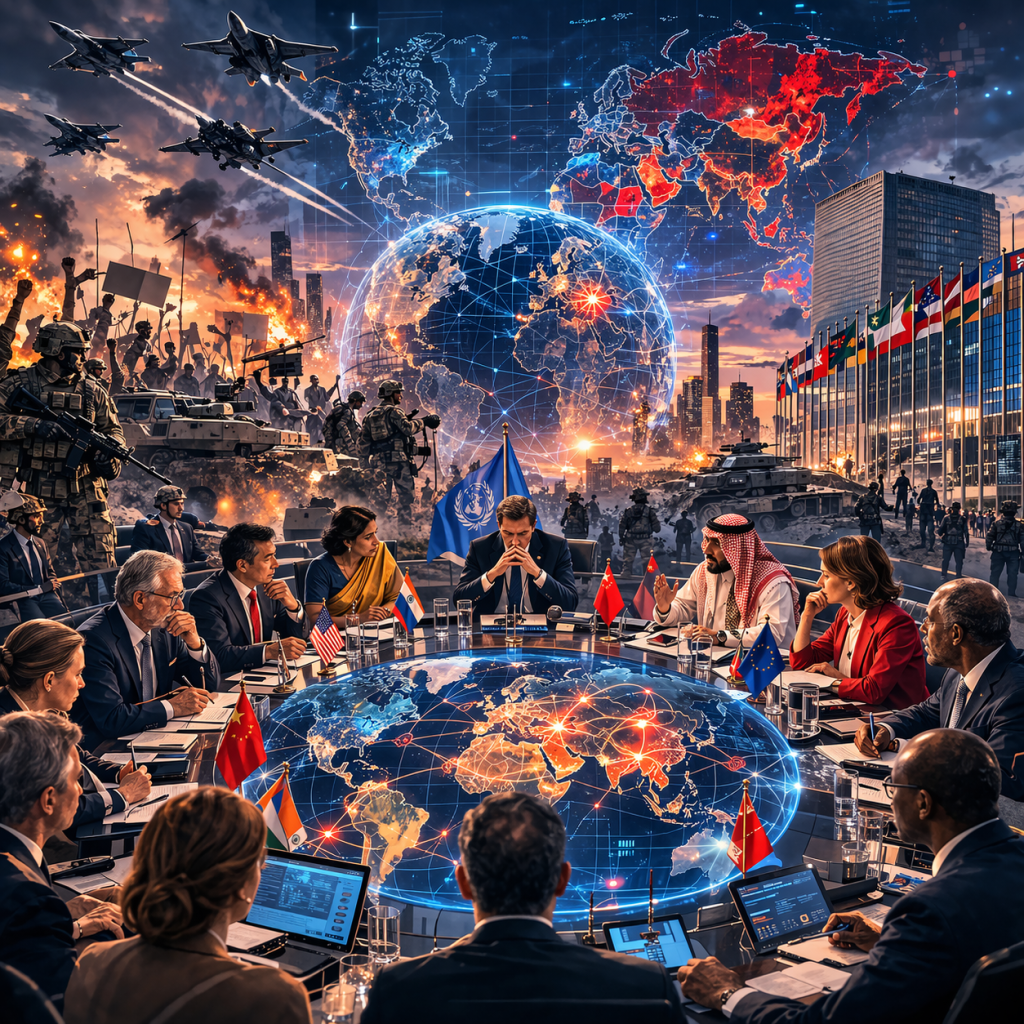
By the year 2026, the world’s simmering conflicts and geopolitical strains have become more than just headlines; they are actively reshaping economies, altering political dynamics, and affecting the everyday lives of people everywhere. The globe is a complex tapestry of uncertainty, with shifting alliances and a constant flow of breaking news, covering everything from the ongoing Russia-Ukraine conflict to the evolving crises in the Middle East.
The immediate situation is only part of the story. The real question is what this means for the world at large, and, more specifically, for India.
A War Between Russia and Ukraine That Affects the Whole World
Even years after it started, the war between Russia and Ukraine is still the most talked-about conflict in the world. What began as a local fight has turned into a long-lasting geopolitical standoff between major world powers.
The war has had a big effect on:
Energy markets around the world: Europe’s reliance on Russian gas has changed, which has caused oil and gas prices to go up and down around the world.
Food security: Ukraine, which is often called the “breadbasket of Europe,” has had problems with grain exports that have affected countries in Africa and Asia.
Military alliances: NATO’s job has grown, with more money spent on defense and better positioning.
There is no clear end in sight, even though talks and diplomatic efforts are still going on. The conflict has become a trial of endurance, testing both economic and military capabilities.
Middle East: A Region in Constant Flux
The Middle East remains a volatile theater in global politics. Even in 2026, the landscape is shifting rapidly, shaped by political rivalries, competition for resources, and the influence of external powers.
Key developments include:
Ongoing hostilities between Israel and its neighbors.
Strategic competition between regional heavyweights like Saudi Arabia and Iran.
The global influence of the United States and Russia.
A defining aspect of Middle Eastern geopolitics is its connection to the world’s oil supply.
Any instability in the area has an immediate effect on fuel prices, which in turn has an effect on economies all over the world, including India.
Updates on the latest global conflicts: the world is on edge
There are also a number of smaller but important conflicts happening around the world. There are more and more geopolitical flashpoints, from fights over borders to political unrest within countries.
Some important trends are:
Rising defense budgets in many countries getting ready for the unknown
Cyber warfare and digital spying are becoming important tools in war.
Countries are changing their strategic alliances and reevaluating their partnerships.
Traditional warfare is no longer the only thing that defines the modern geopolitical landscape. It now includes trade wars, economic sanctions, and competition in technology.
What it means for India: balancing strategy and stability
India is in a unique position in the middle of these global conflicts. As its economy and political power grow, it needs to carefully manage its relationships with many countries.
There are a few ways that India has been affected:
- Energy Safety
India gets a lot of its oil from the Middle East, and it needs a lot of it. When supply is disrupted, fuel prices go up, which has an effect on transportation, inflation, and the economy as a whole.
- Trade and the economy
When there are wars around the world, it makes it harder for businesses to get the goods they need, which raises their costs. This has a direct effect on industries like agriculture, manufacturing, and exports.
- Diplomacy with a plan
India has stayed neutral and fair in conflicts like the war between Russia and Ukraine. This lets it protect its own interests while keeping good ties with both Russia and Western countries.
- Safety and Security
India is also improving its defense capabilities and focusing on becoming self-sufficient in military technology as tensions rise around the world.
A Ripple Effect on the Global Economy
The effects of global wars on the economy are huge. The effects are felt even in countries that aren’t directly involved in wars.
Some of the most important effects are:
Inflation: The cost of living around the world goes up because energy and commodity prices are going up.
Disruptions in the supply chain: Delays in shipping and production have an impact on businesses all over the world.
Uncertainty about investments makes businesses and investors more cautious, which slows down economic growth.
These problems are even worse for developing economies. It becomes a tricky balancing act to keep inflation under control while still growing.
Why This Topic Is Hot Right Now: Fear, Uncertainty, and Real-Time Updates
Global conflicts are becoming more popular not only because they are big, but also because they are happening right now. People are always getting breaking news because digital platforms let them get updates in real time.
This makes a mix of:
Worry about the stability of the world
Wanting to know how things will turn out
Knowing how connected the world has become
Today’s wars are not like those of the past; they are deeply connected to systems around the world.
The Big Picture: A Change in How Power Works Around the World
The change in global power dynamics is one of the most important things about the current geopolitical tensions. The world is becoming more multipolar, which means that more than one country has power instead of just one.
This change is causing:
New partnerships and alliances
More competition in technology and defense
Emerging economies like India have more power in the region.
This opens up new possibilities, but it also makes international relations more complicated.
Last Thoughts
Geopolitics and conflicts around the world in 2026 are making the world both connected and hard to predict. The war between Russia and Ukraine, the tensions in the Middle East, and other new conflicts are not just one-time things. They are part of a bigger change in how countries get along with each other.
The problem for India and the world economy is how to deal with this uncertainty while keeping growth and stability.
In the end, one thing is clear:
People all over the world are no longer just watching wars happen; they are living through their effects right now.

