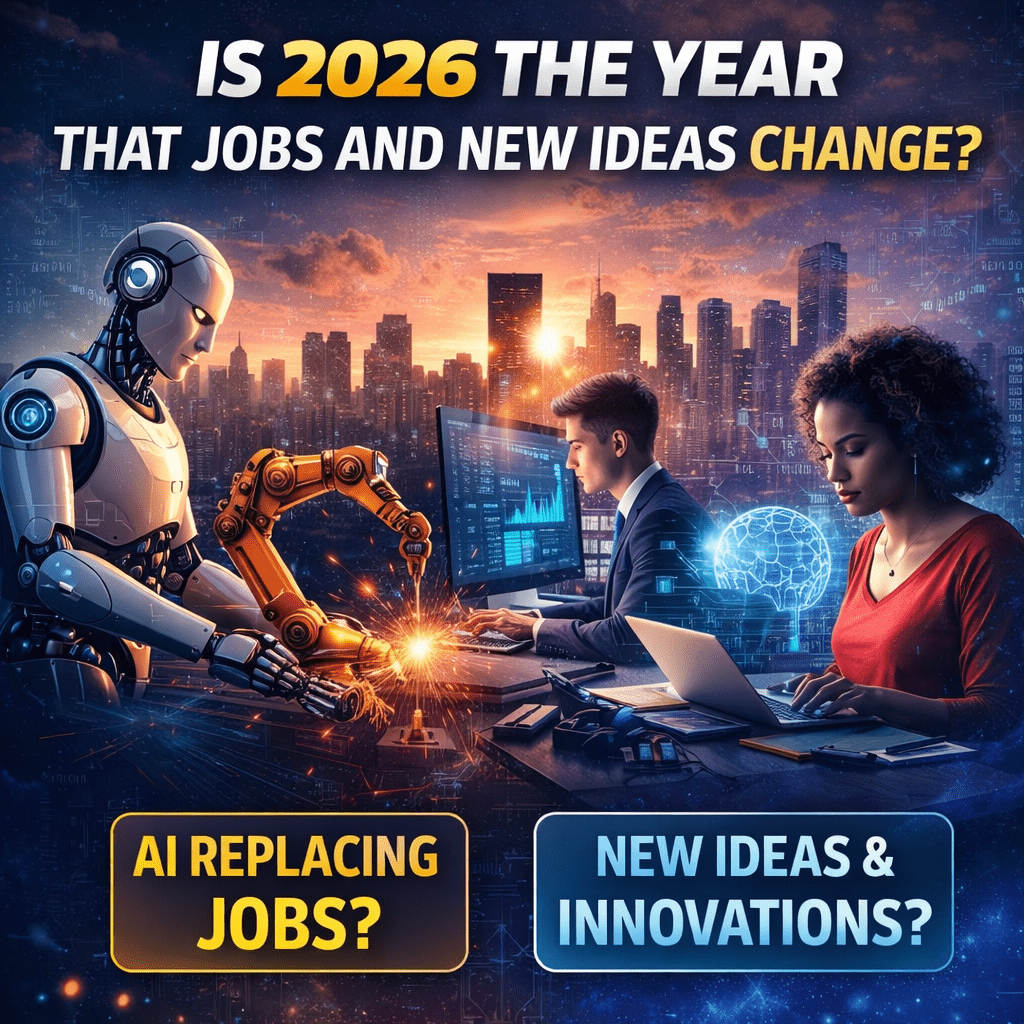
In the story of artificial intelligence (AI) around the world, 2026 is shaping up to be a key year. What used to seem like a futuristic idea is now a part of everyday life. It powers businesses, changes industries, and even affects how governments work. But when things grow quickly, they can be unpredictable. People all over the world are talking more and more about AI laws, job loss, and the rise of new tools that compete with big names like ChatGPT and Gemini.
So, what’s really going on? And more importantly, should we be happy, worried, or both?
The AI Boom: It Happened Faster Than Anyone Thought
The best word to describe AI in 2026 is “explosive.” Everyone, from small businesses to big tech companies, is making or adding AI tools. Companies are no longer asking if they should use AI; they’re asking how quickly they can do it.
Generative AI, automation, and machine learning are all getting better, which is causing this rise. There are now many tools that can write, make images, look at data, and even write code for software. The barrier to entry has gone down a lot, which means that smaller businesses and independent creators can now compete in ways that were unthinkable just a few years ago.
At the same time, the competition is getting tougher. Every week, new AI platforms come out that have unique features, like faster content creation, better design tools, or more in-depth data analysis. A wave of new ideas is now challenging the dominance of a few big companies.
The Rise of AI Regulation: Governments Step In
Governments all over the world are taking the saying “With great power comes great responsibility” to heart. By 2026, AI regulation won’t just be a theory; it will be policy.
Countries are working hard to write and put into effect laws to deal with important issues like:
User protection and data privacy
AI algorithms that are fair and not biased
Risks of deepfakes and false information
Being responsible for decisions made by AI
The goal is to find a middle ground that promotes new ideas while stopping abuse. But this is not as easy as it sounds. Too many rules could slow down progress, while too few rules could cause problems with ethics and society.
Different parts of the world are dealing with this problem in different ways. Some are concentrating on strict compliance frameworks, while others are taking a more adaptable, innovation-friendly approach. This difference around the world is making things interesting because businesses have to deal with more than one set of rules at the same time.
The big question is whether AI will take over jobs in 2026.
This is the question that everyone is asking, and that’s understandable.
The short answer is Yes, but not in the way that most people are afraid of.
AI is definitely taking over some jobs, especially those that are repetitive and follow rules. There are a lot of changes happening in jobs like customer service, data entry, basic content writing, and even some programming. Companies are using AI to cut costs and make things run more smoothly, which means there are fewer jobs in these areas.
But that’s not the end of the story.
Some jobs are going away, but new ones are popping up just as quickly. AI is making people want:
Engineers who respond quickly
Ethicists and trainers for AI
AI strategists and data analysts
Creative people who can work with AI tools
AI isn’t replacing people in many cases; it’s making them better. People who learn how to use AI well are becoming more productive, more valuable, and more competitive in the job market.
The real change isn’t losing jobs; it’s changing them.
New AI Tools: Competition Is What Makes Them Better
Another big trend in 2026 is the rise of new AI tools that are competing with well-known platforms. This competition is actually a good thing for users.
Why?
Because it makes:
Updates that are faster and have better features
Less expensive and easier to get to
Tools made just for certain types of businesses
Some AI tools, for instance, now only work on marketing automation, while others only work on coding, video editing, or business analytics. This variety of tools lets users pick the ones that are best for them instead of having to use a single tool that works for everyone.
It also means that new ideas are being made very quickly. Things that were thought to be cutting-edge just six months ago can quickly become out of date.
Why Everyone Is Talking About AI: Fear vs. Curiosity
AI is popular around the world not just because of what it can do, but also because of how it makes people feel.
Fear is one thing:
Will AI take my job?
Can we trust AI to make choices?
What happens if it’s used wrong?
But there is also curiosity and excitement:
What ways can AI help me with my work?
What new chances can it make?
Can I make something with AI on my own?
This mix of fear and curiosity is making people talk about it in all kinds of places, from work to social media to everyday life. People aren’t just watching AI; they’re trying to figure out how they fit into a world run by AI.
The Key to the Future Is Adaptation
Adaptation is more important than resistance, and that’s what the AI boom in 2026 taught us.
History shows that every big change in technology, from the Industrial Revolution to the Internet Age, has brought both problems and chances. AI is the same.
For people, this means:
Getting better at things
Keeping up with AI trends
Using tools that help you get more done
For companies, it means:
Putting money into AI in a smart way
Preparing workers for the future
Finding a balance between automation and human creativity
And for governments, it means:
Making rules that are smart and adaptable
Protecting people while encouraging new ideas
Last Thoughts
It’s not just a trend that AI will be around in 2026; it’s a change. It is changing the way we work, think, and use technology. It’s true that people are worried about losing their jobs and having too many rules, but these are only a small part of a much bigger picture.
The true narrative of AI pertains not to replacement, but to evolution.
Those who change will do well. People who fight back may have a hard time. And as the world continues to deal with this quickly changing situation, one thing is certain:
AI is here to stay, and the talk about it is just getting started.