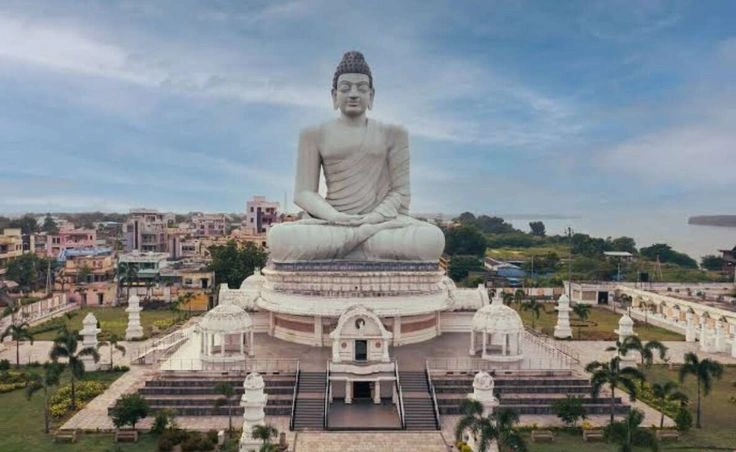
Andhra Pradesh has settled its capital city debate, bringing clarity to a situation that had long been a source of confusion. After years of back-and-forth, the state assembly, on a sunny April day in 2026, finally approved a significant amendment.
This legislation designated Amaravati as the sole capital of Andhra Pradesh, finally putting an end to the uncertainty.
This move signals the end of the contentious multi-capital plan, paving the way for unified progress. It’s a welcome development for a state still recovering from its 2014 separation from Telangana. Simultaneously, it’s a significant bet on revitalization.
This legislation dismantles the three-capitals proposal championed by his predecessor, Y.S.
Jagan Mohan Reddy advocated for. This plan called for Amaravati to be the capital for the legislative, Visakhapatnam for the executive, and Kurnool for the court. Naidu termed it “Amaravati’s return” and promised to bring back the big idea that once got a lot of praise throughout the world.
Why is this important now? Andhra Pradesh’s lack of decision-making held up billions of dollars in investments in a country where cities are the main drivers of growth. Amaravati’s status as the only capital might help that promise come to life, especially because India is racing toward its aim of a $5 trillion GDP. But can it really help regular people in a state that is dealing with floods, problems with farmers, and job searches?
The Long Road to the Blues of Bifurcation
Think back to 2014. When Telangana took Hyderabad from Andhra Pradesh, the quest for a new capital began with high aspirations. Naidu, who was in his first term, focused on Amaravati, a greenfield site on the banks of the Krishna River, some 35 km from Vijayawada. Farmers gave up more than 33,000 acres, which made news around the world because of how big and generous it was.
The masterplan, written by Singapore’s urban wizards, called for a world-class metropolis with 33% green space, smart technology everywhere, and space for 3.5 million people. The legislature complex, the high court building, and the seed infrastructure were some of the first successes. They were all paid for via a unique land-pooling arrangement. Instead of payment, farmers got annuities, developed plots, and homes. There was a lot of activity in Amaravati by 2019, with offers of Rs 50,000 crore from groups like the World Bank and Housing and Urban Development Corporation (HUDCO).
Then there was a twist. Reddy’s YSR Congress Party won the elections in 2019 on the promise to reconsider everything. In late 2021, he called Amaravati a “scam” and brought up the notion of three capitals. The secretariat would be in Visakhapatnam, the economic center of the Bay of Bengal; the high court would be in Kurnool, in Rayalaseema; and the assembly would be in Amaravati. Supporters thought it would help balance the needs of different regions: the economic goes to coastal Andhra and the judiciary goes to Rayalaseema. What do critics say? They said it would cause turmoil by splitting up resources and making investors scared.
People started to protest. The farmers of Amaravati, who felt betrayed, went on strike for 1,200 days, the longest in the history of India’s farmer movement. Tractors stopped highways, ladies made human chains, and the air was full of “Jai Amaravati” cries.” The Andhra Pradesh High Court stepped in several times, stopping development on the three capitals and scrutinizing property purchases in other places. The national administration, led by Narendra Modi, stayed out of it and asked for a single capital in Supreme Court submissions.
Naidu’s Return and the Amendment Hammer
Go ahead to 2024. Naidu’s TDP, along with Jana Sena and BJP, brought down Reddy’s government. Naidu came back with a vengeance, running on the slogan “Amaravati or bust.” What did he do first? Bringing back the Amaravati capital project. The assembly put the amendment bill on the table in March 2026, and after a lot of debate, it passed unanimously.
Important revisions in the Andhra Pradesh single capital amendment:
Amaravati was called the “legislative, executive, and judicial capital” all in one place.
It gets rid of the 2020 AP Decentralisation and Inclusive Development of All Regions Amendment Act.
Gives the Capital Region Development Authority (CRDA) new powers to speed up building.
Promises to pay farmers who were hurt and help them get better, which addresses earlier complaints.
Naidu didn’t just talk. He has gotten Rs 26,000 crore from the central government and private investors. In February 2026, a well-known group from Singapore came back to change the masterplan for sustainability. They added features like solar-powered buildings and designs that could withstand flooding after the Krishna deluge destroyed early buildings in 2024.
But things aren’t always going well. Reddy’s camp says it’s a revenge plot that doesn’t take Rayalaseema’s needs into account. The three-capitals case is still going on before the Supreme Court, and there are legal problems ahead. Even still, Amaravati’s place as the capital seems set in stone. Work is starting up again, with earthmovers back on site, roads widening, and the famous assembly dome rising again.
What it Means for Andhra’s Future to Have Amaravati as Its Sole Capital
Imagine a shiny skyline where the sound of construction mixes with the breeze from the Krishna River. That’s what I want. In terms of money, it changes the game. Amaravati is South India’s next important center since it is in a good location and has highways that connect it to Hyderabad (300 km), Chennai (400 km), and Bengaluru. Once it’s constructed, experts say it will develop by 8–10% each year, making it a competitor to Gujarat’s GIFT City.
For people who live there, the risks are high. More than 27,000 farming families put their money in land-pooling programs that promised them Rs 50,000 a year, 1,000 square yards of land, and jobs in the city. People had to deal with delays, which made things hard. Some sold their things, while others moved. Now that things are getting better, they’re looking for returns. “We’ve waited too long,” said one farmer from Thulluru village on a recent visit, his voice full of hope. Will the government deliver on time, or will red tape get in the way again?
India too saw the effects of the wider repercussions. Andhra’s story is a warning for states like Maharashtra that want to build new cities. Multi-capital dreams seem good, but how they are carried out is important. According to data from the NITI Aayog, single-capitals like Chandigarh or Dispur help growth happen faster since they have stronger infrastructure and a cohesive government. Government forecasts suggest Amaravati could generate two million jobs in IT, banking, and tourism by 2035.
However, challenges persist. The riverfront’s development has made flooding more likely, a fact underscored by the inundations of 2019 and 2024.
Critics advocate for taller buildings and structures, alongside mangroves resilient to the impacts of climate change.
It’s important to make sure that people in the area have jobs while migrants are coming in. And what about money? Central aid is helpful, but Naidu is trying to get foreign direct investment (FDI) from the US and UAE by calling Amaravati “India’s green capital.”
Voices from the Ground: Farmers, Businesses, and Enemies
When you talk to stakeholders, their viewpoints are often different. Amaravati’s farmer leaders say it proves their point. Thummala Nageswara Rao, a veteran of protests, says, “Our land offer wasn’t charity; it was an investment.” Business groups like CII are happy because projects worth Rs 10 lakh crore that were on hold are now moving forward.
On the other hand, people who support Visakhapatnam are sad about its lost glory. A local chamber chairman says, “Vizag’s port and steel make it ready for business.” Reddy, from the opposition benches, warns of “Amaravati elitism” and promises to battle in Delhi courts. A 2025 LocalCircles survey found that 62% of Andhras want a single capital, but just 45% of Rayalaseema residents do.
People all throughout the world are watching. The Asian Development Bank, which used to support the project, is now looking to get back in. Singapore’s changes incorporate EV infrastructure and AI zones, which fits with India’s aim for smart cities.
Amaravati Finally Takes the Crown: Andhra Pradesh Ends Capital Chaos with Single-Capital Verdict