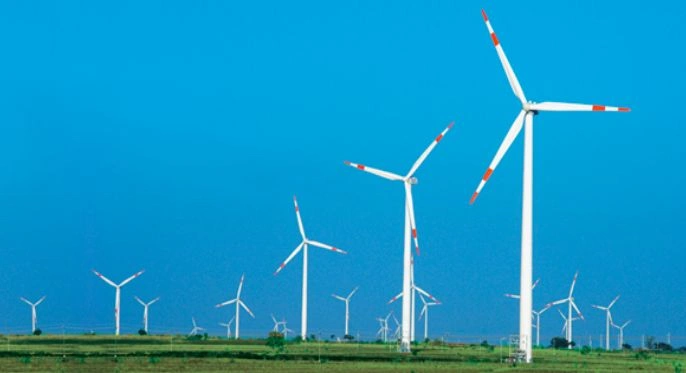
The country added a remarkable 6.05 gigawatts (GW) of wind generation capacity in fiscal year 2026, pushing its total installed capacity past the 56 GW mark for the first time. This achievement isn’t just a statistic; it’s a major shift for a nation striving to meet ambitious renewable energy targets while also addressing its energy demands. Despite coal remaining the dominant energy source, this wind power expansion signals progress toward a more sustainable future, particularly in states like Gujarat and Tamil Nadu.
India’s energy requirements are surging, driven by industrial growth, the rise of electric vehicles, and a constantly expanding population. Wind power, harnessing the free energy of the wind, is arriving at a critical juncture.
But how did we get here, and what does it indicate for the future?
The Numbers That Tell the Story
Let’s take it apart. According to the Ministry of New and Renewable Energy (MNRE) and industry trackers, wind installations reached a record high of 6.05 GW in FY26, which ended on March 31. That’s more than double the 2.92 GW added in FY25, showing a sharp recovery from pandemic slowdowns and supply chain hiccups.
India’s total wind capacity is already over 56 GW, which is part of the country’s larger push for renewable energy that is getting close to 200 GW altogether. Wind power accounts for around 10% of the country’s total installed electricity capacity, but that number is rising quickly. Here’s a quick look at the last several years:
Added 3.3 GW in FY24
Added 2.92 GW in FY25
Added 6.05 GW in FY26, a record high
Gujarat had the most new installations, with more than 2 GW, followed by Tamil Nadu with 1.5 GW and Karnataka with 1.2 GW. These states don’t just have good luck with wind; they also have the land, the rules, and the investors waiting in line.
This spike happens at a very important time. India wants to have 500 GW of non-fossil fuel capacity by 2030, and wind power is a big part of it. Solar power is already above 100 GW, and the combination of sun and wind could power homes, factories, and even data centers without hurting the world.
What Started This Wind Rush?
Wind projects were having trouble a few years ago. High tariffs, conflicts over land acquisition, and grid delays prohibited developers from getting involved. But FY26 changed everything. A lot of it has to do with government incentives. The Production Linked Incentive (PLI) program for wind turbines gave money to local businesses to help them make more things, which cut down on the need to buy things from China and Europe.
In the reverse auction concept, developers compete hard for projects. In 2025, SECI (Solar Energy Corporation of India) gave out more than 10 GW of wind tenders at rates lower than ₹3 per unit, which is cheaper than new coal plants. That’s a great deal, and big companies like Adani Green, ReNew Power, and NTPC were interested.
Technology also got better. Bigger turbines, which currently average 3 to 5 MW each and have hubs that are 140 meters tall, are getting more power from the same land. Hybrid wind-solar farms are becoming more common since they keep the power steady even when the wind isn’t blowing. One of these projects in Rajasthan produces 1.5 GW of power around the clock, and it’s a model that people all over the world are interested in.
Don’t forget about the states. Gujarat’s wind policy lets you skip 100% of the stamp duty and get your application approved quickly. Tamil Nadu installed 500 MW in Q4 FY26 and brought back existing sites thanks to its coastal breezes. Karnataka is giving viability gap funds to make marginal sites work. These actions changed doubters into builders.
Focus on the Leaders: States Leading the Way
Gujarat means business. It already had 12 GW, and this year it added 2.1 GW, largely in Kutch and Saurashtra. Farmers there are renting land for wind turbines and making consistent rental income of ₹50,000 to ₹1 lakh per MW per year. It helps rural economies too.
Tamil Nadu, the old wind king with more than 11 GW overall, came back strong. Last year’s monsoon delays were bad, but new substations fixed grid problems. Kayathar and Theni areas grew a lot, which helped fuel surrounding textile centers.
Karnataka and Maharashtra each contributed 1.2 GW and 800 MW, respectively. Even Andhra Pradesh, which is new to the game, put in 300 MW of offshore pilots, which shows how much more India might do with its coasts. Wind power from the sea? That’s the next big thing. Pilots off the coast of Gujarat are hoping to reach 30 GW by 2030.
These stories from different states show that wind isn’t the same for everyone. Local changes make it work, and this year alone, over 50,000 direct jobs in manufacturing and operations have been created.
Problems that wind power still has to deal with
There are some rough winds. Land is still a problem. Protests in Maharashtra pushed back projects by months because farmers are worried about shadow flicker and birds. Developers are responding with community grants and designs that are good for birds, but it’s taking a long time.
Another problem is grid integration. India’s system loses 20% of wind electricity because it is too full. The Green Energy Corridor is erecting 3,000 km of lines, but it needs to speed. The project costs ₹12,000 crore. Battery storage could help by combining wind with lithium packs for steady electricity, but it costs a lot, between ₹5 and 6 crore per MW.
Getting money isn’t free, either. Tariffs went down, while the cost of turbines up front went up to ₹6–7 crore per MW. Banks are getting more interested in green bonds, but small developers are having a hard time. And then there’s the weather, which is unpredictable. Monsoons that come and go can mess up construction schedules.
What if these problems don’t get fixed quickly enough? Is it possible that India won’t reach its 2030 goals? It’s a reasonable question that keeps policymakers up at night.
How India Compares to Other Countries
India is presently the fourth-largest wind market in the world, after China (more than 400 GW), the US (140 GW), and Germany (65 GW). But it’s still low per person, with less than 50 watts per person compared to China’s 300. What good news? The growth rates are the best. Europe is slowing down because of expensive prices, but India is installing wind faster than anyone else.
This is important all throughout the world. Next year at COP30, India will brag about these wins and ask for tech transfers. There is also the possibility of exporting. Indian turbine companies like Suzlon are looking at Africa and Southeast Asia, where wind is just starting to pick up.
Links with Denmark and Germany contribute know-how; Vestas and Siemens Gamesa have factories here that train locals. It’s creating a local business, much like solar did.
India’s Wind Power Surge: Record 6.05 GW Added in FY26 as Capacity Tops 56 GW