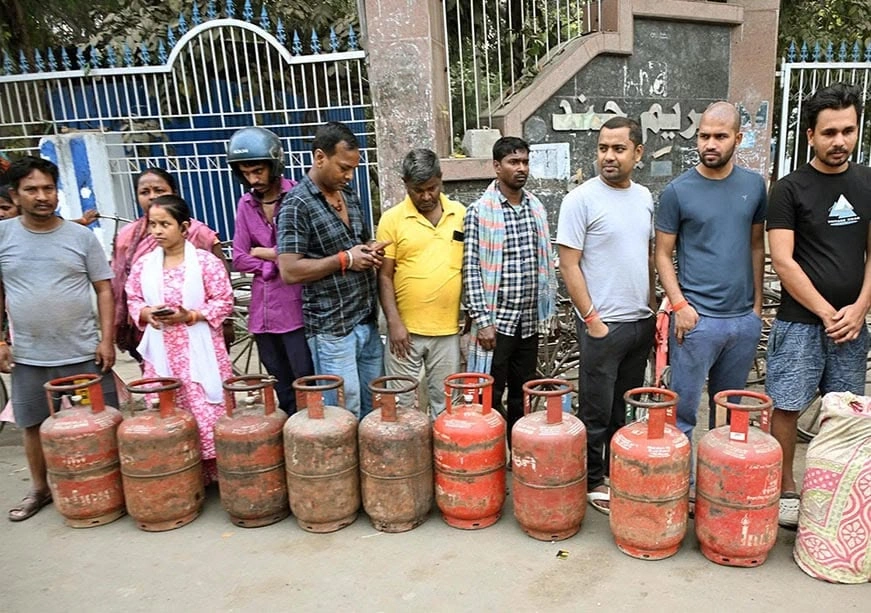
The Indian government is quietly modifying how it delivers fuel subsidies, which is generating fights in Delhi’s halls of power and beyond. As oil prices go up around the world and the cost of imports goes up, officials are looking for methods to keep the budget deficit under control without making things too harsh on consumers. It’s a hard balance to strike, but it’s incredibly vital for a country that depends on imported oil.
The Problem with Gas Prices
In India, fuel subsidies have been a big part of politics for a long time. Think about the good things: cheap gas and diesel make people happy, keep farm equipment running, and help keep inflation from getting out of control.
But now that Brent crude is sitting around $80 a barrel, which is higher than it was last year, the calculations don’t make sense.
India is the world’s third-largest buyer of crude oil because it needs so much of it. Last fiscal year, the cost of these imports skyrocketed to an unbelievable $220 billion. This rise was caused by a rise in demand after the pandemic and the ongoing tensions in the Middle East.
Subsidies, mostly coming through state-owned oil companies like Indian Oil Corporation (IOC) and Bharat Petroleum (BPCL), have expanded to disguise price rises at the pump. The government says that under-recoveries, which are the difference between cost and selling price, hit ₹25,000 crore in the first half of FY26.
What is the plan? A shift from general subsidies to targeted ones. Like the LPG subsidy program that saved billions, officials are thinking about offering direct benefit transfers (DBT) to populations that need it. This isn’t new; there have been pilots in places like Rajasthan. But making it happen all around the country would help stop leaks, which is when subsidies flow to the rich.
Why now? The budget deficit for FY26 should be 4.9% of GDP, which is less than the 5.1% it was last year. Every penny that isn’t spent on subsidies might be used for welfare or building things. But changing things can have the opposite effect. Do you remember how prices went up in 2022? Truck drivers protested, and the elections were coming up.
The Crisis’s Roots: Why India Can’t Get Enough Oil
Let’s go back. India is addicted to oil since it doesn’t make enough of it at home. ONGC and other businesses only pump 600,000 barrels a day, but India needs 5.5 million barrels a day. Refineries are practically at full capacity, although most of the supply still comes from imports.
Everything gets worse because of geopolitics. After Russia invaded Ukraine and shut off supply, India had to import inexpensive Russian crude oil. Russia now sends 40% of India’s oil. That’s a smart strategy that will save you $10 to $15 a barrel. But worries about attacks and sanctions in the Red Sea have caused freight costs to go up by 30%.
The rupee has gone down too. When the rupee is worth ₹84 to the dollar, any rise in the price of oil hurts more. The Petroleum Planning & Analysis Cell said that last quarter, it spent ₹1.2 lakh crore to import fuel.
So far, these are the most important import numbers for FY25-26:
The total amount of crude oil imported was 225 million tons, which is 5% more than last year.
The average cost is $82 a barrel.
Bill: ₹1.8 lakh crore (for the first nine months)
Refining margins are good in the US, with IOC making $12 to $15 per barrel, but subsidies lower profits. Even though sales went up, BPCL’s net profit dropped by 20%. The government can’t keep selling bonds to oil corporations indefinitely. Last year, they sold ₹30,000 crore worth of bonds.
Who is paying for the current system of subsidies?
This is how subsidies work right now: Oil marketing companies (OMCs) lose money on retail sales, but they get paid back later with bonds or budget allocations. Prices for diesel and gasoline have stayed the same since May 2022. Even if it costs more to make them, they remain fixed at ₹96 and ₹89 a liter in Delhi.
This “no-hike” policy is good for customers, but it harms OMC’s profits. Companies higher up, like ONGC, aid by lowering the price of natural gas. Other fuels, such aviation fuel and LPG, assist diesel.
But things don’t seem good. SIAM data shows that demand for diesel, which is crucial for farming, is up 8% in rural areas. Gas sales in cities? Steady at 30 million tons every year. The wealthy get more, while the poor get less.
What if prices were set by what people genuinely wanted? A 20% rise might add ₹10–15 per liter, which would hike the monthly fuel costs for middle-class families by 10–15%. That’s where targeted aid comes in: direct benefit transfers (DBT) through Aadhaar-linked accounts. This might help 20 crore low-income families.
What choices does the government have?
The Petroleum Ministry states that there would be a review with several elements. Nirmala Sitharaman, the finance minister, hinted at it in her budget speech in February, where she talked of “fiscal prudence.” A high-level delegation, thought to be led by a former RBI executive, is looking at alternative options.
Here are some of the top ideas out there:
Tiered pricing: Offer discounts to customers who use less than a set quantity, such 10 liters of gas per month per automobile.
Dynamic pricing is setting prices in stores based on international norms, but with a wait.
Green levies offset: Use taxes on refiners that appear out of nowhere to pay for subsidies.
India is already trying things out. The PM Ujjwala scheme made LPG subsidies digital, which cut theft in half. Connecting Kisan cards to pumps could make it possible for farmers to use fuel as well.
It’s not strange in other parts of the world. Indonesia stopped giving out subsidies in 2022, which saved 2% of GDP, even though there were protests. Brazil uses auctions to give specific support with diesel. The IMF put pressure on Bangladesh to hike prices.
India is more careful because of elections in crucial states like Maharashtra. BJP strategists are aware that changes in fuel costs could affect votes. The number of votes in risen went down by 5% when prices went risen.
Economic Ripples: Growth, Debt, and Rising Prices
Changing subsidies isn’t just about oil; it has an effect on the whole economy. The RBI’s repo rate stays at 6.5% because of subsidy overhangs, which makes it tougher for private investors to invest when the deficit is greater.
Inflation is the big ghost. Fuel costs 12% of the WPI, and when fuel prices go up, it costs more to move food. RBI data show that a 1% rise in gas prices raises the CPI by 0.1%. That’s dangerous because of the risks of the monsoon season and the rise in food prices around the world.
On the other hand, making subsidies more fair promotes green drives. If petrol costs go up, more people will buy electric vehicles (EVs), which are now at 2 million units. India’s goal to invest $500 billion in green projects needs room in the budget.
It’s hard for businesses as well. Logistics businesses like Delhivery think that having a steady supply of diesel is vital since it helps them make more money. Car companies desire CNG, but the infrastructure isn’t ready yet.
What does this mean for the typical Indian person? A farmer in Punjab might get DBT diesel credits, which will make tractors cheaper. Do you live in Mumbai? Prices are going up, but EVs may be cheaper in the long run. Have you ever considered about how much your daily gas bill supports the system?
People are talking: Voices from the Ground and Experts Weigh In. Hardeep Puri, the oil minister, declared not so long ago, “We’re not passing on every modification.” But people who work in the industry are letting their anger show—OMCs owing ₹2 lakh crore.
Farmers’ unions want fuel to be free, and truckers don’t want costs to go up. Consumer protection groups like CUTS want things to be obvious.
Economists don’t all agree. “Subsidies disrupt markets,” says Pronab Sen, who supports full market pricing with cash transfers. Others, like NK Singh, contend that there are costs to society.
Local authorities in Maharashtra, a state that relies on oil refineries like HPCL’s, want jobs. Pune’s car center, which may be in your backyard, is still running strong because of cheap logistics.
Politics, logistics, and the unknown are all going to be problems.
The issue is putting it into practice. DBT needs data that is 100% accurate, yet there are still problems with Aadhaar in rural areas. At initially, Ujjwala had a lot of trouble with technology.
Prices for oil are likely to be unpredictable, and OPEC+ cuts might push them up to $90. When the monsoon doesn’t come, demand increases up.
Subsidies maintain fossil fuels in the environment. Coal is going down, but diesel is still around. Changing subsidies might make solar pumps affordable, which would help reach net-zero by 2070.
A Better Way Forward?
Changing India’s fuel subsidy is like playing poker with a lot of money on the line. By directing help and letting prices rise, the government might lower the deficit, promote efficiency, and encourage people to be more environmentally friendly. Infrastructure like highways and trains might be a lot better if they saved up to ₹50,000 crore a year.
It won’t be simple. To turn short-term suffering into long-term gain, you need to build trust through clear communication, pilot successes, and safety nets.
The real win? Power. India needs to switch to renewable energy sources, just like the global oil companies are. Will this review make that adjustment, or will it only patch the holes? One thing is clear: you can’t stay still in a world that is continually evolving.
India is having a hard time with its modifications to gasoline subsidies since oil imports are going up and the government doesn’t have enough money.