Gas prices in India have remained elevated, with petrol in major cities such as Mumbai exceeding Rs 103 per liter. This has prompted commuters and fleet operators to reconsider their options. New government regulations, coupled with a rapidly expanding market, are bringing electric cars (EVs) to the forefront. This shift isn’t solely about the cost of fuel; it’s also reshaping India’s transition to cleaner energy sources.
Sales Surge Signals Genuine Advancement
The electric car market in India has evolved beyond a mere pilot program.
The Federation of Automobile Dealers Associations has announced a significant 24.6% jump in retail sales for FY2026, with figures approaching 24.52 lakh units. This represents a considerable increase over the previous year’s numbers. It’s also worth noting that two-wheelers account for roughly 58% of all sales.
These vehicles are a common sight in cities like Pune and Delhi, where they’re a daily commuting staple.
Sales in the initial quarter of 2026 were even more impressive, with 696,769 units sold, reflecting a 35% year-over-year increase. Passenger cars experienced the most significant growth, climbing 86% year-over-year, despite the absence of direct incentives in the new programs. Tata Motors sold 78,811 cars, while Mahindra’s sales soared to 42,721, fueled by models such as the BE 6 and XEV 9e.
MG Motor sold 53,089 cars, which is 74% more than last year. Hyundai sold 5,885 cars, which is 138% more than last year.
These numbers show that electric cars now make up between 8.5–9% of the market, up from 7.7% last year. TVS, Bajaj, and Hero now dominate 61% of the two-wheeler market, which shows that Indian corporations are quick to change.
What does this mean for folks who drive to work every day? You might have to pay Rs 1–1.5 lakh up front for an electric two-wheeler, but it saves you thousands of rupees on petrol over time, especially right now.
Policies Push for Growth
The government isn’t just sitting there. The PM E-DRIVE program will run until March 2028 and has a budget of Rs 10,900 crore. But by March 2026, it will stop offering money to help people buy two- and three-wheelers. It gives up to Rs 10,000 off e-two-wheelers and Rs 50,000 off high-end three-wheelers, as well as cash for charging stations.
Changes made recently have concentrated on performance. Now only efficient EVs can qualify, which means that quality is more important than quantity. That’s a wonderful idea since it gets rid of people who aren’t doing well and supports Indian manufacturing under Aatmanirbhar Bharat. Advanced Chemistry Cell incentives are helping us make more batteries and rely less on China.
Pushes at the state level are also helpful. Because West Bengal made e-rickshaws obligatory, sales of three-wheelers went up to 78,057 in December 2025. These laws say that by 2030, 30% of all new automobiles should be electric, and by 2070, there should be no emissions. Adoption would slow down without them. Do you remember how FAME-II sparked the first boom?
Prices of fuel make things more important. A liter of petrol costs between Rs 103 and Rs 109, thus a scooter ride of 50 kilometers a day costs Rs 2,000 a month. EVs bring the cost down to nearly nothing after charging. Even though the government has cut taxes to protect consumers, prices are high because crude oil is close to $110 a barrel and the rupee is weak.
Charging Up the Infrastructure
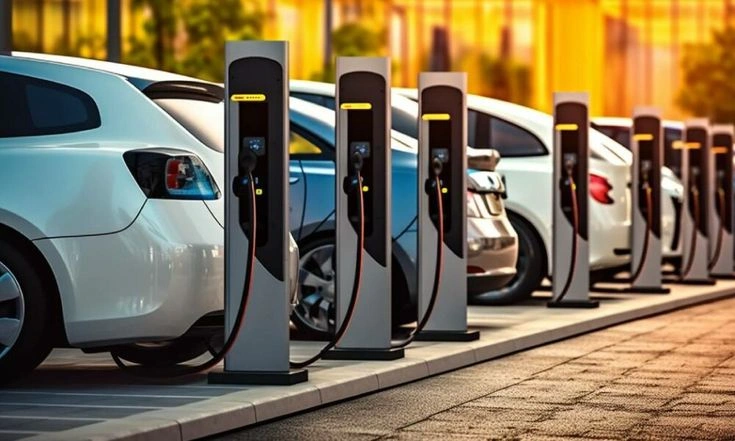
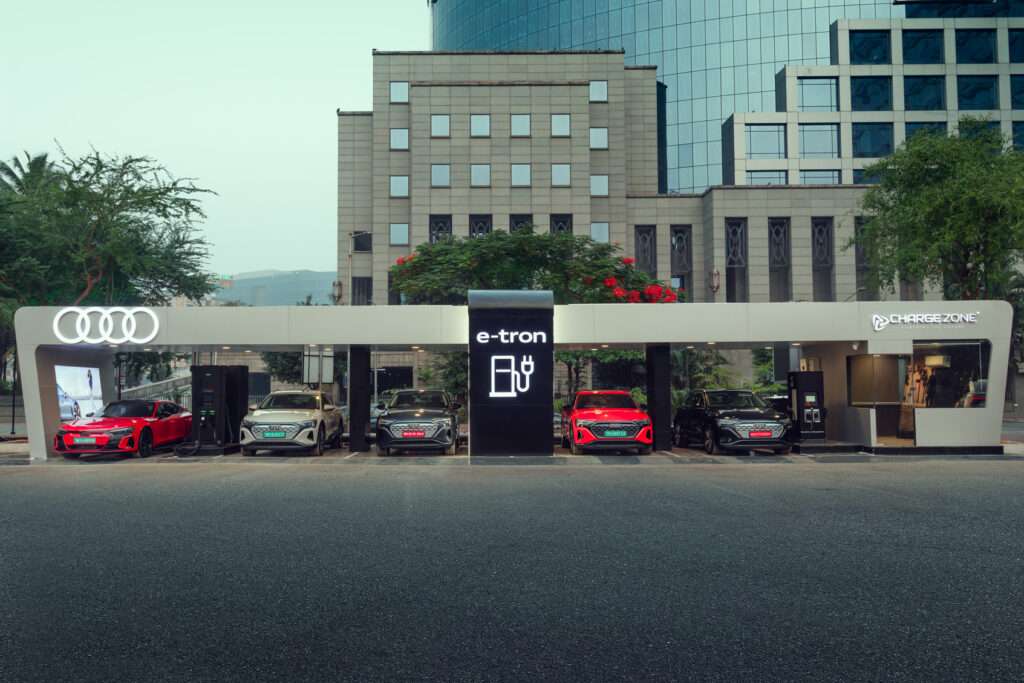
To use EVs, you need plugs. By March 2026, India had more over 27,000 public stations, up from 5,000 in FY21. That’s five times as many. But there is still only one charger for every 235 electric vehicles, which isn’t fantastic. PM E-DRIVE gives billions to fast chargers, and the goal is to have 72,000 of them shortly.
Companies are getting engaged. Relux Electric has 100 stations in Punjab and Rajasthan. MobiLane intends to establish 1,000 stations all throughout the country by the end of the year. ThunderPlus opened super-fast 120kW bays in Hyderabad that can be upgraded to 480kW. Highway extensions in Pune, which is known for its traffic bottlenecks, make it possible to drive electric cars for longer distances.
Apartments that don’t have charging stations at home are still a headache, though. Have you ever thought about how many balcony chargers we’ll have in five years?
Things that will get in the way on the road ahead
Things are getting better, which is excellent, but there are still concerns. People who are careful with their money don’t want to buy EVs because they cost a lot at first and are still more expensive because of the batteries. People who live in the country, where there aren’t many stations, really worry about their range. Prices stay expensive due of imported parts, including rare earth magnets, although localization is getting better.
People are also not sure if they want to buy. Many people still use gas because they are used to it or don’t trust new technology. Banks now provide EV loans at lower rates, so it’s crucial to learn about them and how to pay for them up front.
EVs reduce pollutants from emissions, but there are also worries about mining for batteries. India is relying on norms about recycling to do that.
What happens every day and true stories
A delivery driver in Pune converted to an e-scooter because gas prices were going up. He saved Rs 4,000 a month. Fleet operators for e-commerce love electric cargo three-wheelers, which have expanded by 172% with a 1.4% penetration rate. They managed to cut costs and still meet their environmental, social, and governance objectives.
City-dwelling families are drawn to electric SUVs, such as the Tata Nexon EV. These vehicles can cover distances of up to 400 kilometers on a single charge. March 2026 saw a record-breaking 280,000 units sold, largely due to pre-subsidy deals finalized before the previous year’s end.
India’s 40.7% compound annual growth rate through 2030 outpaces that of numerous other nations, positioning it as a key player in the EV market. The question remains: can it achieve a 30% market share by the decade’s close?
The Indian government’s preference for electric vehicles tends to grow when fuel prices rise.