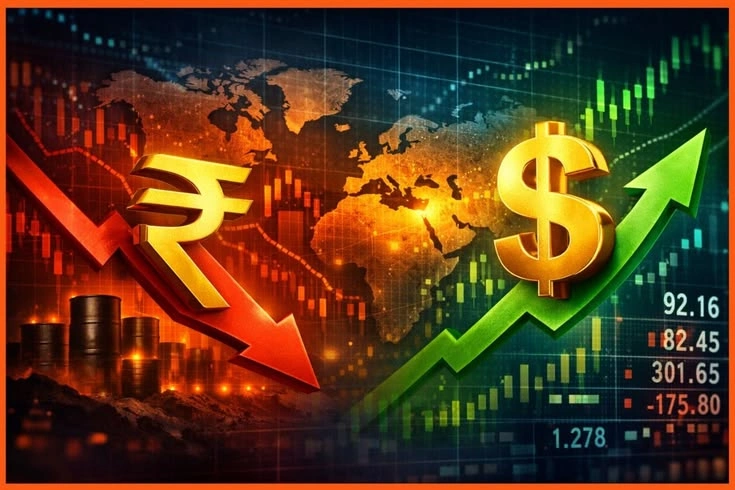
India’s government has a tough choice to make this year, when global energy markets are throwing curveballs. As of early April 2026, crude oil prices have risen again, hovering at $85 per barrel. This is due to tensions in the Middle East and consistent demand from countries that are starting to recover. This isn’t just a headline for a country that gets more than 85% of its oil from other countries; it’s a direct punch to the wallet. The fiscal target for FY 2026-27 is a 4.5% budget deficit relative to GDP, prompting New Delhi’s decision-makers to contemplate austerity to curb spending. The question remains: can they achieve this without hampering development, especially with elections looming?
This situation is significant because India’s economy, still the world’s fastest-growing major economy, expanding at roughly 6.5–7% GDP growth, requires sound finances to support everything from infrastructure projects to social programs. Escalating oil prices could fuel inflation, weaken the rupee, and complicate subsidy decisions. As Finance Minister Nirmala Sitharaman prepares for the upcoming budget, whispers of spending cuts, project delays, and tighter fiscal constraints are becoming increasingly prevalent.
It’s a typical case of balancing economic restraint with the needs of 1.4 billion people.
The Oil Shock: Why Prices Are Going Up Again
Crude oil doesn’t care about boundaries, but it hits India’s hard. The strained relationship between Iran and Israel has complicated supply chains. Simultaneously, OPEC+ members, including Saudi Arabia and Russia, are maintaining their production quotas, a move influenced by their own economic challenges.
When you add in strong demand from China and the US, you have a perfect storm.
The math is hard for India. Every year, oil imports cost more than $200 billion, which is nearly 30% of the overall import bill. Economists at the Reserve Bank of India (RBI) say that a $10 increase in oil prices can lower GDP growth by 0.3% to 0.4%. The rupee has already dropped to about ₹84 per dollar, which makes those imports even more expensive. Prices for petrol and diesel in cities like Mumbai and Delhi have gone up 5–7% since January, which is bad news for people who drive to work every day and truck drivers.
Households feel it first: cooking gas cylinders cost more, transportation costs go up, and food prices go up as well since shipping costs go up. What does this mean for the average family in Patna or Pune? A slow loss of buying power, just as inflation was dropping to 4.5%.
The Line in the Sand for the Fiscal Deficit Target
The 4.5% target is important for India’s fiscal credibility. It was set in the interim budget in February 2026. It’s down from 4.8% last year, which shows that the government is committed to fiscal consolidation after COVID. In order to hit it, revenues need to cover around 80% of costs without too much borrowing.
But oil is messing up the idea. The current account deficit is now 2.2% of GDP, which puts pressure on foreign reserves. If GDP slows down, tax receipts, which are high from GST and income tax, may not be enough to make up for this. The government’s growth engine, capital expenditure, could take the knock this year at ₹11 lakh crore.
Key pressures at a glance:
Subsidies are going up: Fertilizer and gasoline subsidies could go up by 20–25%, from ₹2.5 lakh crore to more over ₹3 lakh crore.
Less money coming in: Are customs fees on oil imports reduced because there are fewer of them? No, higher prices equal more money going out.
Debt sustainability: With public debt at 58% of GDP, there isn’t much room for error.
ICRA and CRISIL analysts say that if the objective is missed, bond yields could go up, making it more expensive to borrow money in the future. Do you remember when oil cost $120 in 2022? India barely held its ground. This time, the stakes seem bigger because worldwide rates are higher.
What steps are being taken to deal with austerity?
According to North Block, the government isn’t afraid to tighten its belt. When we talk about austerity here, we mean targeted cuts, not blanket cuts. Think of it as surgical strikes on spending that isn’t necessary.
One key notion is to make sense of capital expenditures. Phase delays might happen for big projects like the ₹1 lakh crore highway push or semiconductor plants. Under the Fiscal Responsibility Act, states are also under pressure to cut their own deficits.
Other things being thought about:
Changes to subsidies: Giving cash directly to LPG could save ₹10,000 crore by getting rid of fake LPG.
Push to divest: Sell off shares in PSUs like BPCL or ONGC more quickly, with a goal of reaching ₹2 lakh crore in FY27.
Efficiencies in procurement: Buying in bulk for the military and railways can save 5–10% on expenditures.
Non-plan spending freeze: Cut back on travel, events, and marketing. Remember the edict from 2019 that said no new schemes?
Not everything is bad. Higher dividends from RBI (₹1 lakh crore projected) and spectrum auctions are good for the economy. But here’s a dilemma for the people in charge: How can you cut without making people angry, especially since elections are coming up in Maharashtra and Haryana?
There are things we can learn from past austerity measures. In 2013, the UPA-2 government lifted restrictions on fuel and gold because of oil shocks. This was difficult but worked. Modi’s 2016 GST rollout and demonetization were bolder changes to the economy. This round seems more complicated, mixing cuts with environmentally friendly projects like ethanol blending, which is now at 20% and has saved $5 billion in oil imports.
Effects on the Ground: From Farms to Factories
Austerity spreads. Industries like textiles in Surat or cars in Chennai have to pay more for their raw materials, which cuts into their profits. If banks focus on being fiscally responsible, funding could get tighter for MSMEs, which employ 110 million people and are the backbone of the economy.
The farmers are the most worried. Diesel costs more, which means irrigation and transportation costs more. Urea subsidies, which are already stretched, could get even thinner. Agriculture that depends on the monsoon is hit hard by unpredictable weather, which makes things worse. In places like Punjab and Maharashtra, which are important to your neighborhood in Pune, protests could happen if the cost of goods don’t change.
People who buy things? Inflation could go up to 5.5%, which is the RBI’s highest limit. The urban middle class is feeling the strain of EMIs and gas, while the rural poor are feeling it on basic needs. Positively, the stability of the currency draws in foreign direct investment (FDI) in technology and renewables—$80 billion last year.
It’s something that people all across the world can relate to. The UK and Germany have their own austerity ghosts from 2010, and the US is debating debt limitations while oil prices are unstable. India is known for being strong; its $650 billion in reserves act as a buffer.
Finding a balance between growth and green shoots
India isn’t just sitting there when it comes to oil dependence. The National Green Hydrogen Mission is getting bigger, with a goal of 5 million tonnes by 2030. Tata and Ola are the leaders in the NEV sector, which is expected to reach 30% market share by the end of the decade. Pipeline projects like the India-Middle East-Europe pipeline offer to bring Russian oil to market at a lower cost by sea.
But there are still problems. Private companies like Reliance are looking to expand since demand is outpacing refining capacity. What will happen if oil prices continue high until 2027? Could austerity turn into tax increases, like a carbon tax?
Economists at NITI Aayog say that supply-side adjustments are the way to go. For example, they want to increase domestic exploration in the KG basin, where ONGC strikes promise 100 million tonnes. Add in a fiscal glide path to a 3% deficit by 2029, and India’s golden decade is here.
India’s Fiscal Tightrope: Cutting Spending While Crude Oil Prices Keep Going Up