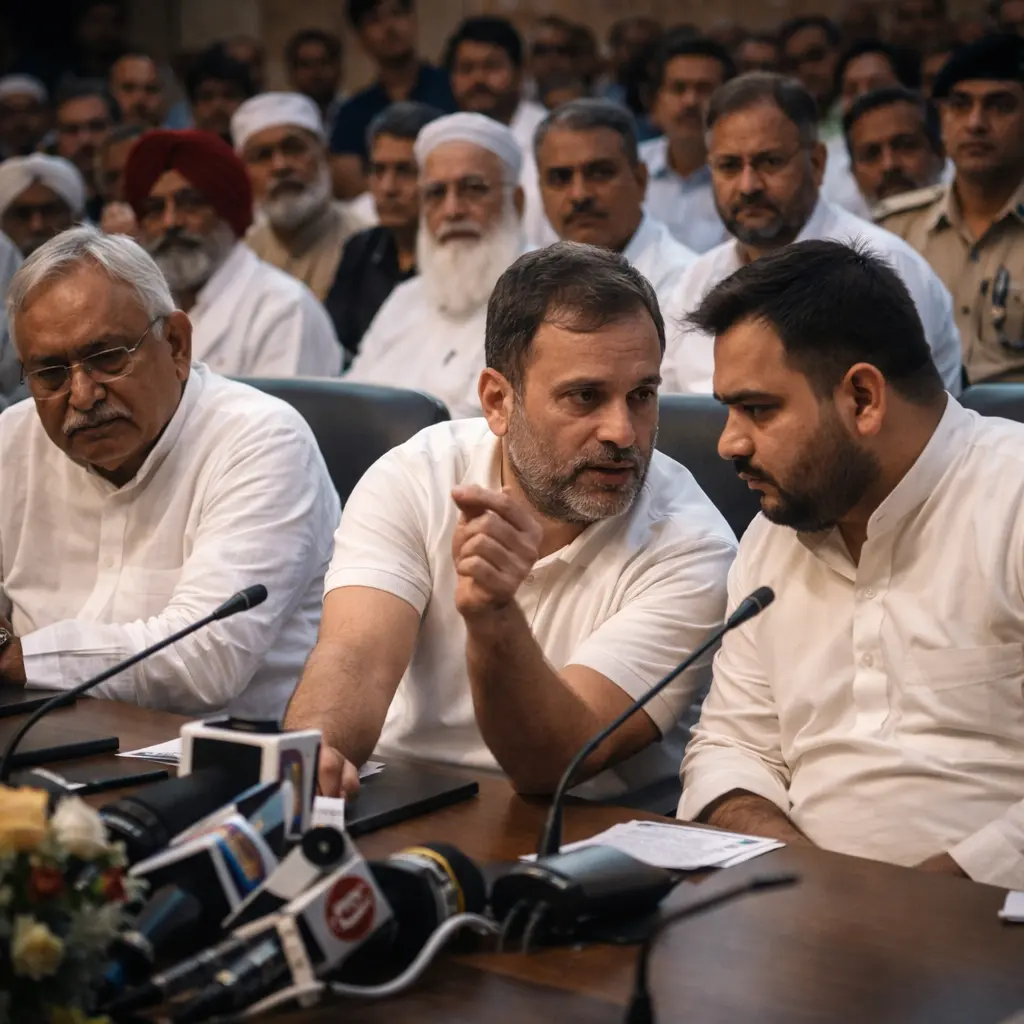
Nitish Kumar has called a cabinet meeting for April 14 — and in Bihar, where politics can pivot overnight, that is enough to set off a thousand theories about what comes next.
ihar has a particular talent for political theatre — and Nitish Kumar has spent two decades as its most compelling performer. So when the Chief Minister quietly schedules a cabinet meeting for April 14, the political class in Patna does not simply note it in the diary and move on. It reads it. It re-reads it. It calls old contacts, revisits old grudges, and begins assembling theories about what the meeting might signal, who it might be aimed at, and whether Bihar is once again on the threshold of one of its famous, disorienting political turns. The Bihar politics watchers know better than anyone that with Nitish Kumar, a calendar entry is rarely just a calendar entry.
What the meeting is — and what it might mean
On the surface, a cabinet meeting is routine governance. Ministers convene, files are cleared, decisions are formalised. Nitish Kumar’s government has held hundreds of them. But the timing of this particular meeting — the date, the mood in Patna, the whispers emanating from within the Janata Dal (United) and from the corridors of its alliance partners — has given this one an unusual charge. Political analysts who track Indian politics closely suggest the meeting may be less about administrative business and more about taking the political temperature inside the ruling coalition. Alliance pressures have been mounting quietly for months, and internal party dynamics within JD(U) have not been as settled as official statements suggest.
“In Bihar, the question is never whether something is about to change. The question is always: in which direction, and for whose benefit?”
The speculation around a potential leadership change, while not confirmed by any official source, is not emerging from thin air either. Bihar’s political history is filled with moments when a cabinet reshuffle or a seemingly routine institutional move became the first visible sign of a larger realignment. Those who have watched Nitish Kumar’s career long enough know that he tends to act from a position of calculation rather than impulse — which means that when he moves, there is usually a reason that becomes clear only in retrospect. For now, observers are left reading signals rather than statements.
The Nitish Kumar factor
To understand why a single cabinet meeting generates this level of scrutiny, you need to understand what Nitish Kumar represents in Indian politics. He is not simply a Chief Minister. He is Bihar’s most durable political institution — a leader who has governed the state across multiple alliance configurations, shifting between the BJP and the RJD and back again with a flexibility that his critics call opportunism and his supporters call pragmatism. Each of those shifts was preceded by exactly the kind of quiet, internal deliberation that the current atmosphere in Patna resembles. The leadership change speculation, however premature, stems from a rational reading of this history rather than mere gossip.
What complicates the picture further is the electoral timeline. Bihar politics does not exist in isolation from the national calendar. With elections approaching, every state-level decision carries an implicit federal dimension. How Bihar aligns itself, which alliance it enters those elections with, and who leads the JD(U) into that contest are questions that matter not just in Patna but in Delhi — where the BJP’s seat arithmetic in the Hindi heartland depends significantly on how firmly Nitish Kumar holds his ground, and whose ground he chooses to stand on.
Beyond the political algebra, there is something more human at play in Bihar’s current mood. Ordinary voters in the state have watched their political landscape shift so many times that they have developed a peculiar immunity to shock — and a sharp instinct for reading what each shift means for them practically. Will development funds continue to flow? Will caste arithmetic be recalculated in ways that benefit or disadvantage their community? Will the next election bring a genuine contest or another managed outcome? These are the questions that matter at the ground level, far more than whether a particular cabinet meeting signals a leadership change or simply the clearing of routine files.
What April 14 will actually produce remains unknown as of now. It may confirm every rumour circulating in Patna’s political circles. It may produce nothing more dramatic than routine cabinet decisions that leave analysts quietly recalibrating their theories. But in a state where political direction has shifted more times than most people care to count, the act of watching and waiting is itself part of Bihar’s democratic character. The cabinet meeting is scheduled. Nitish Kumar will preside. And Bihar — as it always does — will be paying very close attention to what he does next.
The Meeting That Has Bihar Holding Its Breath.