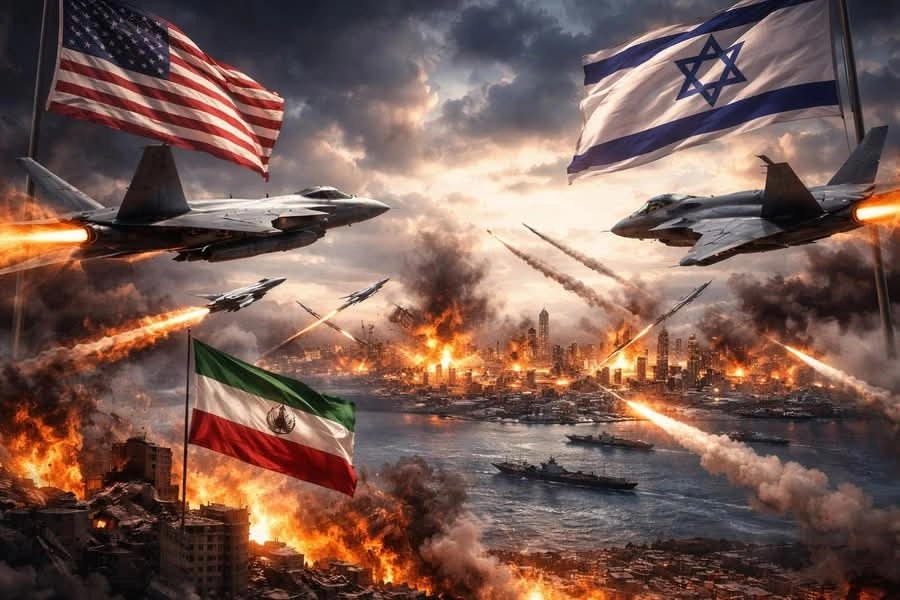
The recently brokered ceasefire, a delicate agreement reached only weeks ago after a protracted period of clandestine hostilities, is already beginning to fray. World leaders are growing more anxious, especially with reports of violations surfacing. Drone strikes in the Syrian desert and missile tests near Iran’s shores are just a couple of examples. With the Middle East still on edge, the big question is whether this fragile peace will last. Or are we, perhaps, on the verge of another round of instability, potentially upsetting the global economy?
It’s early April 2026, and the situation is precarious. The truce, announced in late March following secret discussions in Oman, was intended to ease the mounting pressure.
Iran had stepped up its uranium enrichment, the US had tightened sanctions, and both sides’ proxies were fighting. But now that new accusations are flying, the deal seems more like a break than a solution. This isn’t just abstract diplomacy for regular people, like traders in Mumbai who watch oil prices or people in New York who have to pay more for gas. It’s about making sure we have enough energy, keeping our supply systems running, and the very real risk of a bigger war.
The Fire That Started It
Tensions didn’t just explode out of nowhere. Go back to late 2025, when Israel’s targeted attacks on Iranian-backed militias in Lebanon and Syria made Tehran respond with waves of ballistic missiles. During President Harris’s second term, the US sent naval forces to the eastern Mediterranean in response. By January 2026, Houthi rebels in Yemen, who were equipped and sponsored by Iran, were attacking ships in the Red Sea, stopping 12% of global trade. Indian exporters, who depend on those routes for everything from clothes to medicine, were the first to feel the pain. Shipping data shows that container charges from Mumbai to Europe went up by 40%.
The ceasefire was a surprise. Brett McGurk, the US ambassador, traveled back and forth between Washington and Tehran, using Qatar’s good graces. Iran agreed to stop installing advanced centrifuges at Natanz in exchange for the US lifting secondary restrictions on its oil exports. But faith? That isn’t very common. In early April, satellite images showed strange activity at Iran’s Fordow enrichment complex, which is situated deep under a mountain. US officials said it was a “obvious violation,” while Iranian state television said it was just “regular maintenance.”
What does this mean for the average person? Every time these talks break down, oil prices go up a little bit. Last week, the price of Brent crude oil rose by $5 a barrel, reaching $92. That means greater gas costs and inflation in India, where 85% of energy comes from other countries, ahead of the monsoon season.
A timeline of violations piling up
No one here has clean hands. Here’s a short list of the flashpoints since the deal was signed:
April 2: Fighting in Syria. Israeli planes strike a convoy of Iranian weapons near Damascus. Tehran said the US was “complicit” in the drone attacks that US soldiers shot down over Iraq.
April 7: Gulf Patrol Fight. Iranian speedboats bothered a US destroyer in the Strait of Hormuz, which led to warning shots. There were no deaths, but the video went viral.
April 10: The Houthi Heist. Rebels took over a Greek ship in the Red Sea, saying it was carrying “prohibited arms.” Iran denied being involved, but US intelligence connected it to Revolutionary Guard networks.
April 12: The Case of the Missiles Iran launched a hypersonic missile that it labeled “defensive.” The US said it was unfair because it went beyond the range limits agreed in the truce.
These things don’t happen in a vacuum. According to UN estimates, more than 1,200 people have died in this proxy conflict since October 2025. Hezbollah has fired 5,000 rockets from Lebanon into northern Israel, forcing 60,000 Israelis to leave their homes. On the other hand, airstrikes by Israel have destroyed suburbs in Beirut, which has drawn criticism from throughout the world.
India is stuck in the middle, both physically and symbolically. New Delhi quietly buys 400,000 barrels of Iranian crude oil every day. This is a way for India to keep its relationship with Tehran while also working with the US in the Quad. A full collapse might mean having to rely on more expensive Saudi supplies, which would hurt the rupee.
Iran’s Nuclear Move and the Shadow of a Comeback
Iran’s nuclear program is at the center of it all. Trump killed the 2015 JCPOA deal, and Biden-Harris couldn’t bring it back to life. Iran has enough enriched uranium for three bombs right now if it rushes to make them. IAEA inspectors say they have 142 kg at 60% purity, which is very close to weapons-grade.
Tehran says it’s peaceful, but actions speak louder than words. The armistice included a “pause” on additional enrichment, although reports say that work is still going on at secret facilities. Last week, Israeli Prime Minister Netanyahu, who had just won an election, said, “Iran with nuclear is a death sentence for us and a tragedy for the world.”
This is connected to the Gaza mess around the world. The onslaught by Hamas in October 2023 is still being felt, with 42,000 Palestinians dying throughout Israeli operations. In February, a ceasefire in Gaza that Egypt helped to arrange fell apart when relief convoys were attacked. Some experts think that it has to do with Iran: Tehran gives money to Hamas, and a thaw in US-Iran relations puts pressure on Iran’s friends to back off. But that power is fading as violations grow.
Economic Ripples: From Oil Price Hikes to Supply Chain Problems
Forget about the maps and follow the money. Tensions in the Middle East are hurting the world economy. Central banks are worried about how volatile oil is. Last month, the IMF cut its growth prediction for 2026 by 0.3% because of “geopolitical uncertainties.”
Energy Markets: OPEC+ reduction in production aren’t enough to stop Iran from making threats. Europe is cutting back on Russian gas, but if Hormuz chokes, there could be blackouts.
Shipping Problems: Attacks in the Red Sea have forced 2 million TEUs to go across Africa each month, adding 10 to 14 days and $1 million to each trip.
India’s Point of View: The rupee fell to 85.5 against the dollar this week. The cost of diesel and fertilizer has gone up 15%, which is hard on farmers in Punjab and Maharashtra.
The stock markets show how nervous people are. Israel’s TA-35 index fell 8% in a month, and Iran’s TEDPIX is being manipulated but shows signs of nervousness. What about the energy sector on Wall Street? Up 12%, wagering on an extended period of uncertainty.
For customers, it’s the cost of groceries and delays on flights. Air India changed the routes of flights between Mumbai and Dubai because of “security.” Have you ever wondered how a drone in Yemen may make you pay more at the pump?
Proxy Wars and the Cost to People
People suffer more than just headlines. Since January, fighting between the Houthis and the US in Yemen has forced 200,000 people to leave their homes. Iranian fighters die in Syria’s deserts. Tehran says 600 are dead, but families back home say the number is more. Lebanon’s economy is already in bad shape and can’t handle more rocket fire.
Israel is having trouble with reservist fatigue; 300,000 have been called up since 2023. The Iranian government is facing protests over outages and a lack of water, which are made worse by sanctions. There is a lot of anger—do you remember Mahsa Amini? That spark is still there.
The US is on a tightrope. According to Gallup, 62% of Americans don’t want the US to get more involved. But giving up on Israel or letting Iran get weapons? Political death.
Big Players Speak Up: Alliances Are Changing
Quietly, Russia and China support Iran. Moscow sends drones, while Beijing buys oil. Putin sends Shahed UAVs to Ukraine to help them win. Xi wants cheap energy while his economy slows down.
Saudi Arabia is friends with both Iran and the US, but it also has bases there. Erdogan of Turkey criticizes Israel while doing business with everyone.
India? PM Modi is in a tight place. He pushed for “multi-alignment” at the G20 last year. Now that there are partnerships with Iran for the Chabahar port and tech links with Israel for I2U2, staying neutral is very important. This week, External Affairs Minister Jaishankar told people to “exercise restraint” in order to keep energy stable.
Can the ceasefire be saved? Ways to Move Forward
It’s not too late for diplomacy. On April 13, UN Secretary-General Guterres asked for “immediate verification tools.” Oman will host new discussions next week. There will be more picture ops than breakthroughs.
Optimists say that economic suffering is keeping things in check—Iran needs sanctions lifted, and the US wants steady energy. Pessimists think that Netanyahu’s tough cabinet and Khamenei’s problems with succession will end it.
The US midterms in November are a wild card. Harris can’t handle a crisis. Iran might push the limits to see where they are weak.
More than just breaks are needed for real improvement. Bringing back parts of the JCPOA, such limiting enrichment to 3.67% and having strong inspections, could help build trust. Discussions about regional security, even if Israel doesn’t want to, might include proxies.
US-Iran ceasefire teeters on the brink as Middle Eastern tensions flare.