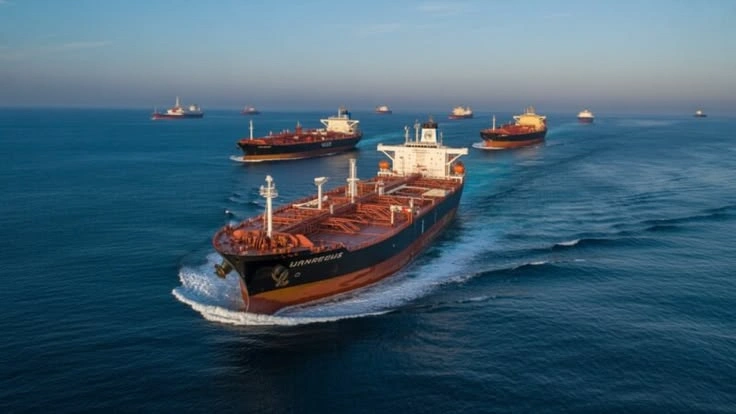
The US Navy’s growing naval blockade of Iranian ports is causing problems for trade all across the world. As tensions rise in the Middle East, ships that don’t want to go through the Strait of Hormuz are taking thousands of miles longer routes, which is raising oil prices and shaking up supply chains all over the world. India needs this chokepoint to get most of its electricity, therefore the stakes couldn’t be greater.
Where the Standoff Came From
It began off modestly, but now it’s anyone’s guess how far it will go. In early 2026, the US sent more ships to the Persian Gulf because of new claims that Iran was enriching uranium beyond the limitations allowed by the IAEA. By mid-March, what had started as patrols had grown into a full blockade of important Iranian ports like Bandar Abbas and Chabahar. Officials in the US said it is a “defensive action” to stop Iran from allegedly supporting proxy militias in Yemen and Lebanon. Iran, as expected, calls it an act of war.
This isn’t the first time. Since the tanker battles in the 1980s, the Strait of Hormuz has been a hot spot, but today’s blockade feels different. It seems more planned, with drone surveillance and carrier strike groups keeping people out of certain areas. Satellite images show that more than 20 US warships are in the right places to make a virtual wall around Iranian seas. Tankers that tried to pick up oil from Iran have been turned back, and some have been confiscated outright because of fresh restrictions put in place by the Biden administration’s successor.
About 20% of the world’s oil, or about 21 million barrels a day, goes through the strait. It’s not just numbers; it’s what keeps economies going from Europe to Asia. India, which gets more than 80% of its crude oil via here, is already suffering the effects. Refineries in Jamnagar and Kochi are looking for other possibilities, but there aren’t many.
How the Blockade Works in Real Life
Imagine a supertanker coming up to the strait and getting a stern radio warning from the USS Abraham Lincoln. Captains are changing their routes to go around Africa or through the Red Sea. This adds 10 to 15 days on the trip and uses more fuel. Ship insurance prices in the Gulf have gone up 300% in just a few weeks, leaving some routes completely uninsurable.
Important strategies are:
Exclusion zones: 50-nautical-mile boundaries surrounding Iranian ports, enforced by destroyers and submarines.
Boarding teams: US Marines check suspicious ships for cargo that is allowed.
Aerial overwatch: MQ-9 Reapers flying about in circles all the time, giving real-time information.
What did Iran do? Threats of placing mines and swarms of speedboats, like the tanker attacks in 2019. They’ve shot test missiles at ships, saying it’s “asymmetric deterrence.” There haven’t been any direct fights yet, but there have been a lot of near-misses. For example, a Greek-flagged tanker brushed against a US frigate last week, leading to a tense 12-hour standoff.
What does this mean for shipping every day? The cost of shipping goods from the Gulf to Mumbai has doubled. Shipping companies like Maersk are putting off sailings, leaving everything from electronics to grains stuck. One shipping executive said, “We’re not blocked, but it feels like sailing through a minefield with our eyes closed.”
Attacks on Global Shipping Routes
The Strait of Hormuz is more than simply a waterway; it’s the main route for oil from the Persian Gulf to the rest of the world. The threat alone stops flows, whether there is a blockade or not. This is where more than 90% of Gulf exports go, including those from Saudi Arabia, the UAE, and Iraq. Those quantities are also stuck since Iran is out of the picture.
Options for rerouting are bad. The Cape of Good Hope adds 3,500 nautical miles, and the Houthi attacks in the Red Sea make it much more dangerous. LNG carriers from Qatar are hit the worst. Last month, Europe’s winter gas supply fell by 15%, which forced Germany to start up coal units again.
India is in a terrible situation. It gets 40% of its oil from the Gulf, making it the third-largest oil importer in the world. Reliance Industries said that refining margins fell by 5% because of “geopolitical volatility.” Prices at Mumbai’s gas stations went up 8% in a week, which struck cab drivers and trucks first. Have you ever thought about how a fight between two ships far away may make gas prices go up?
Asian LNG spot prices went up 25%, while Brent oil prices stayed close to $95 a barrel, which is the most they’ve been since the Ukraine shock in 2023. Dry bulk carriers that move iron ore from Australia to China are fine, but anything that goes via the Gulf is not.
The economy is taking a big hit.
This embargo gives the markets a lot of uncertainty, which they don’t like. At first, Wall Street’s energy sector rose because of betting on oil, but shipping companies fell sharply, with Maersk down 12% and Hapag-Lloyd down 18%. The BSE Sensex in India wobbled as Adani Ports said there may be delays.
Inflation is rising: Higher shipping costs raise the prices of everything from plastics to fertilizers. If this keeps going on, the UN thinks that global trade will lose $50 billion a month. Food prices are going up in developing countries like India, Pakistan, and Bangladesh. Wheat from Black Sea routes is already stretched, and now it’s far worse.
Energy security is the true unknown. OPEC+ promised extra capacity, but Saudi Arabia is talking about cutting production if prices drop after the surge. Meanwhile, renewable energy sources are quietly happy; solar installations in Rajasthan rose by 20% as companies protect themselves from oil price volatility.
Businesses change quickly:
India wants more Russian crude oil through Arctic lines as it diversifies its sources.
Stockpiling: Singapore’s bunkers are full to the brim.
Tech fixes: AI route optimizers now take into account “blockade danger” indicators.
But little players get hurt. Goan fishermen say that naval patrols scare away tuna catches, and Omani date exporters lose millions.
People on the Frontlines
Sailors tell stories that are real. Captain Rajesh Patel, who was in charge of an Indian tanker leaving Dubai, said over a satellite phone, “We steam at flank speed into the strait, lights lowered, praying no one’s itchy on the trigger.” Iranian leaders, on the other hand, promise revenge. The Revolutionary Guards imply that they might close the strait completely, which would easily raise the price of oil to $150.
Diplomats are in a hurry. China, Iran’s biggest buyer, told Venezuela to be careful, but they secretly raised their purchases. The EU put new restrictions on companies related to the IRGC. India is walking a fine line. Last week, Prime Minister Modi’s team hosted Gulf envoys to press for de-escalation while building up strategic reserves.
What do people think? People in Tehran are protesting and chanting “death to America,” while breadlines are becoming longer because exports are drying up. Polls suggest that 55% of Americans support the blockade, but petrol costs that average $4.20 per gallon make them unhappy.
India’s Balancing Act During the Crisis
This is very relevant to a country like India. With 5 million barrels going through Hormuz every day, any problems might lead to blackouts or shortages. Experts warn that the government’s release of 2 million tons from strategic reserves is only a temporary fix. ONGC speeds up the Krishna-Godavari gas fields, and Reliance pushes biofuels.
Piyush Goyal, the trade minister, said it was “manageable,” but industry groups don’t agree. Because they didn’t have enough parts, car companies like Tata had to shut down factories. On the plus side, it speeds up “Make in India” by filling in the gaps in petrochemical production with local chemical companies.
Longer routes entail more pollution: detours add 2 million tons of CO2 to the air every day. Activists are asking if spilled fuel from naval operations pollutes the Gulf waters.
Ways to Calm Things Down?
Hard talks are coming. The UN Security Council meets on Friday. Russia and China reject US resolutions but support Qatar’s efforts to mediate. There are rumors of cyber attacks on Iranian radars, and the “maximum pressure” feelings from the Trump period are back.
Iran could change its mind and send goods to China by land, which would make it less reliant on ports. The US might withdraw the blockade so that the IAEA can inspect. But both sides are sticking to their guns.
US naval blockade tightens grip on Iran; shipping crisis in the Strait of Hormuz grows.