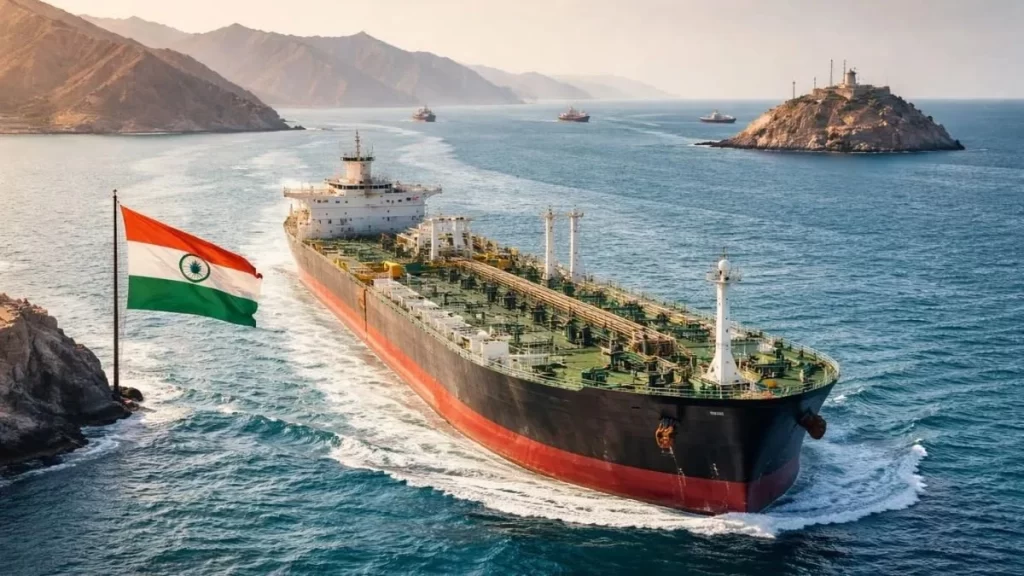
Mumbai’s bustling harbor is bracing for a quiet milestone. The Indian-flagged LPG tanker Jag Vikram is steaming toward its home port, expected to dock any day now. It’s not just another gas carrier pulling in after a routine voyage. This one has navigated the choppy waters of the Strait of Hormuz—one of the world’s most tense maritime choke points—right after a fragile ceasefire eased restrictions between Iran and Israel. In a region where energy routes can turn into flashpoints overnight, Jag Vikram’s journey feels like a small win for global trade, especially for India, which guzzles liquefied petroleum gas to fuel kitchens and factories across the country.
Why does this matter? India imports over half its LPG needs, with millions of households relying on subsidized cylinders for cooking. Any snag in the Gulf—home to 40% of the world’s seaborne oil trade—ripples straight to your local distributor. As Jag Vikram approaches, it’s a reminder of how quickly supply chains can fray, and how they’re holding up, at least for now.
The Tense Backdrop: What Sparked the Hormuz Drama?
The situation in the Strait of Hormuz didn’t suddenly explode. By the middle of 2025, clashes between Iran and Israel had intensified, evolving into a maritime conflict that some observers labeled a shadow war.
Iranian forces seized vessels, drones buzzed tankers, and insurance rates for ships transiting the strait skyrocketed by 300%. The 21-mile-wide waterway, squeezed between Iran and Oman, handles 20 million barrels of oil daily. Block it, and prices spike globally—India felt that pinch last year when crude jumped 15%.
The ceasefire, announced just weeks ago after backchannel talks involving the US and Gulf states, promised safer passage. But trust is thin. Iranian proxies still patrol, and Israeli naval assets linger nearby. Enter Jag Vikram, a 92,000-cubic-meter vessel owned by Mumbai-based shipping firm Essar Shipping. Loaded with LPG from Qatar’s Ras Laffan terminal, it slipped through Hormuz on April 10, one of the first post-ceasefire transits for non-military ships. Captained by a seasoned Marathi officer from Ratnagiri, the tanker dodged no major incidents, but crew reports spoke of heightened vigilance—radars on, speeds steady.
For India, this isn’t abstract. The country imported 12.5 million tonnes of LPG in 2025, much of it via Hormuz. Disruptions last year forced Reliance and Indian Oil to reroute cargoes around Africa, adding $5-7 per tonne in costs. Families in Pune or Delhi might not notice, but it meant tighter subsidies and occasional shortages in rural areas.
Jag Vikram’s Voyage: From Qatar Docks to Mumbai’s Embrace
Picture this: Jag Vikram sets sail from Qatar on April 5, tanks brimming with ethane-rich LPG destined for Indian petrochemical plants. The route is familiar—south through the Gulf of Oman, then the critical Hormuz pinch. Pre-ceasefire, many tankers waited days offshore, rerouting via Saudi ports. Not this one. With the truce holding (barely), it cleared Iranian waters without escort.
Key voyage stats: 1,200 nautical miles covered; average speed 13 knots; no reported delays.
Cargo details: 85,000 tonnes of LPG, enough to fill 2.5 million household cylinders.
Crew insights: Twenty-two Indian seafarers are currently on board, using satellite technology to keep an eye on potential Houthi threats in the Red Sea.
Docking in Mumbai’s Jawaharlal Nehru Port Trust (JNPT) around April 15-16, it’ll offload to terminals feeding Bharat Petroleum’s refineries. Local unions are prepping—dockworkers expect a smooth unload, but they’re watching weather forecasts for Arabian Sea swells. One long-time JNPT hand told reporters off-record, “We’ve seen worse, but Hormuz crossings always keep us on edge.”
This isn’t Jag Vikram’s first rodeo. Built in 2013 at Hyundai’s South Korean yard, the tanker has plied Gulf-India routes for years, carrying everything from propane to butane. But this trip stands out. It’s among the initial five vessels—two Indian, three UAE-flagged—to test the ceasefire’s mettle.
India’s Energy Lifeline: Why Hormuz Haunts New Delhi
India’s energy story is tied to the Gulf like few others. With domestic production covering just 5% of LPG needs, imports are king. Qatar supplies 40%, Saudi Arabia 25%, UAE the rest. Hormuz is the artery. A full blockade could slash supplies by 30%, pushing retail prices up 20-30% and hitting the poor hardest—think Ujjwala scheme beneficiaries in Uttar Pradesh villages.
Government data paints the stakes:
Metric 2025 Figure Potential Hormuz Blockade Impact
LPG Imports 12.5M tonnes -4M tonnes (30% drop)
Household Dependence 300M+ cylinders/year Shortages in 20% rural homes
Subsidy Burden ₹25,000 crore +₹8,000 crore extra
Petrochem Feedstock 60% from imports Production halts in Gujarat hubs
Prime Minister Modi’s team has pushed diversification—LPG from the US and Australia via Pacific routes—but costs bite. Last year’s disruptions cost the exchequer ₹4,500 crore. Now, with Jag Vikram’s arrival, Oil Minister Hardeep Puri hinted at “normalized flows” in a recent tweet, signaling relief.
Yet, questions linger. Can India stockpile enough? What if Iran tests the truce with a drone swarm? These aren’t just hypotheticals—they’re what keep planners in Vishakhapatnam up at night.
Global Ripples: From Gulf to Global Markets
Jag Vikram’s smooth sail eases more than Indian worries. Europe, still weaning off Russian gas, eyes Hormuz for LNG alternatives. China, India’s rival in imports, rerouted 10% of its tankers last year, inflating freight rates. Brent crude dipped 2% post-ceasefire, from $82 to $80—a boon for petrol pumps in Bengaluru.
Shipping giants like Maersk paused Hormuz runs; now they’re resuming. Insurers, who hiked war-risk premiums to $1 per barrel, are pulling back. Experts, however, sound a note of caution. The strait witnessed fifteen separate incidents in 2025, encompassing seizures, the laying of mines, and outright attacks.
A UK Maritime Trade agency report noted 50+ vessels diverted.
In India, this connects to larger changes. The government’s Sagarmala project is designed to strengthen coastal refineries, with a goal of reducing import dependence by 10% by the year 2030. Private companies, such as Adani, are looking at potential deals in Qatar. However, Jag Vikram highlights a significant vulnerability: 90% of India’s trade is conducted via sea routes, much of it through critical chokepoints like Hormuz, Malacca, and Bab el-Mandeb.
Voices from the Ground: Seafarers, Traders, and Families
Talk to a Goan seafarer family, and Jag Vikram’s story hits home. “My son sails these routes,” one mother shared. “Ceasefire or not, every call home feels like waiting for rain in monsoon.” Mumbai’s Crawford Market traders are talking about it: LPG prices are stable. The cost of a cylinder remains at ₹800, with no increases in sight.
Environmental considerations also come into play. By reducing wood-burning pollution, LPG contributes to India’s net-zero objectives.
A Hormuz snag? Back to coal and kerosene, spiking emissions.
What does this mean for you, reading this in Pune or Kochi? Stable cooking gas for now, but a nudge to think about energy security.
India’s LPG Tanker Jag Vikram Nears Mumbai: A Bold First Crossing of Hormuz Post-Ceasefire Easing