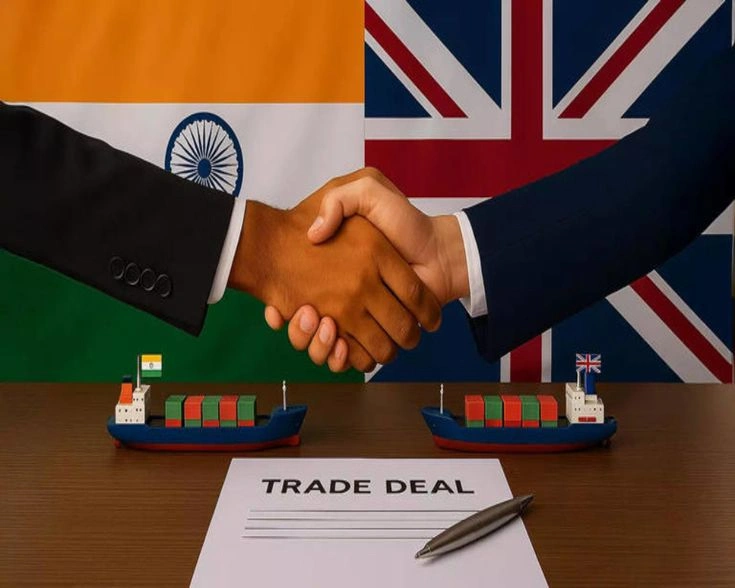
India is working hard to strengthen its trading links with Southeast Asian countries. Recent deals that focus on supply chains and exports show a change in strategy that has caught everyone’s attention in the middle of global tensions.
The Beginning of the Partnership
The story begins in the early 2000s, when India first glanced to the east. Under Prime Minister Narendra Modi, the “Look East” policy changed to “Act East,” which focused on commerce, security, and cultural ties. ASEAN, a group of ten countries that includes Indonesia, Thailand, and Vietnam, has played a big role in this. Last year, commerce between the two countries reached around $80 billion. India’s exports to the region have been continuously rising, even though the country has a trade deficit.
These connections go back a long way. The India-ASEAN Framework Agreement on Comprehensive Economic Cooperation began in 2009 and includes trade in products, services, and investments. Tariffs went down on thousands of goods, making it easier for Indian pharmaceuticals, textiles, and machinery to get in. But there were still disparities; India’s imports, especially electronics and palm oil, were higher than its exports. Now, new talks are trying to fix that.
What does this mean for India? Southeast Asia’s busy factories and ports provide a way to get away from China during supply chain problems during the outbreak. For a country like India, which has a lot of workers and tech-savvy young people, it’s a chance to move up the global value chains.
New Agreements in the Spotlight
In 2025, things got heated as India renegotiated the ASEAN trade deal to fix imbalances. Indonesia is now India’s most important ASEAN partner, with $28 billion in trade between the two countries in FY25. Officials from both sides met recently to talk about how to make the supply chain stronger. This includes things like semiconductors, electric vehicles, and agricultural products.
Some of the most important successes are lower tariffs on Indian marine products, fruits, grains, and drugs going to Indonesia and Thailand. Malaysia is interested in textiles and machinery from India, whereas Vietnam is interested in organic chemicals. These aren’t just pledges on paper; they are underpinned by rules that change the 2009 framework, notably the Trade in Services accord from 2014.
Moves in sub-regions provide flavor. The Mekong-Ganga Cooperation makes it easier for people to get around, and Indo-Pacific projects are linked to maritime security. India is also seeking for digital agreements on shared infrastructure and cybersecurity. What if these partnerships help India get a piece of the $3 trillion ASEAN market?
In boardrooms in Pune or Mumbai, executives are already making changes. One exporter from Mumbai said that new rules that speed up customs might cut delivery times by weeks.
Supply Chains Get a New Look
The true game-changer here is the supply chain. After COVID, problems showed that we were too dependent on a few countries. India aims to be the second hub, providing industries with land and workers. Southeast Asia agrees. Mari Elka Pangestu, Indonesia’s trade adviser, termed India a partner to “deepen and reinforce” regional connections, avoiding the security hazards of having too many people in one place.
For example, Vietnam is a powerhouse in electronics, while India’s PLI program attracts companies like Foxconn to set up shop in Chennai. New agreements make laws of origin easier to follow, so parts may move smoothly. For example, Indian steel can go to Thai auto manufacturers and then finished automobiles can come back. Iron ore and textiles exports went grown 15% in only the last quarter.
There are still problems. India’s infrastructure is behind; ports like Mundra can handle a lot of traffic, but red tape slows things down. The 2014 India-ASEAN Investment Agreement is an example of an agreement that protects investments. Bilateral FTAs with the UAE and Australia show how things work. ASEAN will probably follow suit soon.
Here are some quick facts on changes in the supply chain:
India’s electronics exports to ASEAN are up 20% from last year.
Key industries: pharmaceuticals (sending insulin to Indonesia) and textiles (sending yarn to Vietnam).
Goal: Lower reliance on China for essential minerals by 10%.
This isn’t just a thought. A farmer in Maharashtra who ships mangoes to Singapore knows this: lower duties mean greater prices.
A Boom in Exports Is Coming
India’s best area is exports. Pharma is in charge, with generics flooding the marketplaces in Thailand and Malaysia. Basmati rice and spices are examples of agricultural exports that are aimed at Indonesia’s increasing middle class. Next comes machinery and auto parts, which are helped by “Make in India.”
The numbers illustrate the story: exports to ASEAN recently topped $34 billion, while imports were $47 billion. The goal of the new deals is to change that. Thailand wants more Indian shoes and ecological goods, while Malaysia wants more oil products. The 2014 Services Agreement even includes IT and tourist services.
What makes India better? Size. It’s also a goldmine for businesses, with 1.4 billion people. ASEAN companies are interested in Indian electric vehicles and renewable energy. If things keep going the way they are, commerce between the US and Indonesia might reach $50 billion by 2027.
Relatable angle: Have you ever thought about how your smartphone’s chips might get to Hyderabad next? These agreements make it real.
Problems and Obstacles
But it wasn’t a smooth ride. Trade imbalances bother Delhi because ASEAN’s inexpensive imports overwhelm the market. Renegotiations want better conditions, but ASEAN doesn’t want to open up completely. Geopolitics is on the rise: China’s Belt and Road is in charge, and America’s friendshoring is picking sides.
Gaps in infrastructure are bad. Projects that take a long time to finish hurt trust. Singapore is India’s main gateway to ASEAN, with 80% of commerce going through there. It is very important to diversify to Vietnam or the Philippines.
There is also a struggle between labor and standards. India has to teach more people because of talent deficits, while ASEAN wants eco-compliance. But hope is still there. Military drills and visits from high-ranking officials make things stick together.
Voices from the Ground
Business leaders are happy. According to FICCI’s research, 70% of exporters think these ties will lead to 25% increase. During negotiations in Delhi, Indonesia’s envoy underlined the “complementarities” in value chains.
There is a lot of activity in Gujarat’s textile hubs. One owner said, “We compete on quality now that there are new rules.” Consumers also profit since cheaper imports make up for higher costs.
It’s a good idea around the world. With Trump back in the White House advocating “America First,” India’s impartial attitude is appealing. What are the EU’s rules for the supply chain? The India-ASEAN agreements line up early.
Wider effects for India
Jobs are growing at home. There could be millions of jobs in Tamil Nadu’s supply chain parks. Exports help the forex market, which eases the strain on the rupee. IT companies in Pune are interested in data centers in ASEAN.
India is a stabilizing force in Southeast Asia. Less dependence on China implies growth that lasts. Think about how regional chains deal with shocks better.
India’s playbook gets bigger: FTAs with the UAE and Australia establish examples. What’s next? Maybe further liberalization of services.
What does it mean to be successful? By 2030, trade will be fair, manufacturing will be busy, and everything will flow smoothly.
Wins in the Real World
Spotlight Indonesia: Trade has doubled in five years. Marine products and pharmaceuticals are India’s top exports, while Indonesian coal and oil come back. Nickel joint partnerships for batteries are starting to appear.
Thailand: cars and processed foods. A facility in Chennai now sells to markets in ASEAN.
Textiles and steel are important in Vietnam. India is becoming a more important partner in the US-China trade battle.
These aren’t just one thing. Act East ties them into security by having joint exercises in the South China Sea.
India strengthens trade ties with Southeast Asia: New deals change how goods are shipped and sold.