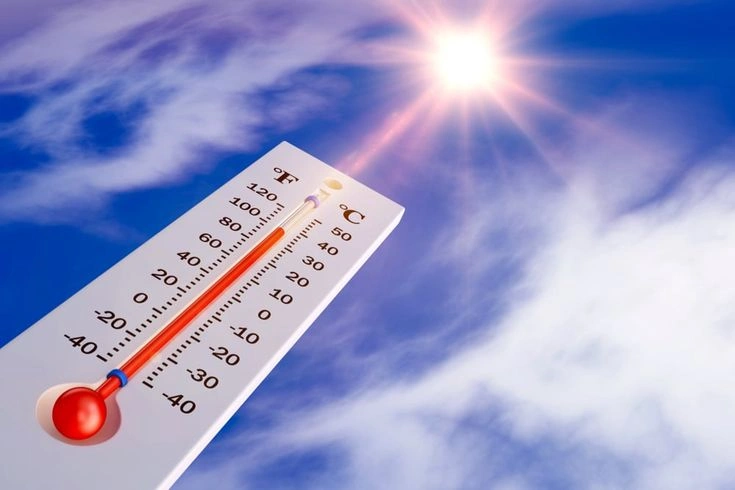
The UN’s latest climate report is shocking because it says that global temperatures are rising at a breakneck speed—faster than even the most dismal models anticipated just a few years ago. This week’s report comes out in the middle of a series of terrible heatwaves in Asia and Europe. It paints a clear picture: we’re heading toward 1.5°C of warming much faster than expected, and the effects are already being felt hard. This isn’t just data for a globe that is already dealing with floods, droughts, and record-breaking monsoons like the ones that hit India last year. It’s time to wake up. What does this mean right now? Because the chance for real change is closing faster than we expected.
The Fast Pace of Warming
The scientists who wrote the paper used data from satellites, ocean buoys, and ice core samples that go back decades to show that the average global temperature has risen by around 1.2°C since before industrialization. That’s not a sluggish creep; it’s sped up a lot since 2020. Last year was the warmest summer ever, with heat domes frying portions of the Arctic and raising sea surface temperatures to record highs.
What is making this happen? Yes, greenhouse gasses, but the paper focuses on tipping points that happen too soon. As permafrost in Siberia and Canada thaws, more methane is released, which acts like a feedback loop that traps even more heat. Oceans, which soak up 90% of extra heat, are also reaching their limits. For example, coral bleaching episodes are killing reefs from Australia’s Great Barrier Reef to India’s Andaman Islands.
This is very near to home in India. The subcontinent, which is home to about a fifth of the world’s people, saw a terrible heat wave in 2025 that killed hundreds of people in Rajasthan and Uttar Pradesh. Farmers in Punjab saw their wheat yields drop by 15% because of rains that came and went. The paper says that South Asia is a hot area and that the Bay of Bengal would see stronger cyclones. Picture this: places like Mumbai and Chennai, which are already prone to flooding, will have storms that are much stronger by the end of the decade.
At a glance, the UN data shows these main trends:
Since 2010, the average temperature around the world has risen by 0.2°C every decade, which is twice as fast as it did in the 1980s.
The sea level is increasing by 4.5 mm every year, which is a threat to 1 billion people who live on the shore.
The Arctic ice is melting 13% every decade, which makes global warming worse.
These numbers aren’t just numbers. They’re the science that needs to be heard.
Why Models Were Wrong
For a long time, climate forecasts have been our guide, but this analysis says they didn’t see how bad things would get. The IPCC’s earlier estimates suggested that 1.5°C would pass around 2030 to 2050. What now? Maybe by 2030, if emissions don’t drop too much.
Scientists may have missed short-term changes, such the El Niño that supercharged heat in 2023–2024, or downplayed “zombie fires” in boreal woods that burn underground and release CO2 all year. As countries work to improve air quality, aerosol pollution is going down. This has made some warming less noticeable by reflecting sunlight. The ground is hotter when the skies are cleaner.
People all throughout the world still depend on fossil fuels. China and India, which need coal to fuel expansion, have built more than half of the new plants since 2020. But the research says good things about India’s solar effort, which aims to install 500 GW by 2030 and has already installed over 100 GW by 2025. But it’s not enough. What if we asked ourselves, “Are we putting too much faith in technology to cure things while ignoring the essentials, like cutting back on meat eating that is causing deforestation?”
The story of India adds grit here. Since 2000, the country’s emissions have tripled, yet per person, they are much lower than those in the US or Europe. The research says that “fairness” means that wealthier countries should pay for adaptation in places like the Maldives or Bangladesh, where rising waters could force millions of people to leave their homes.
What Happens in the Real World: From Fields to Cities
Everyday effects are where the rubber meets the road. Agriculture, which employs half of India’s workers, is in trouble. The study talks about crop failures, such rice paddies in Bihar drying up and coffee plantations in Karnataka moving up the hill as frost lines disappear. If nothing changes, maize yields could drop by 20–30% by 2040.
This makes things worse. The Himalayas’ glaciers, which feed rivers for 2 billion people, are melting twice as quickly as they were in the 2000s. India and its neighbors are fighting over dams in the Ganges valley because it could run out of water in the summer.
Cities aren’t safe either. Delhi’s air is already bad for you, and long-lasting heat islands will make it far worse. The research talks about “wet-bulb” temperatures, which are around 35°C and too humid for people to cool off. These temperatures are now common in Pakistan and may soon reach Indian cities.
The health costs are also rising. In the Western Ghats, vector-borne diseases like dengue are moving to higher altitudes. Extreme weather forced 30 million people to move around the world last year. In India, floods alone forced 2 million people to move within the country.
Here are some examples of sectors that are at risk:
Food Security: by 2050, the world will lose 10–15% of its calories.
Biodiversity: At 1.5°C, 20% of species are at risk of going extinct.
The World Bank says that the economy will lose $2.8 trillion a year by 2030.
Communities change in different ways. In Kerala, restoring mangroves protects the coasts, and in Gujarat, solar-powered drip irrigation preserves farmland. But how do you scale this? That’s the main point.
Who’s Blaming Who, and What’s the Solution?
Emissions make the world look divided. The US and EU, two historical giants, have curtailed production but moved it to Asia. China is the biggest emitter of CO2, accounting for 30% of the world’s total. India is next, with 7%, and this number is rising quickly as the country industrializes.
Renewables give us hope. Since 2010, the cost of solar energy has dropped by 90%, and the cost of wind energy has dropped even more. The paper praises India’s International Solar Alliance, which brings together 120 countries. Electric cars? India wants 30% of cars to be electric by 2030, but the charging infrastructure is behind.
Policy is behind reality. COP29 in Baku fell short on money—wealthy countries promised $100 billion a year but only gave half. The reserves for loss and damage for vulnerable states are only $700 million, which is nothing compared to the trillions that are needed.
Direct air capture, which pulls CO2 from the sky, is a great new technology, but it costs $600 a ton. Nature-based solutions, such as planting trees on 1 billion hectares, could store 10 gigatons of carbon each year. India’s Green Mission aims to cover 26 million hectares, creating jobs and carbon sinks at the same time.
People are important too. Have you ever thought about how your daily choices add up? Using public transportation instead of private cars in Mumbai decreases personal emissions by 40%. Diets based on plants? They cut down on food footprints overnight.
Voices from the Front Lines The study includes stories that make the numbers more real. A fisherman in Tamil Nadu is sad that the oceans are getting warmer and sardines are becoming less common. A Mongolian herder watches as grasslands turn into desert. Women in rural Odisha, India, have to walk farther to get water, which makes their lives harder. Protests in Davos and Delhi show how impatient people are: why promise when you can’t deliver?
Governments don’t always act the same way. The EU’s carbon border tax puts pressure on exporters, while the Biden administration’s subsidies helped clean tech. India’s promise to reach net-zero by 2070 depends on green hydrogen and biofuels.
UN Climate Alert: Temperatures Rising Faster Than Expected—Immediate Action Needed