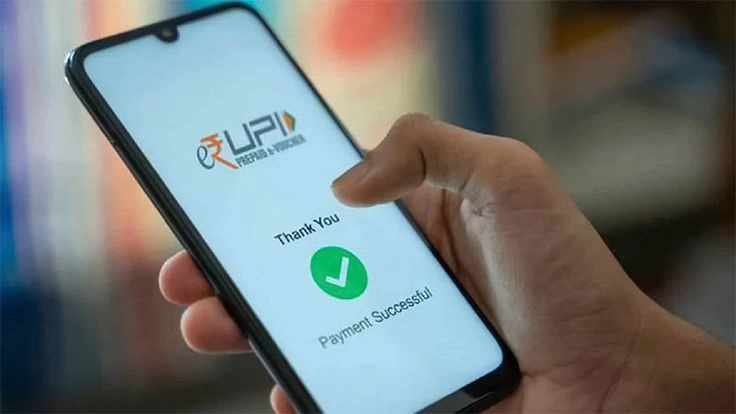
India’s digital payments landscape just hit a significant milestone this week, in a week that’s got everyone talking. The National Payments Corporation of India (NPCI) announced record UPI transactions topping 18 billion in volume for the first time ever. That’s right – 18 billion taps, swipes and scans that powered everything from street-side chai to high-end mall splurges. It’s more than a number on a spreadsheet – it’s a snapshot of how deeply the Unified Payments Interface (UPI) has become part of life across the country as of April 17, 2026. What does this indicate for the future of money here with Indians increasingly dumping wallets for phones?
This is not a passing fad. UPI, the home-grown system introduced by NPCI in 2016, has suddenly made India the world’s digital payments powerhouse. Transaction values touched ₹25 lakh crore ($300 billion) in the last week alone, jumping almost 60 per cent over the same period a year ago. Guess that’s why it’s trending throughout Twitter threads and WhatsApp forwards. But why now? And will this momentum carry?
Figures that tell the story
Let’s get into it. UPI handled 18.05 billion transactions between April 10 and April 16, setting new records, according to NPCI data. For comparison, that’s more than quadruple the amount from four years ago when the epidemic first spurred digital usage. The development trajectory has been stupendous. From 74 billion transactions at ₹126 lakh crore in 2022 to 131 billion at ₹200 lakh crore in 2024 and the projections for 165 billion at ₹280 lakh crore by the end of 2025. Q1 trends of this year itself show that 45 billion transactions will touch ₹70 lakh crore.
Key take-aways of the week:
Peak Day: April 14, 2.7 billion transactions Peak Hour: Transactions peaked in the evening hours as individuals finished up their days with fast online purchases.
Value growth: Total value jumped to ₹25.2 lakh crore, led by low-value P2P transfers and increased merchant payments.
App leaders: PhonePe was the leader with 48% market share, followed by Google Pay at 37%, and Paytm clawing back at 9%. New players like Navi and Cred are getting there too.
These are not abstract numbers. Here’s a thought: In a country of 1.4 billion people, where portions of the countryside still prefer cash, the rise of UPI says a lot about true change. It may not raise an eyebrow for urban millennials in Mumbai or Bengaluru to scan a code for groceries, but even tier-2 areas such as Jaipur and Lucknow are swiftly catching up.
From Humble Beginnings to Global Craving
UPI didn’t explode overnight. It was an effort by NPCI to integrate disparate payment methods, NEFT, IMPS, cards into a seamless app experience. By 2017, early adopters like BHIM (the government’s app) were humming, but the true takeoff came after demonetization in 2016. Then suddenly people wanted an alternative to the disappearing ₹500 notes.
Fast forward to present. UPI’s QR-code wizardry means you can pay anyone, anywhere and immediately, with no costs for most users. No bank details involved, only a virtual payment address (VPA) like yourname@upi. HDFC, SBI and ICICI banks rushed in, powering applications which now account for 80% of India’s retail digital payments.
It’s turning heads the world over. Last year, Singapore’s PayNow integrated with UPI, enabling easy foreign remittance payments for Indians. The UAE and France are trialling similar integrations. Even the US is taking notice – Visa and Mastercard have struck partnerships to introduce UPI-like tech to America. India’s model? Cheap. Accessible. Scalable. No wonder that it has been hailed by the Reserve Bank of India (RBI) as a pattern for emerging countries.
But a question arises: If UPI can conquer India, why has the world not caught up?
Everyday Magic How UPI Powers Pulse of India
Step into any kirana store in Pune or dhaba by the roadside in Delhi and you will see the QR code placed on the counter, the telltale sign. That’s UPI in action, with an average of 12 billion transactions a month. It’s not just convenience – it’s empowerment.
Take little merchants. Fruit vendor loses revenue in Maharashtra’s markets waiting for change Now, with UPI Lite – released last year for modest transactions under ₹500, they complete payments in seconds, with no internet needed for cached ops. Uttar Pradesh farmers get subsidies directly in UPI-linked accounts, no middlemen involved
These figures tell a compelling story. According to the RBI data, UPI transactions in rural areas grew 45% on a year-on-year basis. Women have been mostly excluded from finance and now make up 40 percent of transactions – apps like GPay’s sound-based payments are also useful for the blind or low-literacy users.
And then there’s the festival bump. UPI volumes surged 70% on Diwali 2025, with gold merchants and e-commerce giants like Flipkart riding the wave. Record this week? Part of that trend is being driven by tax returns hitting accounts and summer holiday bookings heating up.
Tech Under the Hood: What Drives UPI
At its heart, UPI is a real time gross settlement mechanism. So when you scan and pay, your bank’s UPI switch sends the request through NPCI’s servers and within two seconds, your account is debited and the recipient’s credited. It is based on the Immediate Payment Service (IMPS) backbone, with layers of encryption and two-factor auth with UPI PIN.
New ideas keep coming up. UPI 2.0 permitted credit lines on apps like Amazon Pay, which allow customers to borrow small sums at the time of checkout. UPI-PayNow cross-border payments process billions of dollars in remittances every year, offloading the burden on SWIFT.
Fast Lane Challenges
Every narrative is not complete without challenges. Cyber police statistics show that fraudster scams are growing smarter with phishing scams through phony UPI links increasing 30% last quarter. RBI nudges NPCI to improve AI fraud detection. Apps must now have biometric log-ins for large value txns.
Then, glitches of interoperability. Not all small banks have called their quits, leaving some rural users high and dry. This is being addressed by NPCI with the UPI Small Finance Banks effort.
The experts are also worried about too much reliance. And what if the servers crash during heavy demand like the little downtime in March? And with 90% of transactions under Rs1,000, is it in danger of undercutting established banking?
India-specific viewpoints give flavour. UPI’s invoice sharing feature eases tax filing for SMEs in a GST-heavy economy. But the digital divide remains. In Bihar villages, cash still rules with barely 60% smartphone penetration.
One scan on each job, boosting the economy
This spike has rippling effects. Formalization is increasing and unorganized industries are contributing more to GDP through verifiable digital trails. The stock markets applauded also, with NPCI partners like Infosys and TCS seeing share hikes post-announcement
Govt is all in. The Digital India effort links UPI to Aadhaar and Jan Dhan accounts, adding 500 million new users since 2020. UPI’s ‘Made in India’ branding gets a jolt from PM Modi’s vocal-for-local push
It’s a flex globally. India’s push for the UPI at G20 conferences has led to Brazil’s Pix and Europe’s TIPS. Remittances are cheaper via UPI corridors, a $100 billion annual inflow.
India’s UPI boom: Cashless revolution in full swing as transactions hit record high