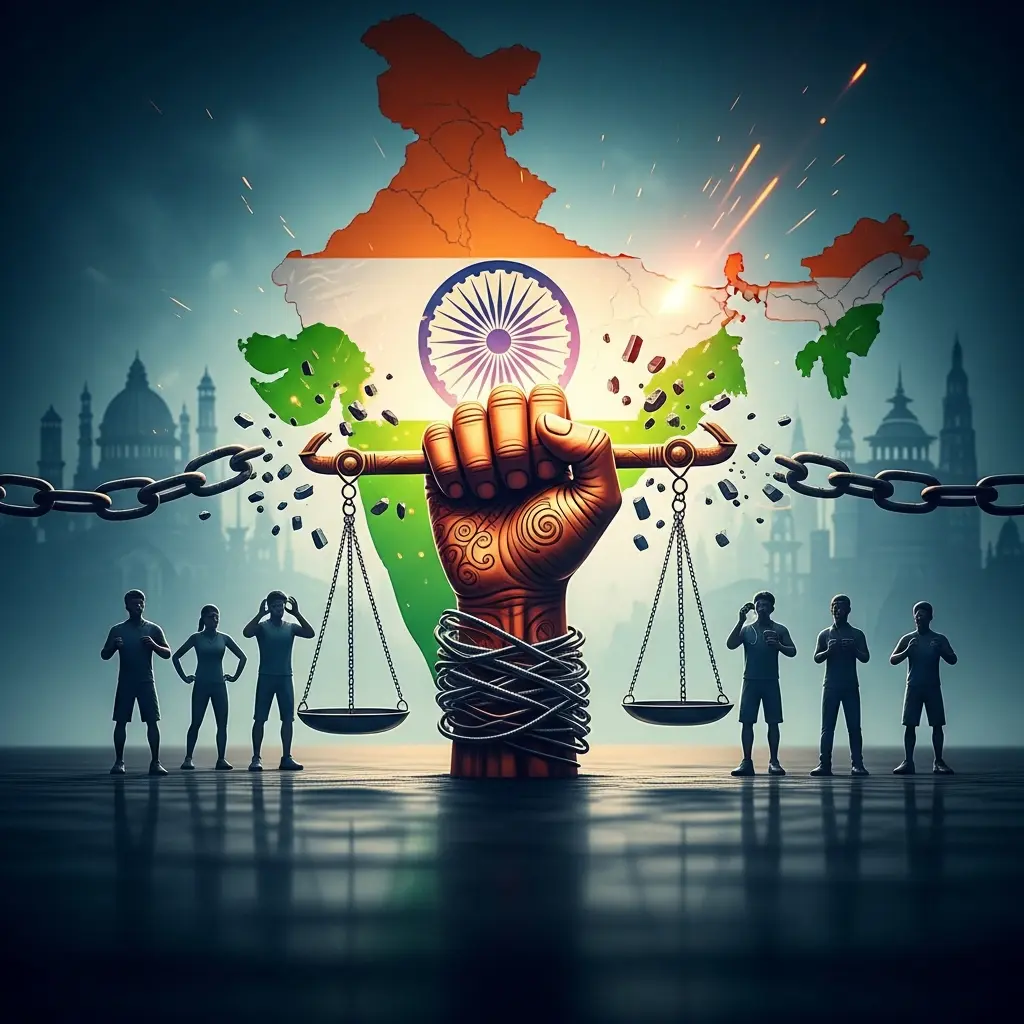
A landmark anti-doping law reform signals India’s most serious effort yet to clean up its sports culture — targeting coaches, medical staff, and suppliers alongside athletes.
For years, the conversation around doping in Indian sports has centred almost entirely on athletes — their bans, their failed tests, their careers cut short. But a sweeping new reform effort gathering momentum in New Delhi is set to change that framing permanently. India’s proposed anti-doping law reform doesn’t just go after the sprinter who injected a banned substance or the weightlifter who tested positive. It goes after whoever handed them the syringe.
The proposed legislation would criminalize the supply and administration of performance-enhancing drugs, making it illegal for coaches, physiotherapists, nutritionists, and medical personnel to facilitate doping — not just the athletes who use it. It is, by design, a systemic approach: dismantle the entire doping ecosystem rather than continue the exhausting cycle of catching individuals at the finish line.
“India isn’t just trying to reduce numbers on a violations list. It’s trying to rebuild the culture of sport itself — from training ground to podium.”
The urgency behind this reform isn’t hard to explain. India has ranked among the world’s highest for doping violations in recent years – a fact that has drawn sharp criticism from the World Anti-Doping Agency (WADA) and cast a shadow over the country’s otherwise impressive sporting rise. As India punches harder on the international stage in athletics, wrestling, weightlifting and shooting, the credibility of those performances is being questioned in ways that cut deep into national pride. WADA India relations have been strained and domestic sports bodies have come under increasing pressure to demonstrate genuine reform rather than cosmetic action.
Unlike previous attempts to reform India’s doping law, this one acknowledges that athletes, especially young athletes from rural or economically disadvantaged backgrounds, are often the most vulnerable link in a corrupt chain. Coaches with authoritarian control over careers, team doctors who have access to banned substances and supplement providers who operate in an unregulated grey market have long exploited this imbalance. The new law would place legal culpability squarely on those figures of authority, acknowledging what sports psychologists and welfare experts have argued for years: that doping in many cases is not a personal choice but an institutional failure.
Stricter penalties form the backbone of the reform. Authorities are weighing proposals that would treat the supply of performance-enhancing drugs in sporting contexts as a criminal offence carrying significant prison terms, not merely administrative sanctions. This is similar to the approach adopted by countries like France, Italy and Germany, where doping in sport has been viewed as a public health and criminal issue for decades. Adherence to these global anti-doping standards has been stated as a priority as India gears up to host more major international sporting events and seeks greater credibility in the eyes of organisations such as WADA and the International Olympic Committee.
Beyond penalties, the reform envisions a fundamental upgrade to monitoring infrastructure. Enhanced testing protocols across training facilities, surprise inspections at state-level academies, and mandatory doping education programmes for accredited coaches and staff are all on the table. The National Anti-Doping Agency (NADA) is expected to receive expanded powers and resources, addressing long-standing complaints that the body was under-staffed and under-equipped relative to the scale of the problem. Drug regulation in sports, critics have long argued, cannot function effectively when the watchdog operates on a shoestring budget.
Experts who have followed India’s anti-doping policy landscape closely are cautiously optimistic. They say the political will behind this reform seems stronger than previous half measures, and the legislative framing – treating doping as a threat to the integrity of sport, not just a rules infraction – suggests a profound philosophical shift. The challenge, as always with ambitious Indian policy reform, will be in the implementation. Enforcement across thousands of training centres in dozens of states, many of which have their own sports bureaucracies and political entanglements, will require coordination that past efforts have struggled to achieve.
There is also the matter of education and cultural change. Criminalising supply is one thing; changing the deeply ingrained belief in certain sporting communities that shortcuts are simply part of competitive preparation is quite another. That work is slower, less dramatic, and far harder to legislate. It demands investment in clean coaching pipelines, transparent sports governance, and athlete welfare systems that give young competitors a genuine alternative to the pressure of doping. India sports reform, if it is to last, must address both the law and the culture simultaneously.
None of this diminishes the significance of what India is attempting. If passed and effectively enforced, this legislation could mark the beginning of a genuine turning point — the moment India stopped chasing doping violations from behind and started trying to prevent them at the source. That would be worth celebrating. But the true measure of this reform won’t be found in the statute books. It will be found in whether, five years from now, the stories coming out of Indian sport are about the extraordinary things its athletes achieved — and the confidence the world has that those achievements were earned cleanly.
India Takes Aim at the Entire Doping Ecosystem — Not Just the Athletes.