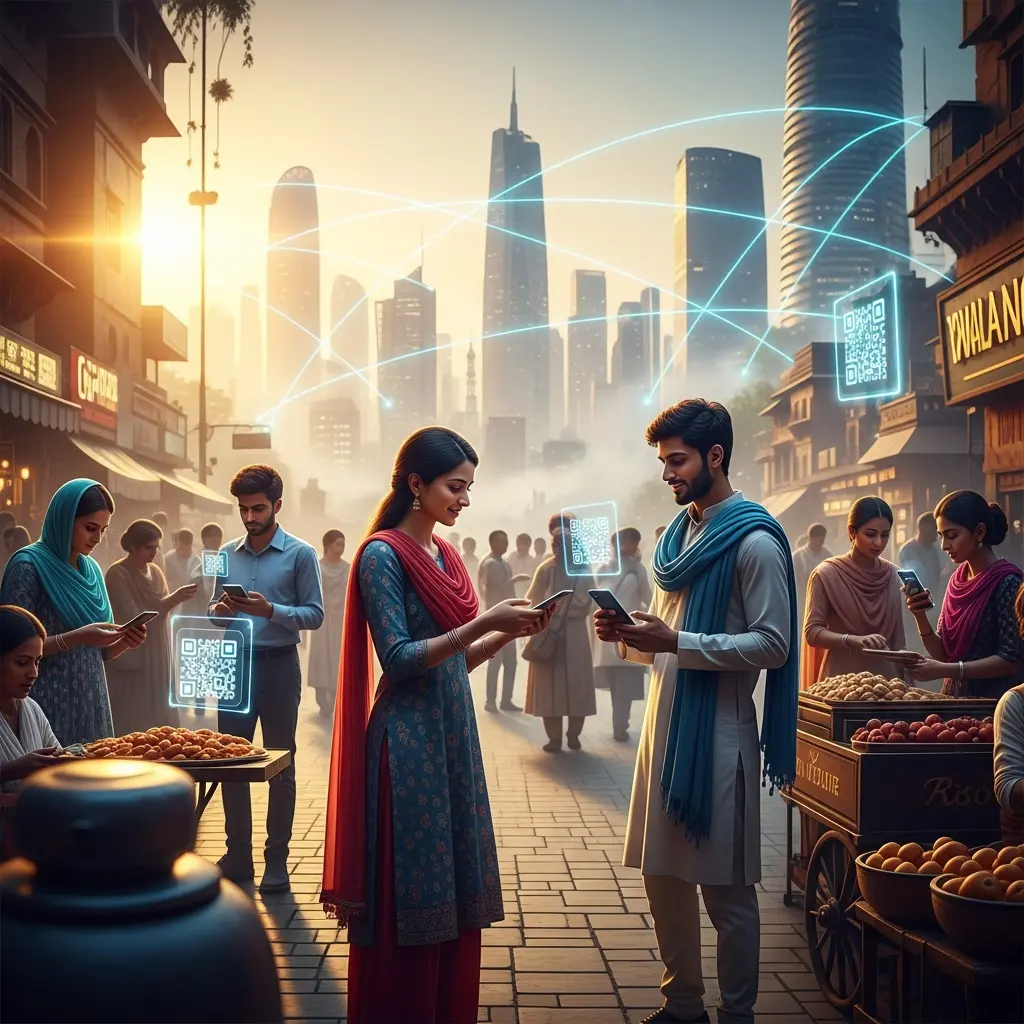
Walk into any sabzi mandi in Jaipur, any roadside dhaba on the outskirts of Nagpur, or a tiny kirana shop tucked into a Mumbai lane — and you’ll almost certainly see a QR code taped to the counter. A few years ago, that would have been remarkable. Today, it’s just Tuesday.
India’s digital payments story is no longer a story of potential. It is one of arrival. The numbers from March 2026 make this clearer than ever before, with UPI transactions hitting record highs — not as a one-off, but as the continuation of a trend that has fundamentally re-wired how over a billion people think about money.
From a Big City Novelty to a National Habit
For years, a cashless economy seemed something for the tech-savvy millennials in Bengaluru or Delhi. Merchants in smaller towns were skeptical. Customers stuck to what they knew — folded notes passed across a counter, change counted out coin by coin.
That hesitation didn’t vanish overnight. It dissolved gradually, driven by three converging forces: cheaper smartphones, wider internet access, and a government that made financial inclusion a genuine policy priority — not just a talking point.
The Unified Payments Interface, better known as UPI, was the spark that lit the fire. Launched in 2016, it allowed anyone with a bank account and a smartphone to send or receive money instantly. No waiting, no complicated forms, no minimum balance requirements. Just a phone number or a QR code, and the money moves. The simplicity was almost radical.
Why the UPI Growth Story Is Different This Time
India has seen waves of digital enthusiasm before — and some have crashed. What feels different about the current UPI growth trajectory is its breadth. Earlier waves of digital payments were largely urban and propelled by e-commerce and food delivery apps. What’s happening now cuts across geography, age group, and income level.
A vegetable seller in a small-town UP market, a domestic worker in Chennai who gets her salary directly to her UPI-linked account, a teenager in a tier-3 city buying gaming credits online — these are all part of the same ecosystem now. Financial inclusion has been an aspiration for too long, it now visibly is a living reality.
Direct benefit transfers, subsidies routed through Jan Dhan accounts and ongoing campaigns nudging merchants and consumers alike towards digital transactions all added momentum. Government schemes had a meaningful role to play in this. When you combine top-down policy push with genuine bottom-up convenience, adoption tends to accelerate fast.
The Infrastructure That Made It Possible
None of this would have happened without the quiet revolution in connectivity. India added hundreds of millions of internet users over the past decade, many of them first-time users who leapfrogged desktop computers entirely and went straight to mobile. Affordable data plans — among the cheapest in the world — made staying online a realistic option even for people with modest incomes.
Smartphone penetration followed. When a decent handset costs less than a month’s grocery bill, the barrier to entry for digital payments drops significantly. And once a person uses UPI even once — to split a bill, pay rent, or buy a train ticket — the reluctance to go back to cash becomes surprisingly strong.
What This Means for India’s Fintech Future
Record UPI numbers are exciting, but they’re really just the foundation. What gets built on top of that foundation is where the real opportunity lies. India’s fintech ecosystem is already buzzing — lending platforms using alternate data to extend credit to the previously unbanked, insurtech companies offering micro-policies for ₹50 a month, wealth management apps targeting first-time investors in their twenties.
All of these businesses depend on the digital payments infrastructure that has now, quietly and somewhat miraculously, reached scale. A country where most adults have a UPI-linked account is a country where a fintech entrepreneur can build something and reach a genuinely massive audience. That’s a rare thing globally, and India has it.
Experts are increasingly pointing to India not just as a large digital payments market, but as a model — a playbook that other emerging economies are actively studying. Countries across Southeast Asia, Africa, and Latin America are looking at the UPI architecture and asking how they might build something similar. India, in other words, isn’t just participating in the global fintech conversation. It’s leading it.
The Work That Remains
That said, record numbers don’t mean the job is done. A meaningful portion of the population still operates largely in cash, particularly older citizens and people in remote areas with patchy connectivity. As more people move into the digital financial system, digital frauds and scams remain a real worry and bad actors follow. Awareness, improved consumer education and stronger grievance redressal mechanisms are all works in progress.
Then there’s the question of what truly inclusive fintech looks like, not just access to a payments app, but access to credit, savings and insurance products that actually work for people at the bottom of the pyramid. That’s a harder problem, and UPI transaction volumes alone don’t solve it.
A Quiet Revolution, Still Unfolding
At its core, India’s digital payments story is a human story. It’s about a street vendor who doesn’t have to worry about making change. A migrant worker who can send money home in seconds instead of days. A small business owner who gets paid on time, every time, with a digital record she can actually use.
The record UPI numbers of March 2026 are worth celebrating. But perhaps more than the scale, what is worth appreciating is the mindset shift — from a country that treated cash as the default to one that increasingly treats digital as the norm. That shift, once made, is very hard to reverse. And for India, that might be the most significant milestone of all.
Tapping Into Tomorrow: How India Became the World’s Digital Payments Powerhouse.