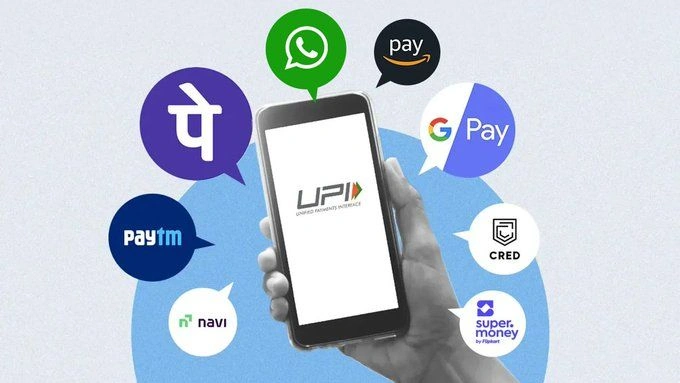
Something big is happening in a place where the street hawker haggled over a crumpled note and the office worker fought with his wallet full with cash. India’s native digital payment system, the Unified Payments Interface (UPI), has set a new record for its highest-ever monthly transactions; in March 2026 alone, it surpassed 18.4 billion transactions. That’s not just a statistic, it’s a revolution affecting the way 1.4 billion people purchase chai, pay bills and even fund their aspirations – silently. As the government ploughs forward with its Digital Public Infrastructure (DPI) drive, UPI is not standing still. It is surging ahead and taking India toward a cashless future at a far faster clip than anyone had imagined. But what does this mean for you, the regular user or the tiny retailer suddenly inundated with QR codes?
This jump occurs at a vital juncture. The number of UPI transactions has surged to this significant figure from a mere 92 million in 2017, with Prime Minister Narendra Modi’s “Digital India” ambition attracting international attention. The government’s development of DPI is the gasoline for this fire. Think seamless integration with Aadhaar for identity, ONDC for e-commerce, and now UPI as the payment backbone. India’s digital crown gem is UPI, and that is no exaggeration. More than 500 million users access UPI through apps like PhonePe, Google Pay and Paytm. But with volumes at historic levels, the issue is: can the surge continue? And what impact is this having outside of India?
The anatomy of UPI’s record-smashing spree
The UPI story is that of unrelenting expansion fuelled by simplicity and scalability. Unified Payments Interface (UPI) was launched in 2016 by the National Payments Corporation of India (NPCI) which allows users to link their bank accounts with a virtual payment address (VPA) to make and receive money in real-time. This method eliminates the need for cards or PINs in minor transactions, simply needing a scan or a touch. 18.4 billion transactions of over ₹25 lakh crore (about $300 billion) took place in March 2026, compared to 17.3 billion in February. This is like everyone in India making 10 payments a month.
What prompted this jump? Government incentives matter a lot. Things like UPI rebates for utility payments and store discounts have got customers hooked. During festivals like Diwali last year, transactions grew 60% as people preferred digital ‘shagun’ over cash envelopes. Rural adoption is booming also, with 45% of volumes currently coming from non-metro areas, as per NPCI data, courtesy to affordable handsets and Jio’s data revolution. Imagine a Maharashtra farmer paying for his grain using UPI while sipping tea in his community. This is the new normal.
The drivers of the spike:
Free structure: Most peer-to-peer transfers are free, undermining cash’s convenience.
Interoperability: 400+ banks & applications, no lock-in.
Real-time settlement. Money moves in seconds, 24/7.
This isn’t hype. According to Reserve Bank of India (RBI) data, UPI has an 83% market share in the retail digital payments space, far ahead of cards and wallets. “It is a standout globally. Visa does billions of transactions annually, UPI does it monthly at a fraction of the infrastructure cost.
Government’s DPI Drive: UPI as the Engine
Now, the globe is copying India’s DPI stack, which is at the heart of this plan. The government is not just cheering on UPI, it’s incorporating it deeper into public services. Take the rollout of UPI Lite, which was launched last year to help with low-value offline transactions, which has now become 20% of small merchant payments. Or the campaign for UPI Credit, going out to millions, allowing users pay later like a digital credit card.
Finance Minister Nirmala Sitharaman, in her 2026 budget speech, had set aside ₹10,000 crore for DPI scaling, underscoring this. It’s part of a bigger play: integrating UPI with India Stack’s identity (Aadhaar), data exchange (Account Aggregator) and open networks like ONDC. The result? A farmer can verify identity, order transport through ONDC and pay immediately – all digitally.
India’s victories are beginning to pile up. Auto-rickshaws have started putting up UPI QR codes in my hometown Pune that cut time spent on bargaining. At the national level, states such as Uttar Pradesh are implementing UPI for government initiatives, disbursing subsidies directly to eliminate leakages. UPI opened its doors to campaign donations for the 2025 elections for the first time.
But it’s not all easy. To prevent monopolies, NPCI has set the market share of any app at 30%, with PhonePe and Google Pay holding 47% and 37% respectively, generating disagreement on the level of competitiveness. But the government’s hand is firm. RBI eyes foreign remittances using UPI by mid-2026
Real-World Impact: From streets to startups
UPI’s magic works in the everyday mess. Imagine Mumbai’s dabbawalas, famed for juggling lunchboxes, now accepting UPI tips—efficiency and tradition in one. And small firms do well too: “UPI has increased my sales every day and brought in the younger clients who are scared of cash,” a street-side vada pav vendor in Delhi told me recently. Turnover for micro-merchants jumped 40% post-UPI, per a 2025 FICCI study.
The recipients are mainly women and underprivileged populations. Over 55% of new UPI users are women, many of them first-time digital users due to government initiatives such as PMJDY. UPI enables self-help groups in rural Bihar to provide microloans, removing middlemen. The story is told by financial inclusion data. Bank account penetration crossed 95% last year with UPI as the on-ramp.
Startups are riding the wave.” Fintech unicorns like Razorpay process billions of rupees per month, and neobanks provide UPI-linked savings at 7 per cent return. E-commerce? ONDC’s integration with UPI has helped small vendors give Amazon and Flipkart a run for their money. Even gaming apps are leveraging UPI for fast withdrawals, powering India’s $5 billion esports market.
But there are still challenges. Cybersecurity fears are growing as fraud cases went up 25 per cent year-on-year to 1.1 lakh yet NPCI’s AI-based fraud detection system has blocked 90 per cent of such cases. Network issues during busy times annoy consumers. And money? It’s shrunk by 50% in volume but still remains in Tier-3 towns. How do we get that last mile?
Worldwide Waves: UPI’s Transnational Dream
India’s DPI is not sticking at home. UPI’s world domination drive is gaining momentum. Singapore’s PayNow teams up with UPI to make remittances easy —₹10,000 crore flowed in 2025 alone, cheaper than Western Union. Then it was UAE, Nepal and France with 10 million cross-border transactions in the last quarter. India’s 2023 G20 presidency endorses DPI as global good; 100+ countries eye imitation.
Take Africa: Nigeria’s central bank is piloting a system similar to UPI; Brazil’s Pix is quite similar to it. How come? UPI costs less than 1 paisa each transaction, lower than the global average. PM Modi threw it at the 2026 World Economic Forum: “DPI for development, not domination.” The outcome? Bhutan, Mauritius ease remittances for India’s diaspora | Adoptions in India
This is golden for Indian travellers Scan a UPI QR in Dubai, pay in rupees, no FX hassles. Forex influx up 15%, NRI money comes home fast India’s UPI is a financial export worldwide. NPCI International has signed deals totaling $2 billion.
There are still challenges. Regulatory alignment is slow in certain countries, and currency volatility nips. Still, forecasts predict UPI at 25 billion monthly transactions by 2028 – fintech’s new worldwide benchmark.
Challenges Ahead: Sustainability and Equality
No revolution is perfect. As UPI quantities rise, infrastructural strains are showing themselves. Downtimes during peak hours irritate users and RBI’s proposed interchange fees may boost merchant prices by 1.1%. Privacy of data? RBI’s data localization requirements are a help, but with 500 million users, breaches might be devastating.
Equity gaps nag, too. There are still 300 million people in the countryside without smartphones, but the urban India may be racing ahead. Initiatives like Digital Saksharta Abhiyan, promoting digital literacy, try to bridge this gap, although the progress is inconsistent. Some still have the scars of demonetization in 2016. They are hoarding cash.”
Scammers are always a step ahead. Last year, we lost ₹1,500 crore to phishing via phony UPI apps. NPCI is fighting back with biometric locks and AI but user awareness is still key. A bug eating your festival bonus? Risks such as these demand smarter defenses.
India’s UPI Revolution: Digital Payments Transforming Daily Life and the Global Economy