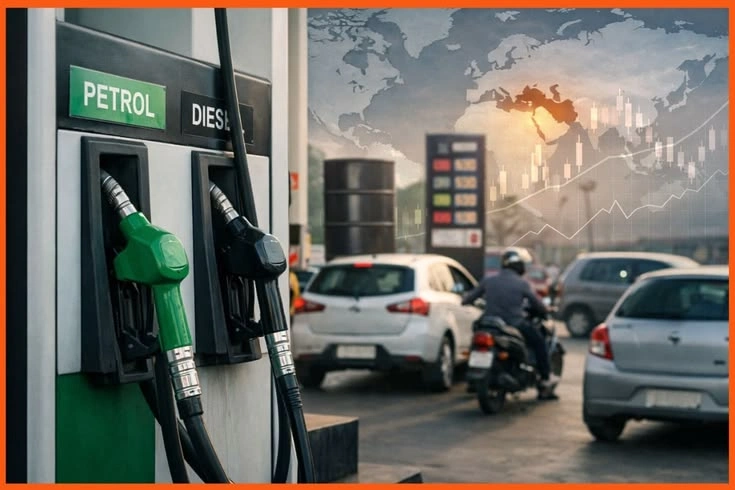
Today’s global oil prices are bouncing all over the place, entangled in a web of OPEC machinations and geopolitical conflict. That implies higher costs at the pump and a stress on everyday budgets for a nation that guzzles foreign crude like few others.
What’s Behind the Latest Oil Price Rollercoaster?
Oil markets never sleep and they’re jumpy right now. Fears of delays to important shipping lanes like the Strait of Hormuz by big actors such as the US and Iran are keeping traders on their toes. That’s a choke point for around 20 percent of the world’s oil.” Brent crude futures hit $110 a barrel last month while West Texas Intermediate was steady around $112. They are not record highs, but they are enough to disturb nerves.
OPEC+, which includes heavyweights Saudi Arabia and Russia, is not helping cool things down. They said they would raise May production by 206,000 bpd to help bring supplies back into balance. Still prices nudged higher, although. Why? Markets scent uncertainty. OPEC+ has a history of surprise cuts to prop up prices and as demand recovers in areas of Asia they are walking a fine line. India’s imports alone tell part of the story. India imports almost 90% of its crude oil, therefore every barrel counts.
Think about it: When was the last time oil prices were really predictable? The Ukraine conflict started the supply worries a few years ago, and one shock has led to another.
OPEC’s Balancing Act in a New World
OPEC hasn’t always had this much influence. Established in 1960, it began as a club of oil exporters to balance Western oil monopolies. Now, with Russia in the fold in OPEC+, it controls some 40% of world supply. Their latest steps, a tiny rise in output after months of voluntary reduction, show they are feeling pressure from consumers like the US and China, who want cheaper energy.
But here’s the rub. Saudi Arabia, the de facto leader, needs oil above $80 a barrel just to break even. Russia, also under sanctions, depends on high pricing. So when they modestly boost output, like the 137,000 barrels a day from last November, it’s less about generosity and more about testing the waters. Prices dropped for a moment then recovered back on Iran worries.
That spells volatility for global markets. A $1 a barrel jump in oil prices alone can add $16 billion to India’s yearly import bill. That’s real money, enough for big infrastructure projects or to reduce fiscal pressures.
India feels the heat of oil instability
The economy of India runs on oil, no ifs or buts. It is importing about 5.6 million barrels a day and the Indian basket price has hovered in the mid-$60s to $70s level lately. If worldwide standards go up, the price at a Jamnagar or a Mumbai refinery also goes up. Petrol in Delhi crossed ₹95 a litre yesterday and diesel is not far behind. Truckers complain, farmers fret about fertilizer prices, and urban commuters reconsider their two-wheelers.
Hit hard: The ripple effects:
First, inflation soars. Fuel goes into transit, food prices, manufacturing. A $10 rise in crude could lift India’s CPI by 0.3-0.5% sustained rise. “Households feel it in their grocery bills and bus fares.”
Rupee faces strain. Higher imports mean more dollars going out, devaluing the currency. Oil was one of the reasons why the rupee fell by roughly 5% against the dollar last year.
Tax issues. LPG and kerosene subsidies are heavy on government budgets. Some of the hikes are absorbed by Indian Oil Corp and other state oil corporations to keep retail prices “stable” but that eats into profits.
India spent $137 billion on crude imports during 2024-25. A just dollar loss can save us $1.5 billion a year, the type of breathing room to subsidize rural electrification or green energy pushes.” But with OPEC+ dragging its feet, those savings vanish.
Urban India feels it acutely. In Pune or Bengaluru, where traffic snarls are a regular battle, cab costs rise 10-15% on bad oil days. A friend in logistics told me last week his margins are razor-thin now – every extra paisa at the pump stings.
Geopolitical Hot Spots Fanning the Flames
Not only in OPEC boardrooms. Real world tensions intensify all of it. Iran, the wildcard in OPEC, is under US sanctions and threats over its nuclear programme. A blockade of the Strait of Hormuz could reduce world supplies by millions of barrels a day. We’ve had our scuffles, remember the tanker attacks in 2019?
Russia’s role spices things up. Discounted Urals crude has been a bonanza for India, importing more than 1.5 million barrels a day from Moscow. But if Western sanctions tighten or Black Sea routes choke, those agreements could dry up, requiring more expensive acquisitions from the Gulf. India could need to spend an extra $9-12 billion in 2026-27, if it cuts back on Russian oil.
And then there’s China, hoarding crude amid its economic decline. Their demand supports prices, but any boost there may flood markets – or not if trade wars intensify.
India’s Clever Moves to Tame Oil Monster
But New Delhi is not sitting still. Current strategic stocks stand at roughly 5.3 million tonnes, enough to cover 10 days of imports. They are buying more from Russia and US, diversifying from the dominance of the Middle East (from 80% to 60%). Last year, ethanol blending reached 15%, reducing oil needs by 5-6 million tonnes.
Electric cars are also gaining momentum. Tata, Ola churn produce EVs, sales double every year. Govt’s subsidies aim at 30% EV penetration by 2030. But there are hurdles ahead – battery materials are expensive and charging infra is behind in tier-2 cities.
Biofuels and hydrogen are getting a lot of attention, but they’re not being deployed at scale very fast. Wind and solar currently supply 15% of electricity, reducing some reliance on coal, but there’s still the lock of oil in transport.
What if India increased its exploration at home? KG Basin and other fields are promising. But red tape and green lobbies hinder the pace. Will it be worth it to take larger moves or is diversification the safer bet?
Wider Economic Impact at Home and Abroad
High oil doesn’t just strain our wallets, it reshapes trade. India’s exports of petroleum products, especially Reliance’s mammoth Jamnagar plant, take a hit from crude increases. Lower margins, lower FX income. This cost billions in 2024-25.
US shale growth limits global upside as producers scale up fast. But Europe’s hunt for LNG after Ukraine is sucking up resources. The IEA is an example of emerging markets like India and Indonesia coming together to press for stable prices.
India’s current account deficit is aimed at below 2% of GDP but oil shocks make it bigger. The stakes are evident in the 0.4% GDP damage from earlier OPEC cuts. Finance Minister’s budget balancing challenge grows tighter
Farm to Highway: Everyday Effects
Ask a Mumbai cabbie and you’ll hear the frustration. Diesel up again? Fares go up, passengers vanish. Maharashtra farmers blame diesel for pumps and tractors for the skyrocketing prices of vegetables.
Manufacturing is also suffering. Auto plants would be idled for the price of moving steel up. Inflation eats away at real wages – urban middle class opts out of that weekend dine-out
Conversely, low oil periods, such as mid-2024, provided some relief. Stocks surge as inflation eases, pump prices cut by ₹5-7 a litre. But the unpredictability of OPEC keeps hope at bay.
Looking Ahead: Stability or More Ups and Downs?
Oil prices may steady if OPEC+ maintains raises and tensions de-escalate. Brent is forecast between $90-100 until 2026 unless there is a big flare-up. EVs ramp. Russia discounts could hold, saving India.
Risks are everywhere, though. US elections, Middle East wildcards, China’s rebound all might rattle markets India’s shift to renewables is critical, but it will take a decade.
Households brace for ₹100 petrol for now. Policymakers look at subsidies and reserves. The question is: how long can India surf this oil wave before going bust?
India Fuel Costs Keep Global Oil Prices on Edge as OPEC Tensions Mount Feel the Heat