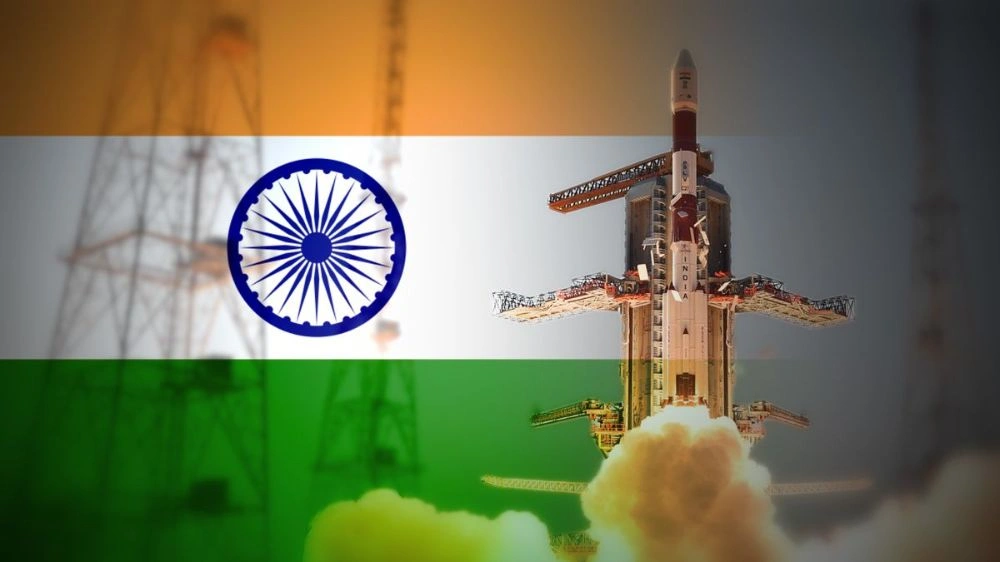
India’s space program is entering a notably busy phase, with ISRO lining up a series of missions that go well beyond routine launches. The plan includes uncrewed Gaganyaan flights, additional PSLV and LVM3 missions, commercial satellite deployments, and longer-term work that supports India’s ambitions in human spaceflight, navigation, communication, and even a future space station.
A sharper mission tempo
ISRO has indicated that it wants to complete seven missions by March 2026, with the first uncrewed Gaganyaan flight, called G1, forming the most closely watched milestone in that batch. That schedule is important because Gaganyaan is not just a prestige project; it is the foundation for India’s crewed spaceflight capability and, eventually, a bigger human space program.
The rate of launches is also indicative of a larger shift in the way India is using its space infrastructure. Instead of focusing on a single headline mission, ISRO appears to be building momentum across multiple fronts at once: human spaceflight testing, operational launches, and technology development.
Why Gaganyaan matters
The Gaganyaan programme is at the center of this push, and for good reason. ISRO officials have said the first uncrewed mission is meant to happen before the end of the current financial year, with three uncrewed flights planned before the crewed mission itself. That step-by-step approach is what makes the programme credible, because human spaceflight is unforgiving and every test has to prove something concrete.
What does that mean in practical terms? It means ISRO is not just preparing a launch; it is validating systems for crew safety, mission reliability, and the ability to bring astronauts back safely. For India, this is one of the most visible signs that the country is moving from being a strong satellite-launch nation to a more complete space power.
Launches beyond human spaceflight
The upcoming mission list is not limited to Gaganyaan. ISRO has also outlined plans for more LVM3 and PSLV launches, including commercial satellite missions and technology-related flights. That matters because launch vehicles are the workhorses of the space sector and a healthy launch schedule is what keeps the whole ecosystem going.
A busy launch manifest also enhances India’s standing in the global commercial launch market. When ISRO can place satellites reliably and on schedule, it becomes more attractive to both domestic and international customers. In other words, the same rockets that support national capability also support space business.
Space station ambitions
One of the more striking developments is India’s growing push toward its own space station. Recent reporting has indicated that ISRO is fast-tracking those plans while also advancing Gaganyaan, and that nearly 80 satellites are in the pipeline for a range of roles, from scientific research and disaster management to internal security and navigation support.
That kind of satellite network is not just about numbers. It reflects an understanding that modern space capability is built on systems, not single missions. If India is preparing for a future space station, it will need communications links, observational assets, safety support, and sustained launch capacity to keep the broader architecture alive.
What these missions signal
Taken together, the upcoming missions point to a more mature phase in India’s space journey. ISRO is no longer only proving that it can launch satellites; it is now building the layers needed for deep capability: crewed missions, orbital infrastructure, research missions, and strong commercial launch options.
The strategic value is easy to miss because space progress often arrives in technical language and long timelines. But the practical impact touches everyday life too. Better satellites improve communication, weather forecasting, disaster response, navigation, and security planning. Isn’t that the real measure of a space program—how far it reaches beyond the launch pad?
India’s wider space economy
There is also an economic side to all this. A heavier mission schedule can support the growth of India’s space economy by creating demand for engineers, suppliers, test facilities, and downstream services. That is especially relevant at a time when global interest in satellite communications, Earth observation, and launch services is rising sharply.
ISRO’s 2025 achievements, as listed by the Department of Space, show how broad the agency’s activity has become, covering missions, ground tests, and technology demonstration programs. That breadth matters because national capability is not built in one dramatic step. It is based on a consistent stream of launches, tests and hardware readiness.
The way forward
There will still be challenges. Launch schedules can slip, hardware integration can take longer than planned, and human spaceflight demands a level of precision that leaves very little room for error. Still, the direction is clear. ISRO is preparing for a period in which India’s space ambitions become more visible, more frequent, and more strategically layered.
For India, the coming missions are about more than headlines. They are about proving that the country can sustain a full-spectrum space program—one that supports astronauts, satellites, research, commercial customers, and long-range exploration goals. And if the current pace holds, the next year could be one of the most consequential stretches in ISRO’s history.
ISRO’s Next Big Push: How India’s Space Agency Is Preparing a New Wave of Missions to Deepen National Capabilities