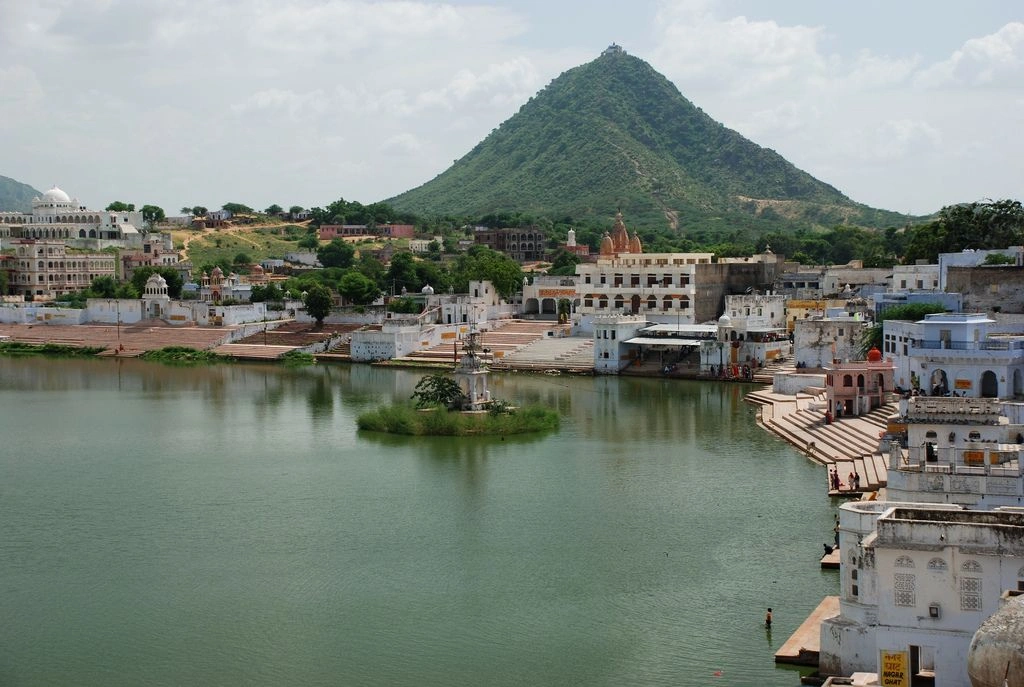
From the glittering waters of Pushkar Lake in Rajasthan, India, something remarkable has emerged. It is not a new tourist season. It is not a new event. It is not a new myth either. It is a completely new species of cyanobacteria, a tiny, thread-like organism that has never been seen before by science. The new species Pushkarmema curajae is not just of scientific interest. It is a silent revelation about the secret life that throbbed in one of India’s most famous and, until now, strangely unexplored pools of water.
Pushkar Lake, a sacred pilgrimage site, home to ancient temples and holy dips for millions, has suddenly become a frontier of biological research. The newly discovered cyanobacterium gives a glimpse of a complex, hidden ecosystem just beneath the surface that might one day offer new medicines, greener fertilizers or even tools to assist the earth in coping with climate change. This is the narrative. In a place where humanity have been looking for the holy for millenia, science is finally finding the divine in the minutiae of the microscopic universe.
That’s why this study is important, and why it’s garnering the attention of researchers and news sources alike.
New Genus Discovery
The story of Pushkarmema curajae began not with a fanfare but with ordinary scientific field work. Researchers collected water samples from Pushkar Lake during studies in 2016 and 2021. Researchers from the Central University of Rajasthan (CURAJ) The lake, also known as Pushkar Sarovar, is a permanent freshwater lake in the desolate semi-arid landscape of the Thar Desert, a region in Rajasthan that experiences excessive temperatures and inadequate rainfall.
The scientists went back to the lab and isolated a filamentous cyanobacterium. It appeared at first to be just another strand of blue-green algae. But when they looked at its anatomy and its DNA sequencing they found they were looking at something altogether different. That organism did not fit into any existing genus categories. “This is a rare success story in microbiology. Discovering a new genus is a far greater event than discovering a new species within a genus.
The researchers called the find Pushkarmema curajae. The genus name Pushkarmema is a tribute to the lake Pushkar itself and the discovery is thus intimately linked to the sacred location. The species name curajae is in honor of the studies performed by the Central University of Rajasthan. Scientists humbly pay tribute to the human work behind the discovery when they name a locality or a team in Latin.
Why Pushkar Lake Is a Secret Microbial Treasure
To get a sense of how remarkable this revelation is, consider of Pushkar’s reputation. For the believers it is purely a spiritual destination and one of the few places that are supposed to be built by Lord Brahma himself. It is a centre for ceremonies and celebrations and is surrounded by ghats and temples. It is a place for travelers to see famous Pushkar Camel Fair and colorful streets of Rajasthan. But the ecological relevance of the species has been largely disregarded.
The lake is in an extreme environment with scorching summers, high evaporation and variable salinity. Such conditions create what scientists refer to as “extreme” or “selective” pressure. It is an environment in which only the hardiest, most specialized microorganisms can live. This implies that the microbial life in Pushkar Sarovar is predicted to be rich in unique species that are stress tolerant and have evolved to thrive in heat, salinity and paucity of water.
Ironically this makes Pushkar, a well recognized destination, good for detecting new microbes. “The severe environment of the lake acts as a natural filter and only specifically adapted species are able to survive,” said Dr Anuj Tomar, a researcher from AIIMS Delhi participated in the study (as reported by news agencies). “But it hasn’t been a prominent focus in microbiological investigations until now.” The identification of Pushkarmema curajae suggests a whole microbial universe out there waiting to be discovered here, perhaps more diverse and bizarre than anyone ever imagined.
Cyanobacteria: The Hidden Heroes of Life
Knowledge of cyanobacteria in general helps us understand the action of Pushkarmema curajae. They are ancient photosynthetic animals, sometimes referred to as “blue-green algae,” however they are bacteria, not algae. They are one of the oldest animals on the world and their ancestors helped generate the oxygen rich atmosphere that allowed sophisticated life to evolve, including us.
Cyanobacteria are omnipresent. They live in lakes, oceans, rivers and even in the earth. They are significant in ecology because they fix nitrogen from the air into a form that may be used by plants . This makes them natural biofertilizers that increase the fertility of the soil without the use of synthetic chemicals. They also are primary producers of biomass, which forms the base of food chains.
In recent years, possible biotechnological applications of cyanobacteria have been examined. They are able to manufacture a wide range of pigments and secondary metabolites, many of which have antioxidant, anti-inflammatory or antibacterial effects. This has spurred interest in their use for nutraceuticals – dietary supplements aimed at improving health – and even as sources for new drugs.
Some of these traits are thought to be in pushkarmema curajae. Preliminary studies suggest that it is capable of creating pigments and metabolites possessing antioxidant properties that can be exploited for the development of new health supplements or bioactive compounds. “This indicates that because it is a new genus there is possibility for even more novel biochemical pathways as the genetic content of the organism may encode for unique enzymes and substances that have not been found in other cyanobacteria.”
Real-World Impact Potential
So what can this little microbe from Pushkar Lake truly do for the world? The possibilities are exciting and yet very much in the speculation world, but they highlight many potential directions:
Medicine and Nutraceuticals Pushkarmema curajae may be developed into new medicines or dietary supplements if future research shows strong antioxidant or other bioactivities. Antioxidants play a key role in fighting oxidative stress, a process linked to aging, inflammation and many diseases. In India, where there is a burgeoning interest in traditional and Ayurvedic techniques of healing, a new supply of natural substances validated by science may be vital.
Agriculture and Biofertilizers: Some agricultural activities, especially those involving rice paddies and other crops, already make use of cyanobacteria as biofertilizers. A new strain of Pushkarmema curajae may be highly effective or adapted to some conditions e.g. dry and semi-arid areas of Rajasthan and beyond. This would help in reducing dependence on costly chemical fertilizers that might damage water bodies.
Climate Resilience and Environmental Applications: As climate change continues to happen, there is a growing interest in organisms that can survive in harsh settings. The adaptation of Pushkarmema curajae to a hot semi-arid environment indicates its potential application in the development of climate resilient crops or bioremediation (microbes for bioremediation of polluted environments). Cyanobacteria, for example, may fix carbon dioxide and help maintain soils, which could be a boon in the fight against desertification.
Scientific and educational value This discovery is a sharp reminder of the value of basic science. It highlights that science can reveal invisible wonders even in places we think we know. The results have ramifications for education and policy in India; investment in biodiversity studies and environmental monitoring could lead to new ideas and economic opportunities.
Big picture: India’s secret biodiversity Pushkarmema curajae is not a one-off find. It is part of the bigger story of India’s vast but poorly documented biodiversity. India, a megadiverse country, with diverse ecosystems from the Himalayas to the Western Ghats and from marshy areas to parched deserts. However, a large portion of its microbial diversity is still unknown.
This problem is exemplified by Pushkar Lake in the center of Rajasthan. The lake is threatened by tourism, agriculture and urbanization. Water quality problems exist include pollution and eutrophication. Simultaneously, the lake is a sacred area and is protected by cultural and religious values. This juxtaposition creates a difficult challenge of how to harmonize conservation, development and scientific study .
The discovery of a new cyanobacterium highlights the need for more integrated techniques. Saving Pushkar Lake isn’t just about keeping the spiritual and cultural significance, but also about protecting a unique habitat which could offer significant scientific discoveries. This poses important issues, how can we make sure such insights are translated into benefits for local communities? How do we perform research that respects the holiness of the lake and also contributes to our knowledge?
For India Pushkarmema curajae may represent the potential of the country in biotechnology. The conclusion underscores the need to invest in research institutions like the Central University of Rajasthan and to nurture links between universities, hospitals and industry, with increasing focus on innovation and self-reliance.
Little Microbe, Big Discovery: Pushkarmema curajae Discovered in Pushkar Lake