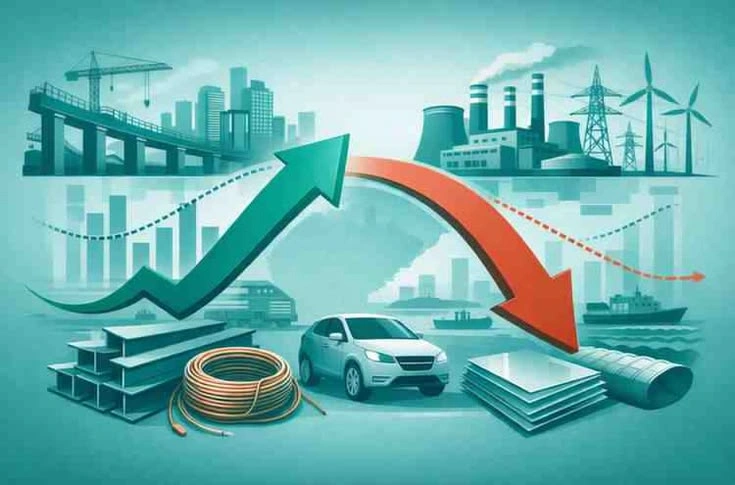
Factories and mines in India increased their activities last month, with industrial output climbing 4.1% in March 2026 from a year earlier. The growth, in the context of global worries, points to a welcome but little improvement in the country’s industrial sector.These aren’t simply figures for a country that wants to be the third largest economy in the world but point to strength in areas that create jobs and exports. But is that growth enough to build momentum, or is it only a temporary bright spot?
The latest data released by the Ministry of Statistics and Programme Implementation (MOSPI) has ignited cautious optimism. Industrial production, an important measure of the economy’s health, had slowed to a 2.3 percent increase in February before the rebound. What does it mean for the common Indians, from the manufacturing workers in Gujarat to the stock market investors? Let’s go through it.
The Data Decoded: What’s Behind the 4.1% Increase?
The India’s Index of Industrial Production (IIP) at its base is a measure of output in the manufacturing, mining, energy and select consumer goods sectors.
Mining output rose a modest 2.1%, restrained by seasonal reasons and regulatory constraints on coal and iron ore production.
Manufacturing: +4.5%, with auto industry up 7.2% on festive pre-orders and EV push.
Mining: +2.1%, stable but hamstrung by monsoon prep delays.
Electricity: +5.8% on increased demand from industry and households
Consumer products are also an intriguing narrative. Durables (refrigerators, vehicles) increased 6.1% while non-durables (food processing, etc) increased 3.2%. Capital goods, which are critical to long-term investment, rose 4.8 percent as companies increased machinery production on government incentives.
It is not explosive, but it is continuous growth. Economists say demand is pent up after winter slowdowns and policy modifications such as production-linked incentives (PLI) schemes. Still, the numbers fall short of the double-digit gains seen in pre-pandemic years. Why the moderation?? Supply chain snarls are partly because to Red Sea interruptions and a declining global market.
Building Muscle: Autos, Chemicals and the EV Boom
Walk through the teeming industrial belts of Pune, Chennai or Noida and you will witness this revival pulse. New model debuts and international orders drove up car production, a harbinger for the health of industry. Tata Motors and Maruti Suzuki reported busier order books as electric vehicle (EV) assembly lines hummed louder. The FAME-III initiative helped India’s EV push to add 12% to two-wheeler output alone.
Chemicals and pharmaceuticals, perennial strong, climbed 5.2 percent. The worldwide supply shifted away from China, leaving the door open for generic medication companies to fill gaps in antibiotics and vaccines. Infrastructure initiatives helped basic metals like steel – think of the Bharatmala highway network and urban metro expansions. But cheap slabs from imports hit steel manufacturers in Jharkhand, pinching margins.
Small and medium enterprises (SMEs), the backbone of jobs, had a mixed bag. Electronics SMEs benefited from demand for smartphone components from giants such as Apple and Samsung, while those in textiles and leather had to cope with cotton price instability. The expansion of this sector is a testament to India’s move to high-tech manufacturing in line with the decade-old “Make in India” agenda.
Challenges In The Shadows: Inflation, Exports & Jobs
But not everything is rosy. Amid the IIP rise, the core sector output (coal, crude oil, steel, etc) expanded only 3.7% in March, according to government figures. Exports, the growth driver, ran into weak demand from Europe as it nursed an energy crisis hangover. India’s product exports rise 8% YoY to $42 billion in March, while electronics, gems-jewelry stymie US tariff discussions.
Inflation is still a pain. The wholesale prices were at 3.5% while food inflation at 7.2% pinched rural expenditure, thereby impacting consumer durables. Rupee depreciation to 84.5 against the dollar benefitted exporters but hiked import expenses for oil – India’s biggest payment at $12 billion monthly.
Another concern is jobs. Industrial expansion provides jobs but not quickly enough. The Periodic Labour Force Survey said manufacturing jobs grew 1.2 per cent in the latest quarter but youth unemployment remains at 17 per cent. Factory developments in Maharashtra and Tamil Nadu promise 2 lakh new jobs this year, but states continue to struggle with skill shortfalls. How can we close that for the millions that enter the workforce each year?
International context adds strain. China’s manufacturing activity cooled to 49.2 on the PMI index, showing frailty in its export engine. US Fed rate cuts should lift demand for Indian textiles, but geopolitical conflicts from Ukraine to the Middle East make oil uncertain.
Government Moves: PLI schemes, infra push buoy recovery
Credit must be given to Delhi’s policy playbook. The PLI initiative has now expanded to 14 sectors and offers incentives of ₹2 lakh crore. It has attracted investments worth $15 billion since 2021. Electronics was boosted by Foxconn and Pegatron ramping up iPhone manufacture in Tamil Nadu. Auto PLI to drive Odisha to build battery gigafactories; aims for 30% EV market share by 2030.
Rebuilding the recovery was infrastructure spending at 3.8% of GDP. Gati Shakti to fast track 12,000 km roadways, increase steel, cement output Renewable energy also got a fillip, with solar module production under PLI targeting 50 GW capacity, feeding into the 5.8% electricity growth.
Budget 2026-27 Previews Indicate More: Tax Rebates for SMEs, Green Bonds for Clean Tech Critics say India’s placement of 63rd globally shows red tape still strangles ease of doing business. States like Gujarat lead the way with single-window clearances, attracting FDI in semiconductors.
Regional Spotlights: Where the Growth Is
The story of India’s industry is regional. Ports in western hubs such as Maharashtra (auto cluster, Pune) and Gujarat (chemicals, Ankleshwar) grew 5.5% in exports. Tamil Nadu in South India was strong in electronics, with Chennai still exuding a “Detroit of Asia” feel.
The east underperformed with Odisha’s mining up just 1.8% due to environmental clearances. Riding on Uttar Pradesh, “UP Global” helped leather and food processing grow 4.2%, backed by progress on Jewar airport. The gaps point to a need for equitable growth. What if the eastern states caught up with the west?
Wider Economy: GDP Effects And Market Sentiment
This IIP print upgrades FY26 GDP growth estimates to 6.8-7% from the RBI’s 6.5% baseline. Industry contributed 1.2 points. GDP was 6.9% in the second quarter. Stock markets responded warmly – Nifty industrials index surged 2.3% post-data led by Larsen & Toubro and Tata Steel.
Q4 FY26 saw $20 billion in inflows of foreign direct investment, with a bias towards manufacturing. But private capex is shy at 4.5% of GDP, waiting for sustained demand. Consumer confidence polls indicate urban spending is high, but capped by rural misery from irregular monsoons.
“India’s secession from China is globally prominent. Manufacturing’s proportion in the GDP is still 17% and the aim is 25% by 2030. Trade deals with UAE, Australia could open doors for $100 billion in exports
What next? Can India sustain this momentum?
Industrial growth of 4.1% in March points to a moderate economic rebound, aided by manufacturing resilience and policy tailwinds. Cars, chemicals and electric vehicles drive the charge but mining and exports are stymied. The biggest challenges are the jobs and the regional balance.
The road forward depends on monsoon rains, thaw in global commerce and greater reforms. If PLI pays off, infra spend continues, India may post 7.5% GDP growth next fiscal The challenge for investors and workers is whether this spark will turn into a manufacturing renaissance or die from outside influences. Early signals are good, but is in the execution.
India’s Industrial Output Rises 4.1% in March 2026: Indicator of Steadying Economic Recovery Amid Global Headwinds