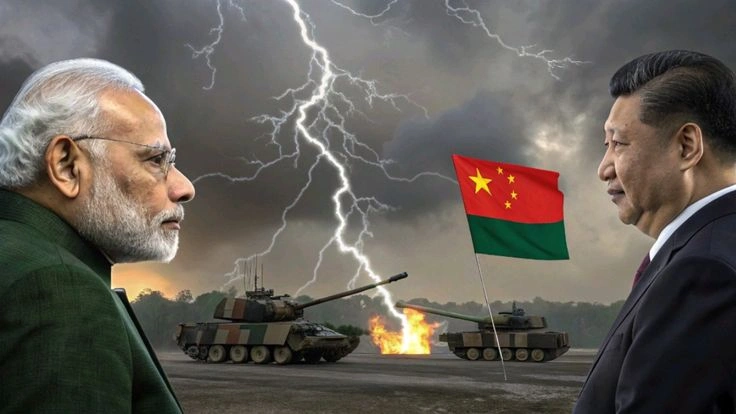
In the shadow of the Himalayas, where rivers cut craggy peaks and nourish millions downstream, a quiet but fierce water rivalry is heating up between India and China. India’s ambitious Siang Upper Multipurpose Project in Arunachal Pradesh has come into the spotlight as New Delhi’s direct response to Beijing’s mammoth dam on the upper Brahmaputra, raising questions about energy security, floods and who really rules Asia’s vast waterways.
Mega Dam in China Sparks Worries
Last year, China started building of what could be the world’s largest hydropower project on the Yarlung Tsangpo River in Tibet’s Medog county, the section of the river that Beijing considers home before it enters India’s Brahmaputra. The dam, the first of five in a cascade, is expected to cost more than $137 billion and produce 60,000 MW of power, three times the output of the Three Gorges Dam. It was announced in China’s 14th Five-Year Plan and breaks ground in July 2025. It will be located near the river’s famed “Great Bend,” just upstream from the border of Arunachal Pradesh.
It’s not just about renewable energy up north for India. More than 30% of the country’s water resources flow down the Brahmaputra, the lifeblood of farms, fisheries and power plants across the Northeast. Experts fear the quick release of water might produce flash floods and that long-term diversion could leave downstream communities dry during droughts. Do you remember the Uttarakhand glacier burst in 2021? That killed a hydro project and illustrated how vulnerable such arrangements may be in seismic hot regions. And there is no binding water-sharing arrangement, like India’s Indus pact with Pakistan, with China holding all the cards upstream.
India’s External Affairs Ministry did not mince words after the December 2024 announcement. New Delhi’s worries were highlighted by spokesperson Randhir Jaiswal who said that it would “monitor and take necessary measures” to defend interests. Data exchange was discussed in bilateral discussions in Beijing earlier this year but old MoUs on hydrological info have expired without being renewed.
The Siang Project: India’s Strategic Riposte
Enter the Siang Upper Multipurpose Project (SUMP), India’s 11,000-11,200 MW giant to be built in the Upper Siang area, near Geku village. Initially proposed by NITI Aayog in 2017, it received renewed impetus as a “dam for a dam” plan – a concrete 300-meter-high dam to absorb floods resulting from China’s upstream interference. It might generate enough electricity to light up the Northeast grid and curb erosion downriver. With a storage capacity of a whopping 10,000 million cubic meters.
The Northeast contributes close to 40 per cent to India’s hydro potential and Arunachal alone has 41 per cent of the basin’s hydroelectric promise. SUMP combines two prior dam projects into one mega-storage unit with promises of employment, 12% free power for the state and better flood control. The project will be led by the National Hydroelectric Power Corporation (NHPC) and may start construction in 2028 and become operational by 2032. “This is a direct antidote to China’s ‘Great Bend’ threat and will reduce the upstream impact,” said Dr Ranbir Singh, chief of Brahmaputra Board.
But it’s not all gravy. The project is situated in seismic zone V, where plate conflicts make earthquakes common, and reservoir filling could induce quakes or GLOFs from melting glaciers. But supporters see it as essential hydro-diplomacy, asserting sovereignty over the Siang, the Brahmaputra’s primary Indian waterway, and staking prior-use rights.
Tribal Pushback and Local Voices
Arunachal is not a state of cheer. The Adi tribe, who call the Siang the ‘Ane Siang’ or goddess river, have launched furious protests fearing submersion of more than 300 villages including the town of Yingkiong. Their apex body, Adi Banne Kebang, flat out rejected SUMP and demanded no major projects on their sacred rivers. Anti-activists like Ebo Mili accuse the government of undermining Free, Prior and Informed Consent with laws such as PESA and FRA.
The state signed an MoU worth Rs 5 crore with two villagers for a pre-feasibility survey, dividing the community – some viewed it as a bribe, some as progress, leading to flared tensions. Protests swept over Siang districts, demanding the scrapping of the project and withdrawal of central forces. One memo reads: “We have had enough dams. “Our rivers have had it.” Real is the psychological burden of displacement worries, hard on traditional farms and customs.
What does progress look like if it means drowning historic homes? That’s the question folks are asking, loud and clear.
Environmental Stakes in a Critical Zone
The Siang basin, with its 82% forest cover, rare species and hotspots like Dihang-Dibang, is a biodiversity jewel. Dams here might trap silt, prevent fish migration, disrupt ecosystems and kill off floodplain life that depends on natural floods. Climate change increases the risk: melting glaciers might flood the reservoir, while changing flows disrupt farming crucial for Northeast living.
India accounts for 80 per cent of the Brahmaputra’s flow through monsoons and tributaries like Lohit, Dibang and Subansiri – much more than Tibet’s meager 300 mm rainfall. But China’s dams endanger that equilibrium, and might strike Kaziranga’s rhinos or Majuli, the world’s largest river island. A 2013 cumulative effect study was criticised for inadequate data; calls now mount for fresh, public assessments.
SUMP, however, might smoothen the flows, reduce flood peaks and add to renewables towards India’s 500 GW non-fossil target by 2030. Risks could be lowered with smaller run-of-river or modular dams, solar and wind.
Broader Geopolitics and Water Conflicts
This is not an isolated case but a part of Himalaya hydro-hegemony. China controls 34% of the basin, but the critical headwaters. India is pushing back via river linkages like Manas-Sankosh-Teesta-Ganga to move excess water south. Bangladesh frets too that Jamuna flows could swing widely. Unlike Ganga accords there is no treaty which ties them giving possibility for “water bombs” in stressful periods like post Pahalgam.
Key to diplomacy: Resume data sharing, create early warnings with Bhutan, Myanmar. IDSA calls for real-time modeling against weaponization. SUMP Provides resolution for India in border tussles but must not stoke domestic discord
The Road Ahead: Power With No Risk?
India’s Siang project: The high-stakes waltz over the Brahmaputra—energy imperatives vs ecological and equity. The Medog dam in Beijing calls for a reply, but racing SUMP invites a backlash from Adi heartlands and nature’s vengeance. Community-led monitoring, climate-proof designs and varied electricity are all smart approaches that may make this a win.
Phased constructions, frank conversations and basin-wide storage might regulate rivers without damaging lives. As China speeds towards carbon neutrality by 2060, India can’t lag behind – but at what cost? It asks for balance, not dominion. The river that created ancient cultures. In the years ahead, with construction looming, Siang will be tested to see if it becomes a shield or a flashpoint. One thing is certain: in this aquatic game, all eyes downstream are wide open.
India’s Siang Dam: A Bold Answer to China’s Brahmaputra Power Play