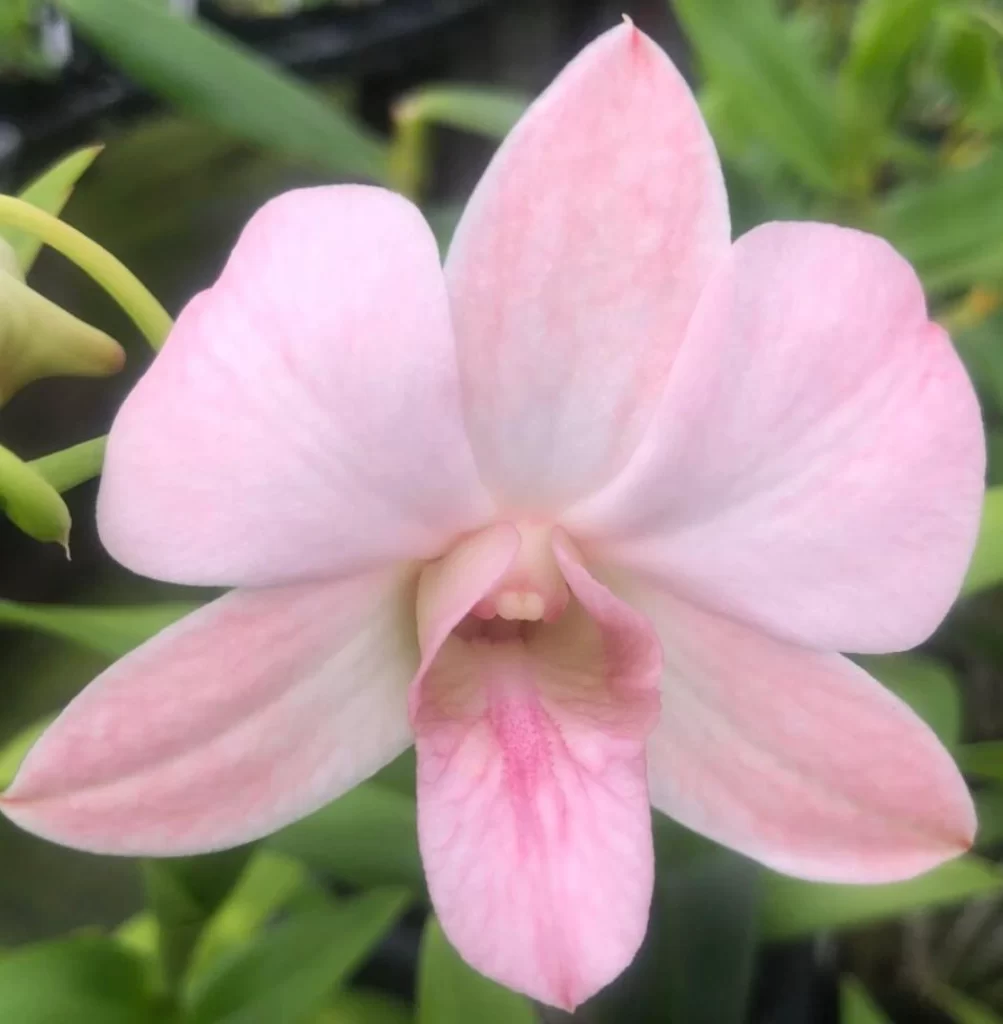
Deep inside the Kondapalli Reserve Forest, where tourists rarely wander and even local footfall is sparse, scientists have stumbled upon a quiet marvel: a rare, pale‑pink orchid known as Eulophia picta. First recorded in central Andhra Pradesh in April 2026, this medium‑sized terrestrial plant has rapidly become a symbol of both the fragility of India’s wild habitats and the quiet progress of on‑ground biodiversity research across the country.
More than a botanical curiosity, this sighting is a reminder that India’s forests still hold secrets—species that textbooks either ignore or mention only in passing. And in a world where urban sprawl and climate change are reshaping landscapes, figuring out what grows where, and why, is becoming as important as protecting the forests themselves.
What makes Eulophia picta special?
Eulophia picta is not a towering tree or a showy canopy, but a modest ground‑dweller that thrives in moist grasslands, sandy patches behind beaches, and in semi‑deciduous to dry lowland forests. It is often called the “nodding swamp orchid” or “pink nodding orchid” because of its pale‑pink, tube‑like flowers that stay closed, giving the inflorescence a drooping, almost shy look.
Unlike many orchids that cling to trees as epiphytes, this species is terrestrial, sprouting from underground, spherical storage organs called pseudobulbs. Its leaves are broad, smooth, and distinctly ribbed—three to five per plant—and the flower stalk, when it blooms, curves like a shepherd’s crook, only to straighten as the seed capsules develop. It grows in full sun to partial shade, which makes it adaptable enough to survive in a range of open habitats, yet sensitive enough that its presence can signal a healthy, relatively undisturbed patch of forest.
Geographically, Eulophia picta is scattered from the Indian subcontinent through Southeast Asia and across to Australia, but it is not a plant that crowds the landscape. Across India, it turns up in moist grasslands, beach‑adjacent sandy soils, and in lowland forests, often at elevations up to about 1,000 metres. In this context, finding it in the central Andhra Pradesh stretch of the Eastern Ghats is not just a new dot on the map—it is a clue about how climate, soil, and moisture patterns are holding together in this part of the country.
Why is this Andhra Pradesh sighting important?
While Eulophia picta is not “new to science,” its documented presence in central Andhra Pradesh is first‑record territory for this region. The discovery was made in the Kondapalli Reserve Forest, a belt of mid‑altitude mixed forests that sits between urban Vijayawada–Guntur and the wider coastal plains. For many years, this patch of forest was studied mainly for its larger trees, mammals, and birds, not for the small, often overlooked herbs and orchids that grow underfoot.
Botanists and forestry researchers who compiled earlier checklists of Andhra Pradesh orchids had already noted that the state hosts a rich, if still under‑documented, orchid flora. However, many of those lists were built from scattered herbarium records and older surveys rather than systematic, ground‑level surveys. Spotting Eulophia picta “in the wild” in this region fills a gap in the state’s plant‑distribution map and underlines how much India’s biodiversity databases still rely on new fieldwork, not just old books.
Beyond the scientific checklist, there is a practical implication: conservation planning. Many of India’s recent biodiversity‑related funds and schemes, including those channelled through the National Biodiversity Authority and state‑level boards, require precise, location‑specific data before protective measures can be scaled up. A rare orchid like Eulophia picta can become a “flagship” for a patch of habitat, prompting authorities to monitor changes in soil, water, and human activity that might otherwise go unnoticed.
Connecting the dots: Orchids as biodiversity indicators
Orchids are not just pretty flowers; they are powerful indicators of ecosystem health. Many species are highly specialised, depending on particular pollinators, fungi in the soil, and very specific micro‑climates. When a rare orchid appears—or, just as importantly, disappears—experts look at the whole picture: what else is growing there, how the water table behaves, and how frequent human disturbances are.
In Andhra Pradesh, the biodiversity picture is already known to be rich but fragmented. The state’s official field guides list more than 2,800 plant species and over 5,700 animal species across forests, grasslands, wetlands, and agricultural landscapes. Yet coastal and intertidal zones, in particular, have remained poorly documented until recent citizen‑science and institutional projects started systematic inventories.
The discovery of Eulophia picta in the Kondapalli Reserve Forest dovetails with these broader efforts. It suggests that relatively intact ground‑layer vegetation exists in parts of the Eastern Ghats belt, along with the kinds of pollinators and soil fungi that certain orchids need. It also raises questions: how extensive are these orchid populations? Are they stable, or are they slowly shrinking as roads, agriculture, and tourism creep closer to the forest edges?
India’s larger biodiversity research push
The Andhra Pradesh sighting of Eulophia picta fits into a wider national trend: India is quietly building a more detailed, real‑time map of its plant life. In recent years, state‑level biodiversity boards and forest departments have been working with research institutes and universities to update checklists, digitise herbarium records, and involve citizen scientists.
At the same time, India’s biological‑diversity framework—anchored by the Biological Diversity Act, 2002—requires states to maintain People’s Biodiversity Registers (PBRs) that document local species, uses, and traditional knowledge. Orchids, many of which are used in traditional medicine and culturally valued, often appear in these registers. But ground‑truthing them—matching local names and folklore to scientifically verified species—has been slow.
The Eulophia picta record in Andhra Pradesh could, in time, help link scientific taxonomy with local ecological understanding. For example, if local communities already have a name for this “pink nodding” orchid, future work could explore how it is perceived, whether it is collected, and how its presence correlates with certain land‑use practices. Such knowledge is not just academic; it can shape whether conservation rules are seen as distant bureaucratic orders or as invitations to communities to protect something they already recognise.
Threats and conservation realities
Despite its range stretching from India to Australia, Eulophia picta is not immune to the broader pressures that are shrinking wild habitats. Across its distribution, scientists have flagged habitat loss, urbanisation, and changes in land use as key threats to similar orchid species. In India, the situation is amplified by the demand for land, water, and infrastructure; even protected forests are often ringed by agriculture, mining, or roads.
Orchids, including many in the genus Eulophia, are particularly vulnerable because they often grow in narrow ecological niches and cannot easily “migrate” when conditions change. Their seeds are tiny and dust‑like, and many need specific fungal partners to germinate. If the soil structure or moisture pattern shifts—say, due to a new canal, a quarry, or a change in fire frequency—entire populations can vanish without fanfare.
This raises a question that researchers and policymakers must confront: how do you protect a species that might only exist in a few hidden patches of grassland or forest understory? In some cases, in‑situ conservation—protecting the site where it is found—can be the most effective strategy. In others, seed banking, tissue culture, and even planned reintroductions into similar habitats may be needed. For now, the Eulophia picta population in central Andhra Pradesh is likely to be monitored, rather than immediately “planted” into nurseries, but its status could easily become a test case for how India balances development with species‑specific conservation.
A window into India’s living laboratories
India’s forests, wetlands, and coastal strips are, in effect, living laboratories. Each new species record—whether it is a rare orchid in Andhra Pradesh, a new plant in Sikkim, or an overlooked invertebrate on the coast—adds another data point to this evolving experiment. Unlike controlled lab settings, these ecosystems are influenced by climate, pollution, and human decisions in ways that scientists are still learning to model.
Andhra Pradesh, in particular, offers a microcosm of this tension. The state has large tracts of developed coastline, expanding cities, and significant industrial activity, yet it also hosts forests like Kondapalli and other reserves that are relatively close to urban centres. Such proximity is full of risk and opportunity. Risk that pressure will grow, but opportunity that urban residents, students and media can be brought into the story of local biodiversity.
Imagine students from nearby colleges regularly visiting the Kondapalli Reserve Forest, using apps and field guides to log plants, insects and birds. Imagine a rare orchid like Eulophia picta becoming a living classroom, something that connects textbook botany with the smell of wet earth, the calls of birds and the visible impact of human presence on the forest.
Rare Pink Nodding Orchid Surfaces in Andhra Pradesh: How a Tiny Flower Is Shining a Light on India’s Hidden Biodiversity