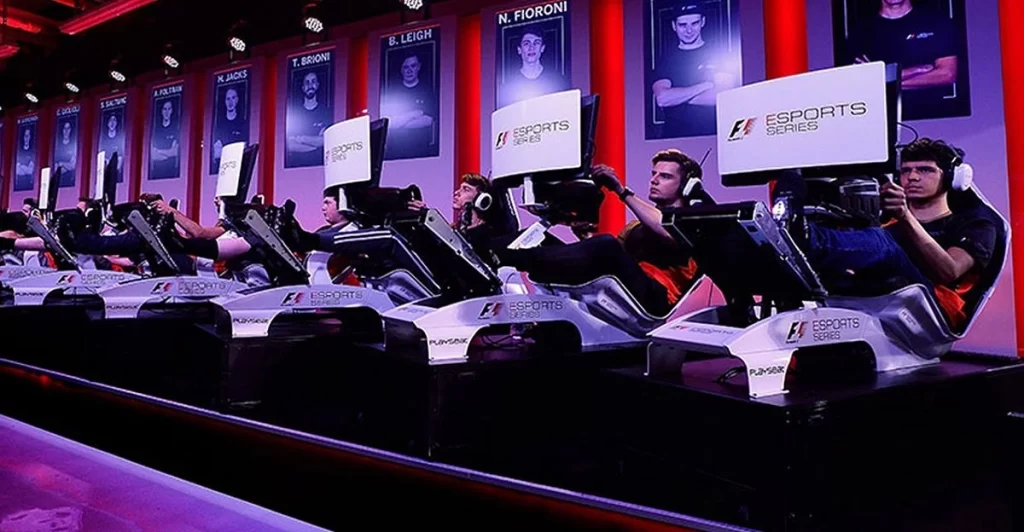
In a watershed moment for Indian motorsport and gaming, Formula 1 has officially partnered with Mumbai Falcons Racing Limited to launch the country’s first sanctioned F1 sim racing championship. Dubbed the F1 Sim Racing India Open 2026, the new competition is designed to turn India’s massive base of F1‑gaming fans into a structured talent pipeline, while simultaneously supercharging the country’s esports–motorsport crossover.
For a generation that grew up tweaking car setups on consoles and debating virtual gridlines on social media, this move feels like validation: your screen time can now be a legitimate stepping stone to the world of professional racing.
What the championship actually is
The F1 Sim Racing India Open 2026 is an official, India‑exclusive F1 sim racing series, run and owned by Mumbai Falcons Racing Limited in partnership with Formula 1. It is the first time F1 has launched a nationally‑focused sim‑racing programme tailored to a single country, underscoring how seriously the sport views India’s fan base and digital‑gaming ecosystem.
The competition will be played on the official F1 25 game, giving participants the same cars, tracks, and virtual environment as the real‑world F1 season. Players can compete on PC, PlayStation 5, or Xbox, keeping the barrier to entry relatively low and maximising reach across India’s diverse gaming landscape.
How the competition is structured
The format is layered, designed to feel like a real motorsport ladder rather than a one‑off tournament.
Online Qualifiers: Open registrations will begin on April 30, 2026, and players will go head-to-head in remote online leaderboards.
This reflects how motorsport talent is identified in the real world – cast a wide net and eventually arrive at a select group of prospects ready to cope with pressure, media and professional environments. For a young gamer in Pune, Jaipur, or Guwahati, it’s no longer just about “maxing out XP” on a game; it’s about making a career‑shaping impression in front of genuine motorsport decision‑makers.
Why India, and why now?
India is no longer a fringe market for Formula 1. With over 78 million F1 fans in the country, the sport has quietly become one of the fastest‑growing motorsport audiences in the world. Much of that growth is driven by Gen‑Z and millennials who experience F1 primarily through streaming, social media, and related video games.
At the same time, esports has taken a leap forward in India’s legal and regulatory framework. The Promotion and Regulation of Online Gaming Act, 2025 has formally recognised esports as a distinct category, giving tournaments and governing bodies a clearer legal foundation. This law essentially tells game‑driven competitions: “You’re not just a side‑hobby anymore; you’re part of the mainstream sports ecosystem.”
Mumbai Falcons, which already runs India’s first F4 championship and has been investing in driver‑development pipelines, is betting that the overlap between virtual racers and real‑world talent is not just cultural—it’s economic. If a few blistering‑fast sim drivers can be converted into real‑track prospects, India could finally start producing the kind of global racing talent that mirrors its hockey or cricket pipeline.
Esports meets motorsport: what this means for careers
Traditionally, becoming a racing driver in India meant either deep family money, wild risk‑taking, or sheer luck. Now, the F1 Sim Racing India Open offers a more democratic route: a structured championship that screens for raw speed, consistency, and mental resilience—all traits that translate whether you’re behind a wheel or a steering‑wheel controller.
For participants, the immediate reward is visibility. The championship is positioned as a “pathway from virtual racing to professional motorsownership”, meaning top performers could be scouted for driver‑development programmes, test drives, or even feeder‑series opportunities. For some, it might even open doors to sponsorship from brands eager to align with high‑profile esports‑driven motorsport talent.
Beyond drivers, the event also opens roles for engineers, data analysts, content creators, and event managers. One of the most interesting questions it raises is: Could India’s next F1‑style driver pipeline be built from a generation of esports‑savvy kids who first proved themselves on a screen, not a go‑kart track?
How this fits into F1’s global sim‑racing strategy
Formula 1 is not just dabbling in sim racing; it is making it a core part of its long‑term strategy. Globally, F1 has launched the F1 Sim Racing World Championship, with events hosted in major gaming hubs like DreamHack. These events are designed to mirror the real‑world season, complete with federation‑style structures, team entries, and global broadcast–style production.
But the India Open 2026 is different. It’s not a fringe national qualifier; it’s a country‑specific, high‑profile programme that carries F1’s official branding and sanction. That signals that India is not being treated as a test market, but as a key growth engine.
For fans, it also means closer access. Instead of watching a distant global sim‑racing event with anonymous usernames, Indian audiences will get to see local names, homegrown rivalries, and familiar cities on the ladder. That kind of relatability is priceless when it comes to building a motorsport culture that feels national, not just imported.
What this means for Indian motorsport culture
India’s motorsport scene has always been a bit of a paradox. On one hand, the sport has passionate fans and a growing number of private circuits, academies, and racing schools. On the other, mainstream visibility and mass participation have been limited. The F1 Sim Racing India Open could help close that gap.
By tying a globally iconic brand (F1) with India’s rapidly expanding esports base, the championship has the potential to:
Democratise racing – No need for expensive karts or track‑time hours; a decent PC or console and a stable internet connection can get you onto the ladder.
Boost motorsport awareness – Tournaments, live simulator rounds, and social‑media‑driven drafts will keep F1 and motorsport in the cultural conversation far beyond race weekends.
Create a talent funnel – Racing organisations, academies, and sponsors will have a visible, measurable pool of young drivers to track, coach, and invest in.
For a country where motorsport has often felt like a “rich‑kids’ club,” this could be the shake‑up that finally makes it feel inclusive. Imagine: a teenager in a 2‑BHK flat in a tier‑2 city, improving their lap times by millisecond increments, all while staring at the same F1 dashboard millions of people around the world are staring at. It’s not just a game anymore; it’s a merit‑based audition.
Connecting sim racing to real‑world racing
The championship is explicitly framed as a bridge between virtual racing and real‑world motorsport, not a replacement for it. Mumbai Falcons, which already runs a driver‑development programme in India, has indicated that top performers could be fast‑tracked into physical‑track training, assessments, and even scholarships or bursaries.
Technically, sim racing has already proven its value in motorsport. Professional teams use simulators to prepare drivers for new tracks, test setups, and refine race strategies. Many F1 drivers openly credit sim racing for sharpening their reaction times and race‑craft. If that’s true for elite drivers, the leap to using sim racing as a talent‑discovery tool is not so radical.
From a training‑perspective, sim racing does something that traditional karting cannot: it exposes drivers to multiple circuits, weather conditions, and car behaviours in a compressed period of time. A young driver in India may not be able to physically drive at Silverstone or Interlagos, but they can race those layouts repeatedly in the virtual world.
That naturally raises another question: At what point does a strong sim‑racing CV become as credible as a strong karting CV in India’s motorsport ecosystem? The F1 Sim Racing India Open might just be the first step in answering that.
India’s broader esports and gaming landscape
India already has a growing base of organised esports motorsport events. The Indian National Esports GT3 Championship and similar series have shown that there is appetite for structured, rule‑based virtual racing. However, the F1 Sim Racing India Open is the first to carry the official F1 stamp and the backing of a team that already operates in the “real‑world” racing ecosystem.
For brands and sponsors, this is a golden opportunity. Motorsport has always been an advertising‑friendly environment, and esports is now a mainstream youth‑focused platform. Put the two together, and you get:
High‑engagement tournaments with live‑streamed races and social‑media hype.
Custom activations around cities, retail partners, and gaming hardware.
Brand‑driven academies and “fastest‑gamer” challenges that double as marketing campaigns.
In a market where young audiences are increasingly time‑poor and attention‑scarce, an F1‑branded sim‑racing league is a powerful way to keep a brand in front of them year‑round, not just on race‑weekend hashtags.
Looking ahead: the long‑term vision
If the F1 Sim Racing India Open 2026 is successful, it could become an annual fixture, much like F1’s own esports world championships. Over time it may evolve to include Women-only or youth-only categories to broaden participation.
Regional leagues that mirror state‑level sports structures.
Academic partnerships with universities in the fields of motorsport engineering, data science and esports management.
For India, the bigger picture is this: the country has long been a consumer of global motorsport content. The F1 Sim Racing India Open is one of the first attempts to position India as a producer of motorsport talent and content, with sim racing at the heart.
As Narain Karthikeyan, India’s first F1 driver, put it when commenting on the initiative: India is not just on the sidelines of F1’s global growth story; it is becoming part of the story itself. The question is no longer whether India can produce F1‑level talent, but how many paths—be it karting, sim racing, or hybrid routes—the country can open to get them there.
For gamers turned racers, the grid has just gotten a lot closer.
India Launches First Official F1 Sim Racing Championship, Blending Esports with Motorsports at Scale