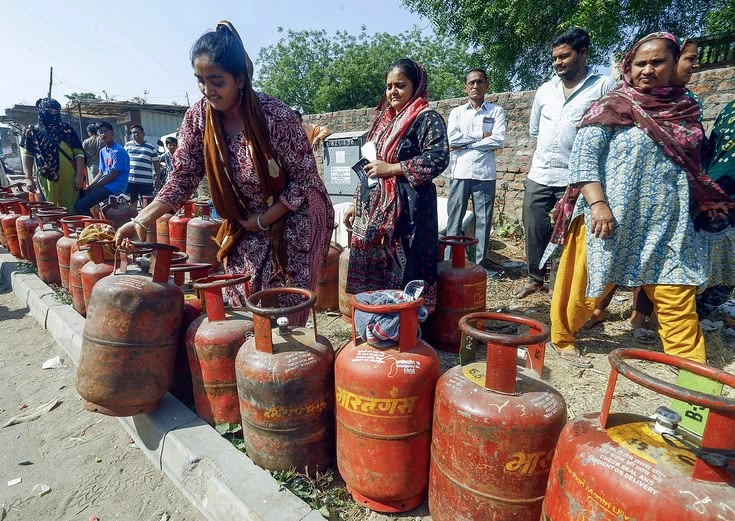
This week the playing field for small company owners across India has changed substantially. Oil marketing firms announced a steep jump in prices of 19-kg commercial LPG cylinders, taking expenses to record levels, effective May 1, 2026. While households are protected from this particular surge with no change in the pricing of petrol, diesel and domestic 14.2-kg cylinder, the commercial sector is bearing the brunt of the adjustment.
The data showed that the cost of a commercial cylinder in Delhi, the capital of India, had shot up to ₹3,071.50, up by ₹993 in the last month. Other big cities are also reporting similar upward revisions, some locations are seeing even more dramatic alterations. This is primarily driven by global energy tensions and continued instability in West Asia and creates an urgent question of how local restaurants, bakeries and service providers will cope with increased operational costs without immediately transferring the burden to the consumer.
The Domino Effect for Small Businesses
Fuel for the backbone of India’s informal sector is not only a utility, it is a fundamental input expense. These 19-kg cylinders are the lifeline of roadside cafes, busy tiffin services, catering businesses and cloud kitchens that keep their wheels turning every day. Now when the price of such an important resource goes up by roughly 1000 rupees in a single night , the immediate response is confusion.
“Now business owners are struggling to find a balance. Many are already running on narrow margins and although some may be looking to modify menu prices to survive, others fear this may dampen client demand. The current scenario is a difficult one for those already dealing with post-pandemic market volatility and supply chain anomalies.
Price in Delhi: ₹3,071.50, New price: up ₹993
Mumbai: Rates crossed the ₹3,000 mark, with sharp rises recorded.
Kolkata & Chennai: Some of the sharpest changes in the cities, with prices crossing ₹3,200 in specific locations.
The Local Reality of Global Energy Conflicts
Oil marketing companies’ decision to change commercial LPG rates is linked to worldwide changes in the energy market. Fighting is still underway between the US, Iran and Israel, and fears over possible disruptions to important trade routes such as the Strait of Hormuz have kept international fuel prices fluctuating. India imports a large part of its crude oil and gas and therefore these foreign pressures often get passed on to the domestic pricing structure.
While the government has shielded the average person from these shocks by freezing home gas and transport fuel tariffs, business energy users are at the mercy of these market adjustments. This difference in pricing policy underlines the government’s priority on keeping prices affordable for domestic consumers, while business companies are forced to shoulder the impact of the global energy crisis.
Can small firms invest in energy-efficient technologies to offset these cyclical price shocks, or are they condemned to a permanent exposure to swings in the global marketplace? For many, a shift to alternative steady energy sources is a long-term objective, but for now, the focus is on day-to-day survival.
The Road Ahead: Facing headwinds
The new pricing is already in effect and many business owners are focused on operational efficiency. More typical are strategies like optimizing burner usage, looking at bulk cooking methods and renegotiating supplier contracts, all to keep their heads above water. Some local business groups have voiced concerns, requesting regulatory support or subsidies to help small-scale businesses weather this fresh financial burden.
The sector is examining the move closely for its impact on overall food inflation. Restaurant prices tend to be sticky but prolonged energy cost pressures usually compel a final adjustment in prices of goods and services. For the average consumer, this means their kitchen stove will remain stable in price for now, but their favorite neighborhood dinner may soon have a price tag that reflects these hidden, rising energy expenses.
Looking Towards a Stable Future
Looking ahead, the erratic nature of commercial LPG prices highlights the need to develop a more robust business model for the hospitality and catering sectors. While the present rise is driven by geopolitical events, the recurring trend of such hikes emphasizes the need for immediate energy diversification. The future looks like one for the brave, those willing to innovate under duress, whether to accept electric induction appliances or more efficient gas-saving technology.
India’s small company sector remains resilient, adjusting to yet another challenge in the rapidly shifting economic scene. As the month goes on, the real test will be whether these businesses can maintain their service excellence without bleeding their bottom lines. There is little likelihood of a change in the short future in the reliance on commercial gas, thus these price changes will continue to be a key factor in the operational health of thousands of companies across the country. “We’re probably going to see the full scale of this effect in the next several weeks as the market adjusts to a new, higher level of energy consumption.”
Small Businesses Face Increased Costs as Commercial LPG Price Rises