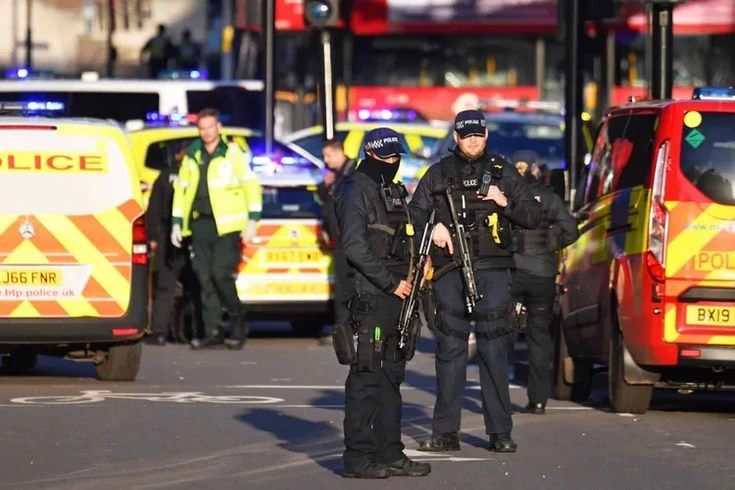
The UK government has formally increased the national terrorist danger level from “substantial” to “severe” in early May 2026, a significant change in the country’s security stance. The judgment by the Joint Terrorism Analysis Centre (JTAC) indicates that intelligence services now think a terrorist strike on UK territory is “very likely” in the next six months. The decision follows a disturbing event in Golders Green, north-west London, when two Jewish men were stabbed in a targeted attack that has shocked local communities and caused an instant high-level response from law authorities.
For many people across Britain the image of “severe” on the national threat scale has a familiar, disquieting weight. The country has not seen this level since February 2022, during a tumultuous period of escalating antisemitic incidents across the city. The government and security services have been keen to stress that it is preventative, based on current intelligence, but the mood on the streets, particularly in districts like Golders Green, remains quite tense.
An Increasing Pattern of Concern
The decision to raise the threat level to severe was not made in a vacuum; it is the result of a sequence of actions over weeks that have worried security officials. But even before the stabbing, London had already been experiencing a troubling pattern of violence against Jewish organizations. Authorities have been investigating a series of arson assaults on synagogues and the firebombing of charity ambulances in the past two months, suggesting a coordinated effort to frighten and hurt the Jewish community.
Things became worse on 29 April 2026, when one man apparently attacked a Muslim in South London before heading to Golders Green, where he tried to stab clearly Jewish passers-by. The quick work of local volunteers and police officers in capturing the suspect saved what could have been a far greater tragedy, but the psychological toll is still significant. It’s an awkward question: How do cities remain open and inclusive places when the prospect of targeted violence seems to be increasing from within?
Intelligence and Reaction
The Home Office and the Met Police have been quick to attribute the increase in risk to wider patterns involving both Islamist and extreme right-wing extremist groups operating within the UK. Intelligence assessments say the groups are turning more to online forums to coordinate activity and spread propaganda, typically targeting minority communities. In response, the government has pledged £25m in security funding to improve measures at vulnerable community facilities including schools and places of worship.
Border security has also been ramped up as part of the wider national response. Passengers arriving at UK airports and ports may expect heightened screening processes as officials try to thwart possible extremist activities before it can take hold. This shift in surveillance and policing is not meant to incite panic but to provide a protective layer for a public that is currently navigating an environment in which the threshold for risk has been palpably lowered.
The human price of fear
Apart from a geopolitical analysis and strategic changes by JTAC, the most immediate effect of this shift is a sense of fear in the impacted populations. The latest attacks have not felt to the London Jewish community like individual criminal acts but rather a sustained effort to undermine their sense of security in their own homes In a place where community engagement is the norm, public life has been altered to a heightened state of awareness, and people are told to be more alert in their daily activities.
Is there a way that we can have strong national security and also retain the openness and sense of community that we have in cities like London? Now it’s up to local authorities to try to preserve that balance, while ensuring that individuals who feel targeted are given the assistance and security they need to go about their lives without continual fear.
Practice of National Security
The “severe” label initiates a familiar cascade of rules that range from intelligence sharing among foreign partners to the everyday functioning of police on the beat. To the typical Briton it may not look like a drastic overhaul of their daily commute, but the administrative and tactical heft of this move is enormous. The environment for business travel has also become more complicated, with extra checks at points of transit, and employers have been urged to reassess their duty-of-care policies, particularly for frequently travelling staff.
Key features of the present response are:
Increased high-visibility police patrols in high-risk or sensitive regions.
Improved screening procedures at the UK border to detect and address possible threats at an early stage.
Targeted funding for community security infrastructure, including for faith-based nonprofits and schools.
Increased collaboration between national intelligence agencies and foreign equivalents to monitor global extremist networks.
A method of stabilization
As the UK moves through this high alert phase, the question increasingly being asked is how long this “severe” classification may continue in place. History has shown these levels may be sustained for months, even years, depending on the fluidity of intelligence collected by services like MI5. The government has said the main aim is to stop further events, but there is also a wider realisation that real security comes from tackling the radicalisation routes that allow these extreme ideas to develop in the first place.
Over the next months, there will probably be an acceleration of public information campaigns aimed at encouraging locals to report suspicious activities, as the efficiency of the security agencies is dependent upon the collaboration and vigilance of the public. The revelation that the threat level has been raised is clearly a cause for anxiety, but officials insist that the UK’s counter-terrorism capabilities are strong and more than able to deal with these changing difficulties. Whether these steps will succeed in easing the anxiety that currently pervades the national security environment, or whether this is the start of a sustained period of hyper-vigilance across Britain, only time will tell.
UK escalates national terror threat to ‘severe’ following London stabbing