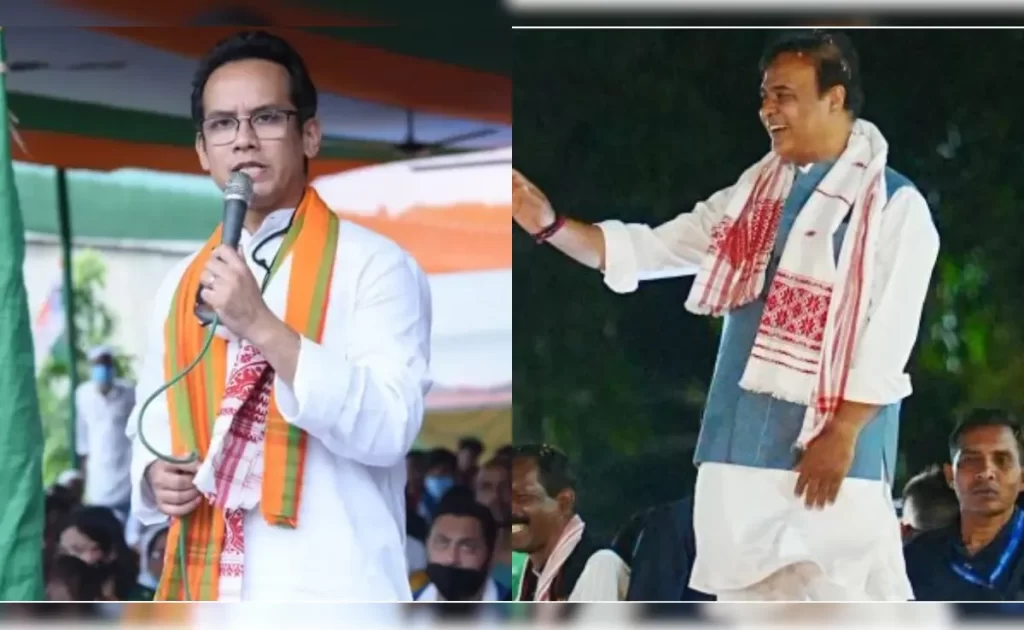
Assam has started voting, and the early mood indicates a decisive political struggle that could determine the course of the state for the next five years. At the core of it all are Chief Minister Himanta Biswa Sarma and Congress leader Gaurav Gogoi as the BJP-led NDA looks for a third straight term and Congress aims to mount a return.
The 2026 Assam assembly election has been receiving exceptionally high attention because it is not simply about seat numbers. The question is whether the electorate wants to continue with the development pitch of the BJP or wants a change of guard led by the Congress’s promise of a cleaner and more inclusive alternative. The vote count across the state has the result being followed intently in Guwahati, Delhi and beyond.
High Stakes Assam
Counting of votes for all 126 Assembly seats began at 8 am and postal ballots were counted first. The outcome will decide the destiny of 722 candidates, including 59 women, in a state where political rivalry has sharpened over the past decade.
This year’s election was notable for one significant reason: voter turnout. The state claimed to have obtained the greatest ever turnout in its electoral history at 85.38 per cent. Such turnout is usually an indication of considerable public interest and it often raises the stakes even more for both the ruling party and the opposition.
BJP seeks hat-trick
For the BJP, the election is being packaged as a vote on governance, infrastructure, welfare delivery and political stability. The party and its NDA partners have spent months trumpeting roads, train linkages, airport expansion, business projects and social welfare schemes as proof that Assam has entered a new phase of growth.
Exit poll trends indicated a lead for the BJP-led alliance, with projections predicting a comfortable majority. Several sites reporting early counting tendencies of the NDA ahead further added to the notion that the ruling coalition remains in a strong position.
That said, Assam elections have thrown up many shocks and the margin is as important as the lead. If the BJP crosses the finish line with a strong total, it will bolster Sarma’s position not only in the state but in the larger national political environment too. If the numbers get tighter, the story changes rather fast.
Congress Seeks Revival
The Congress has put up Gaurav Gogoi in the fray, banking on his profile and the party’s reinvigorated organisational push to regain lost momentum. Gogoi has sought to project the Congress as the voice of change, arguing that the BJP’s extended tenure has not adequately addressed issues on corruption, local identity and equal development.
Gogoi’s own seat, Jorhat, has become one of the symbolic battlegrounds of the election. BJP was ahead in early trends in the seat, making it a carefully watched barometer of the opposition’s overall performance.
Congress realizes this election is about more than a handful of seats. It is about staying relevant in a place where the party formerly ruled but has had trouble putting together a lasting statewide machine again. A bad finish would raise tough questions about organisation, leadership and how the party plans to compete in the Northeast in the long term. This is the poll that can ultimately change the opposition space in Assam? That’s the question that hangs over counting day.
Issues That Defined The Vote
The Assam election campaign was dominated by a traditional but potent mix of concerns: development, migration, identity, eviction drives and welfare. In the state these are not abstract political slogans but issues that touch on everyday life, land, jobs and community strife.
The BJP emphasised on infrastructure and governance, but also on its stand against infiltration and safeguarding of indigenous identity. But Congress wanted the conversation to include local economic hardship, social tensions, and what it termed uneven growth.
That’s one reason why the Assam elections continue to be so crucial – the clash of these narratives. The state is a long memory on political pledges and voters generally respond to a blend of identity, delivery and trust rather than a single topic.
Security and Counting Procedure
The Election Commission has established a sprawling counting network across the state with counting being held at several centres under strict security. Reports said Assam has 40 counting centres across all 35 districts, while other versions revealed 52 places earmarked for the procedure, reflecting the scope and sensitivity of the exercise.
Security has been a primary priority of the approach. EVMs were kept in well secured premises and counting centres have been placed under multi-layer security arrangements with central armed personnel deployed. That amount of precaution is normal for a high-stakes election, but in a politically volatile campaign like Assam’s, it also helps reassure voters that the process is being handled carefully.
Postal ballot is being counted first, then the EVMs. Practically speaking, this implies that the first few rounds can set the tone, but the ultimate image may still change when additional constituencies are opened up. Early leads help but they are not the same as the ultimate result.
What the Numbers Might Mean
The first headline on counting day is the early trends that show the BJP led NDA seemingly ahead. Several reports suggested the alliance was well ahead of Congress and the ruling side was on course to cling to power.
If the trend continues, Sarma is expected to get a strong mandate for a third term and the BJP would see the result as a confirmation of its Assam model. That would still anchor the state’s politics around the BJP’s combination of development, welfare and identity-based messages.
But even if Congress doesn’t win, just doing better than projected could still matter. A more forceful display of opposition would lift the spirits of the party and might help restore confidence among workers and voters in the run-up to future campaigns. Even a partial recovery can be the start of a more extensive turnaround in a state like Assam with its complex layers.
Why Assam matters outside Assam
Assam is typically viewed as a regional struggle, yet its politics has a larger national impact. The state is at the crossroads of border issues, migration debates, development aspirations and the BJP’s bigger Northeast strategy. What happens here often tells us something about what the party is making of the region in the aggregate.
Congress’s performance in Assam is also being scrutinized as part of a larger question: Can the party rebuild in places where it has lost ground over multiple election cycles? A good result would not fix everything, but a bad one would bolster the sense that the party’s revival is spotty.
But for the average voter, the question is easier. Will the next government offer jobs, better roads, stronger public services and a calmer political environment? That is what this election has been about from the beginning, more than any slogan.
Assam Election Results 2026: Counting Underway in BJP-Congress Clash, Himanta Biswa Sarma Targets Historic Third Term