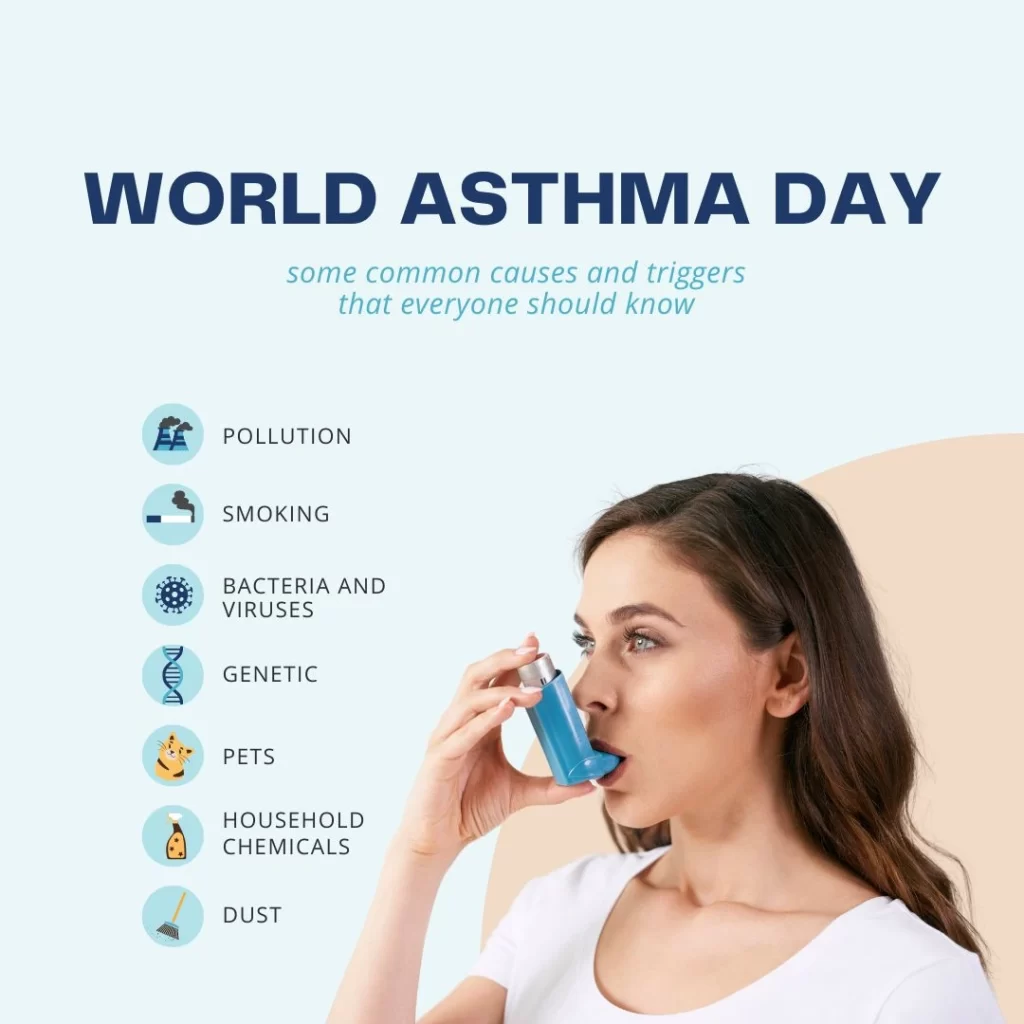
Every May 5, the world pauses to shine a light on asthma, a disorder that quietly impacts lives all around the planet. This year, as we mark World Asthma Day 2026, the attention is on a vital gap: providing millions who need them most with access to inexpensive inhalers. This isn’t just a health issue, it’s a question of fairness, particularly in areas like India where pricing and access can mean the difference between breathing comfortably and a hospital bed.
Why Inhalers Are More Important Than Ever
Asthma is a disease of equal opportunity, but treatment is not. The 2026 theme is right on the money: “Access to anti-inflammatory inhalers for all people with asthma — still an essential need.” Picture this: more than 250 million people globally have asthma everyday, but affordable, basic controller inhalers are unavailable to many in low- and middle-income nations. These are not luxury drugs, they are inhaled corticosteroids (ICS) which quiet inflammation, reduce attacks and save lives.
India alone sees millions of such battles. Urban fog in cities such as Delhi and Pune combines with rural dust to set off flare-ups, yet inhalers can cost a day’s wages or more. What’s the delay? Patents drive up prices, supply systems fail and knowledge is lacking. The Global Initiative for Asthma (GINA) recommends 2-in-1 inhalers that contain both relievers and steroids, yet even these fundamentals are not available to 80% of the population as recommended by WHO. It’s a reminder that there is effective care, but who receives it?
The Global Asthma Crisis Explained –
Let’s look at the numbers. Asthma kills someone somewhere in the globe every 30 seconds. Most of these fatalities can be prevented with cheap inhalers. Low-income areas take the hit – sometimes there are short-acting beta-agonists, but ICS inhalers? Often not even close to shelves or finances. The UN’s nod in late 2025 recently backed efforts like FIRS’s drive for inhaled medications in COPD and asthma care. That’s a hint that governments are waking up.
India is a mirror to this catastrophe. The occurrences have risen 20% in the past decade due to increasing pollution and urbanization. In Maharashtra, industry emissions and traffic choke the air, severely affecting children and workers. Ever wondered why some breathe unfettered and others ration puffs? There’s also the stigma: some avoid inhalers because they fear “weakness” and opt for dubious home remedies that make matters worse.
Quick look at key stats:
Affecting more than 250 million people worldwide.
ICS availability <50% in several LMICs.
India has 20 million cases, urban pockets worst hit.
Avoidable Deaths: 80% with sufficient access.
These are not abstract numbers. These are families missing meals to buy medications.
Asthma in India: Opportunities and Challenges
World Asthma Day is home sweet home in India, zoom in. Emergency rooms buzz with asthma flares. IT hubs in Pune hum. Cheap inhalers could halve hospitalisations but generics can’t compete with branded imports. Programs like Ayushman Bharat try to cover the fundamentals, but inhalers often go through the gaps. Rural clinics store medicines, not puffers.
Look at the Smile Foundation’s work: they’ve pointed out how cost and know-how are roadblocks to growth. “An ICS inhaler can cost 10% of monthly income in low-income neighborhoods. training’s important too because incorrect technique wastes half the dose. May 5, 2026 Community drives showed correct use, instruction and free samples. What if every clinic had spacers for kids? • Simple tools like those raise delivery by 30%, but they are unusual.
Progress is glimpsed. UN promises post-2025 lead generic makers to increase output and lower prices by 15-20% in some cases But experts say incentives, bulk buying and awareness campaigns through apps and local leaders are needed.
Voices From the Frontline
Stats don’t cut through real stories. From nights of dread to school days: How a free inhaler camp in Mumbai slums reduced attacks of a mother’s son In line with the call of 2026, GAN’s 2025 report gathered stories from patients all across the world. One African parent said, “Treatment with relievers only? “It’s like sweeping up in a flood. Anti-inflammatories get to the root, not just the symptoms.
Factory workers in Pune endure it daily. Dust and shifts mean work flares, cost jobs. One union leader advocated employer clinics for ICS stock – minor gains but scalable. These voices ask: How long before affordability is no longer a privilege?
Dealing with the root causes
Asthma feeds on triggers: pollution, smoke, allergens. 15% of instances are fuelled by India’s air quality index which regularly shouts “severe” Inhalers just manage symptoms, but prevention is ideal – clean air regulations, no-tobacco zones, green areas
Health systems fall behind too. Primary care docs do a good job prescribing the proper thing, but what about the follow-up? Splotchy. And today, digital tracking applications help, noting peaks and reminding puffs. But in the villages, no signal meant no help. For instance, FIRS campaigns for regulatory changes and patent pools for affordable generics.
Economics is hard. WHO aims for affordability – one day’s wage max – but ICS typically treble that Pharma, NGOs seek solutions in multi-stakeholder talks: tiered pricing, local manufacture
Technology and Innovation Taking Over
Hope is brewing in labs. Smart inhalers with sensors to monitor usage and provide phone reminders to take medication. India’s companies adapt generics for the tropics: Humidity-proof canisters last longer. 3D manufactured spacers reduce cost by 70% – ideal for rural places.
Telemedicine bridges the gaps. Apps connect patients to lung specialists who prescribe via video post-COVID Virtual fairs demo these saw thousands in events in 2026. Combine with AI that predicts flares from weather data ? The game-changer for urban India.
Policy Changes Pick Up Pace
Calls were amplified by World Asthma Day 2026. UN resolution in 2025 outlines stages of action – states vow to provide access to inhaled treatment for 650 million suffering respiratory illness. India’s health ministry turns to national stockpiles, takes cue from COVID vaccine drives
GINA standards prioritize ICS in all ages including preschoolers. Red tape holds up generic drugs, corruption drains money. Challenges remain. But the momentum is building – post-May 5 public pressure might tip the scales.
Easy Steps to Better Control
Patients don’t have time for policy. Here’s expert-driven practical advice embedded in plays:
Master technique: Practice with spacers. Breathe out completely, breathe in slowly.
Apps track pollen, pollution, avoid peak hours: Track triggers.
Lifestyle tweaks: Yoga can help with stress flares, dust-free houses can aid
Join local advocacy groups to promote stocking in clinics.
What simple change will make your day, or the day of a loved one? Awareness reverses scripts, beginning with awareness.
Looking Ahead: A New Policy Perspective
World Asthma Day 2026 was not just a date, it was a call to arms. The answer is inexpensive inhalers. Millions are waiting. The access divide is an urgent demand, from the filthy streets of India to the global village.”
Wins: UN backing, price drops etc but size important. Imagine universal ICS by 2030: less death, more life. Pharma must innovate. Governments must subsidize. Communities must educate. Stakeholders must act. Each breath reminds of need. Until then. The question is: Will 2027 bring actual change or just more platitudes?
World Asthma Day 2026: Affordable Inhalers Needed to Save Millions