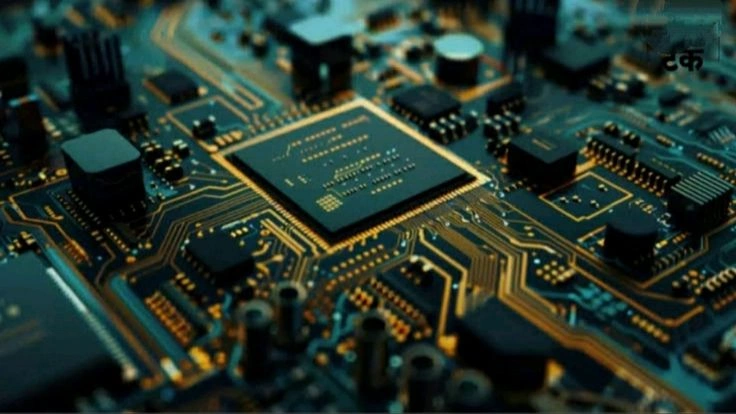
A significant boost to India’s dream of becoming a semiconductor powerhouse. The Union Cabinet has authorized two major projects in Gujarat costing more than ₹3,900 crore under the India Semiconductor Mission, a bold move towards self-reliance in chip manufacture.
The Approval Process
These are not just ordinary initiatives, these are the last lot of projects of the first phase of India Semiconductor Mission or ISM 1.0. The Cabinet, headed by Prime Minister Narendra Modi, cleared two facilities dedicated to cutting-edge tech on May 5, 2026.
One is from Crystal Matrix Limited (CML) in Dholera, building the country’s first commercial Mini/Micro-LED display facility based on Gallium Nitride (GaN) technology. This plant will be used to manufacture Mini/Micro-LED display modules, plus GaN foundry services comprising epitaxy on 6-inch wafers, with an annual capacity of 72,000 square meters of panels and 24,000 sets of RGB GaN epitaxy wafers.
The other is from Suchi Semicon Private Limited (SSPL) in Surat, an Outsourced Semiconductor Assembly and Test (OSAT) facility making discrete semiconductors such as lead frame and wirebond packaging conductors. These will find their way into daily devices such as air conditioners, TVs, mobiles, PCs and even EV battery management systems.
Together, they are backed by an investment of ₹3,936 crore and are expected to produce 2,230 skilled jobs. Gujarat is already a hotbed and these add to the huge commitments like Tata Electronics’ fab in Dholera and Micron’s ATMP in Sanand.
Why Gujarat? The Semiconductor Boom in the State
Gujarat is not falling into this role by accident. The state has aggressively pursued chip producers, giving up to 75% in land subsidies, up to 40% in financial assistance, and advantages on power and water. Sanand, Dholera and now Surat are coming up as silicon hubs.
Verify the figures: four large units alone have generated approximately ₹1.24 lakh crore for Gujarat. Tata’s Dholera fab, a ₹91,000 crore behemoth in partnership with Taiwan’s Powerchip, aims to produce 50,000 wafers a month. This year, Micron’s Sanand facility – the world’s largest clean room for assembly at 500,000 sq ft – began production and is targeting one billion ICs a year by 2027.
CG Power, together with Renesas and Kaynes Semicon, are also in Sanand with investments of ₹7,600 crore and ₹3,300 crore respectively. Japanese corporations are getting in, too – 30 component suppliers are spending to support these operations. It’s developing an entire ecosystem from design to packing.
For a state known for vehicles and chemicals, this change feels natural. Dholera’s Special Investment Region has infrastructure in place and the vision plan of the government, Gujarat SemiConnect, aims for a local to global value chain.
Inside the India Semiconductor Mission:
Launched in 2021, ISM is India’s response to decades of reliance on imports for virtually all of its chips. It provides 50% fiscal support to fabs and OSATs to expand capacity for design, fabrication and assembly at a cost of Rs76,000 crore.
With these approvals, ISM has a total of 12 projects cleared with an outlay of ₹1.64 lakh crore. Two are now in commercial production, and others are starting. But it’s not only plants. Government aid has assisted chip design efforts at 315 academic institutions and 104 startups.
The mission seeks to address India’s 100% dependence on imports, which costs $20-25 billion annually. We are on pace to commence production at four major plants by 2026. The new LED factory is a jump in GaN tech, efficient for power electronics, displays and EVs, where India has to catch up fast.
Jobs, Economy & Real World Impact
These projects are more than just chips. Just the two new ones means 2,230 skilled jobs – engineers, technicians, operators. Gujarat’s semiconductor effort will create an estimated 53,000 new jobs.
Economically it is huge. India’s semiconductor business, currently worth $52 billion in 2024, is expected to touch $103 billion by 2030, powered by mobiles (60% share), vehicles and data storage. $500 billion chips industry worldwide; India wants a share of US-China action
For India this translates to cheaper electronics, stronger EVs and 5G roll-out. EVs alone need specialist chips for batteries – and SSPL’s packaging is a perfect fit. GaN screens could lower power consumption in TVs and phones, keeping up with green targets.
For the average Joe, think cheaper Indian chips in your next smartphone or car. Factories of Gujarat to cater for local needs, exports to minimize import bill
The Challenges Before Us
Building a semiconductor industry is not easy. India has no fabs , no skilled talent and no ultra pure water/power infrastructure. ASML litho machines are also expensive and complicated.
The talent gap is real: demand outstrips supply globally. Training programs are growing up, but it takes time to scale to millions of wafers. Water use is enormous, one fab uses as much as a city.
Geopolitics is putting pressure. Taiwan earthquakes’ supply chain snarls are a lesson on why diversification matters India has to get export regulations right, woo partners like Taiwan, Japan, US
But the momentum is there.” PM Modi’s clean room visit sends positive message for Micron The question is, can India sustain this pace? Will these plants be at full power by 2027?
The Global Context and India’s Big Play
Semiconductors power AI, defense and everything else in the world. Taiwan makes 90% of modern semiconductors; shortages recently devastated automobiles, phones. India as a benign alternative.
PLI plans drew in heavyweights like Micron ($22,516 crore), Tata-PSMC. The cluster in Gujarat matches that of Taiwan—proximity decreases costs of logistics. India eyes $85 billion market 600,000 employment by 2030
GaN shines in EVs and renewables with increased efficiency and smaller size CML’s plant might ship to Europe, where green regulations work in its benefit.
Future Outlook
Gujarat leads the charge as ISM 1.0 ends on a high with these ₹3,900 crore approvals. India’s chip ecosystem is coming of age, from Dholera’s GaN magic to Surat’s packaging expertise.
Commercial shipments are starting, jobs are flowing, investments are pouring. There are challenges ahead (talent, infra, execution) But direction is exciting As Minister Ashwini Vaishnaw said, “2026 represents admittance into global club.
India is not just generating chips, it is creating a tech independent future. So what’s that mean for your next gadget? Perhaps more ‘Made in India’ within. There is commitment to 12 projects and Rs 1.64 lakh crore, so the silicon revolution looks serious.
Union Cabinet approved a ₹3,900 crore semiconductor push in Gujarat, a big push for India’s chip ambitions.