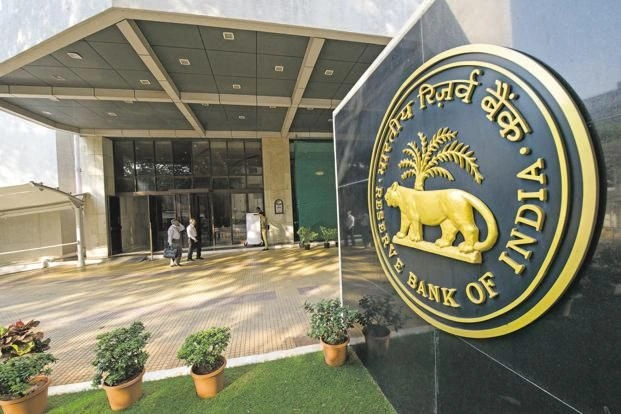
The handshake was silent but the implications are anything but silent. On May 10, 2026, two of the world’s most prominent monetary institutions—the Bank for International Settlements (BIS) and the International Monetary Fund (IMF)—came together as one. The official announcement of their alliance was made on the sidelines of the BIS meetings in the Swiss city of Basel. The signing of a new Memorandum of Understanding on collaboration in the sphere of central banking by RBI Governor Sanjay Malhotra and ECB President Christine Lagarde signified something bigger than a piece of paper.
It’s not every day the central bank of the world’s most populous country officially boosts ties with the central bank of a 20-nation currency union. The original MoU was struck between the Reserve Bank of India and the European Central Bank in January 2015 when then-RBI Governor Raghuram Rajan and ECB leader Mario Draghi signed a similar pact. More than a decade later, as the global financial order shifts under the weight of trade tensions, digital currency experiments and post-pandemic monetary recalibrations, both institutions thought the time was appropriate for an upgrade.
—
WHAT THE MoU REALLY SAYS
The foundation of the amended agreement is a structured commitment to keep talking. It is a platform for regular exchange of information, ongoing policy discourse and technical cooperation between the two institutions in areas of common interest in the field of central banking. Technical cooperation, the official announcement said, might include collaborative seminars and workshops – modest-sounding until you realize the range of issues that central banks are presently battling with across the globe.
Consider the vast range of the terrain modern central banks have had to traverse since 2015, from digital currencies and cybersecurity in financial systems, to cross-border payment infrastructure and banking stress testing. A memorandum that was sufficient for that age possibly needed updating for this one.
“It is crucial that we maintain the global partnership, and I am glad to sign this MoU along with Governor Malhotra as a sign of our continuous discussion with the Reserve Bank of India,” Lagarde said clearly in a statement after the signing. There was no diplomatic vagueness. This was an open endorsement of the relationship by the ECB president.
The Basel backdrop – why the BIS meetings are important
The place of the signing was no accident. The Bank for International Settlements in Basel is sometimes regarded as the central bank of the central banks — and it’s where the world’s monetary officials gather to share data, build global regulatory standards, and, yes, sign deals like this one. The RBI-ECB accord on the sidelines provided another layer of institutional legitimacy to the event.
Basel was also the birthplace of frameworks like the Basel III rules – the post-2008 global banking laws that control capital adequacy and risk management. That both the RBI and the ECB are active members in BIS bodies means this MoU falls inside a bigger ecosystem of global banking cooperation, not outside it.
The Significance of the Timing
This MoU was not formed in a vacuum. It comes at a time of unprecedented acceleration of the greater economic ties between India and the European Union. In January 2026, after over two decades of discussions, India and the EU formally inked a momentous Free Trade Agreement — an agreement that EU Commission President Ursula von der Leyen has lauded as creating “a free trade zone of two billion people, a fifth of the world GDP”.
The EU is India’s greatest trading partner today, with bilateral commerce in goods reaching €120 billion in 2024. In 2023, trade in services was around €60 billion. Now that an FTA is in place, those figures are projected to rise considerably. In this context, a reformed framework for cooperation between central banks is not simply symbolic but genuinely required.
When trade volumes between two locations increase this rapidly, the financial plumbing beneath has to keep up. Banking supervisors need to comprehend each other’s regulatory contexts. Monetary policymakers gain from real-time information on how each system is working. Risks, be they inflationary pressures, exchange rate volatility or potential systemic stress, circulate faster among interconnected economies than any official notice could.
The UPI Factor: India’s Payment Revolution Meets Europe
The RBI-ECB partnership is particularly noteworthy at the moment in one dimension of India-EU financial cooperation, which is the ongoing internationalisation of India’s Unified Payments Interface. UPI, which processes more than 18 billion transactions a month in India, has been slowly growing its global footprint. France became the first European country to embrace UPI payments in 2024 . Cyprus, mid-2025. More EU countries are understood to be in varying stages of discussion.
The larger infrastructure play, however, is the potential connection of UPI with the EU’s TARGET Instant Payment Settlement (TIPS) system. The terms of the India-EU FTA already set the stage for the two sides to explore this connection, which would allow near-instant and low-cost cross-border payments between India and the Eurozone, replacing the current reliance on pricey SWIFT-based correspondent banking. This would be momentous for millions of Indian students, workers and enterprises operating across Europe.
The RBI-ECB MoU institutionalizes regular technical discussion and offers the correct kind of forum for these conversations to place at the regulatory level. Payment system interoperability is not merely a technical effort. It involves extensive coordination among central banks on settlement design, exchange rate risk, fraud liability, and compliance standards. That’s exactly what a structure for cooperation like this is supposed to foster.
Banking Supervision in a World of Interconnections
However large and well-resourced, no central bank can really take on systemic risk alone in today’s financial landscape. The honest answer is no, and both the RBI and the ECB know it.
Global banks work across jurisdictions. The events of 2008 and the mini-banking panic of 2023 revealed how a stress in one banking system can propagate through others in a matter of hours. A structured information-sharing arrangement with the ECB — which supervises the banks of 20 euro-area nations — is a key supervisory asset for the RBI, which regulates a banking sector increasingly integrated into global capital markets.
The partnership is important for the ECB since Indian banks and financial institutions have a growing footprint in Europe and European banks have a large exposure in India. The more open these systems are to each other’s regulators, the more likely it is that both sides will be able to recognize emerging hazards before they turn into full-blown catastrophes.
The MoU also opens the door for the two institutions to work together on emerging regulatory challenges — from crypto-asset market and central bank digital currency (CBDC) supervision, to climate-related financial risk disclosures, all of which are increasingly on the agenda of every serious central bank.
## India’s Growing Monetary Diplomacy
This arrangement is a component of a broader trend of the RBI actively forging its foreign institutional links. Over the last few years, India’s central bank has entered into or renewed cooperation arrangements with its colleagues across Asia, the Middle East and now Europe. Each shows India’s growing economic clout and its desire to shape, rather than simply respond to, global financial rules.
The Basel signature is an early, but obvious example of the kind of foreign involvement Sanjay Malhotra, who took over as the RBI governor in late 2024, intends to pursue throughout his tenure. For her part, Lagarde has long prioritized multilateral financial cooperation during her term at the ECB, especially as the world order has grown more fragmented.
Implications for Indian Business and Banks
The MoU will have an immediate impact in the corridors of regulatory and supervisory powers, but not on the lending rates or account statements of ordinary citizens, at least not immediately. But the downstream impacts are palpable. Both Indian banks looking to extend their activities in Europe, and European banks looking to increase their presence in India, will have a more informed, better coordinated regulatory environment on both sides. That removes compliance uncertainty, which reduces the cost of conducting business across the corridor.
The new FTA will decrease tariffs on over 96% of EU exports, which is good news for Indian companies exporting to the EU. Central bank collaboration is significant because inter-connected systems cover the financial activities of these companies. Trade finance, currency hedging and cross-border credit facilities all function more smoothly when the underlying regulatory authorities have developed channels of trust and information exchange.
A Framework, Not a Binding Treaty
It’s worth being clear about what an MoU is and isn’t. This is not a legally binding contract with binding responsibilities. It does not integrate the RBI and ECB regulatory regimes, nor does it impose any binding supervision obligations. What it accomplishes – and this is important – is build a persistent, formal channel to communication that would otherwise depend on informal relationships or ad hoc interactions.
That formal route counts more than any single piece of legally enforceable language in central banking, where institutional trust is vital and information asymmetries can have significant implications. It sends a signal to markets, to other institutions and to governments that these two central banks view each other as serious, reliable partners.
RBI & ECB sign landmark MoU: What India’s central banking pact with Europe actually means