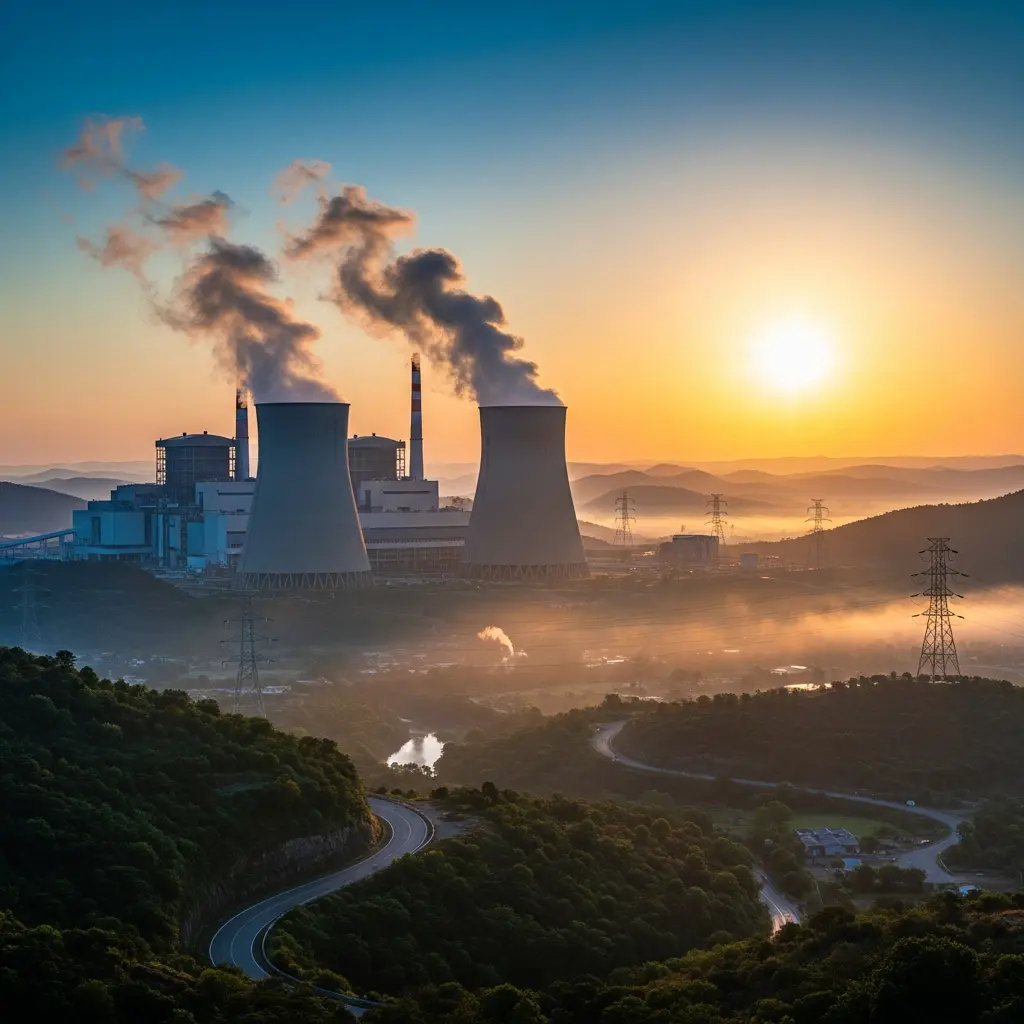
There’s a certain irony in the fact that one of the world’s most solar-rich countries is quietly placing one of its biggest long-term energy bets on nuclear power. But that’s exactly what India is doing. And the more you look at the reasoning behind it, the harder it is to argue with the logic.
India’s energy planners have been remarkably candid in recent months about what the country’s electricity future needs to look like. Renewables — solar, wind, hydro — will form the backbone of a cleaner grid. Everyone agrees on that. But the harder, less glamorous conversation is about what keeps the lights on when the sun doesn’t shine and the wind doesn’t blow. For India, increasingly, that answer is nuclear.
The 2047 Horizon and What It Actually Means
India’s push to significantly expand nuclear power capacity by 2047 is not a vague aspiration. It sits inside a very specific national narrative — the centenary of Indian independence, a moment the government has framed as a target date for transforming India into a fully developed economy. The energy requirements of that transformation are staggering.
India is already one of the world’s largest electricity consumers, and demand is accelerating. Urbanization, industrialization, the electrification of transport, the expansion of data centers — every major economic trend points in the same direction: up. Renewables will scale, but they cannot scale fast enough or reliably enough on their own to meet what is coming. Nuclear energy fills that gap in a way no other source can.
The numbers give a sense of the ambition. India currently generates a relatively modest share of its electricity from nuclear — around three percent of total capacity. The plans being discussed would require multiplying that many times over, which means building reactors at a pace India has never attempted before. That is a tall order. It is also, arguably, a necessary one.
Why Nuclear Makes Sense for India Specifically
Every country has its own energy geography, and nuclear’s case is different depending on where you stand. For India, several factors converge to make nuclear energy policy particularly compelling.
First, there is the carbon question. India has made significant international commitments on climate — net-zero by 2070, substantial renewable capacity by 2030. Meeting those commitments while growing an enormous economy requires low-carbon baseload power, and nuclear is the densest, most reliable form of it available. Unlike coal, it produces no direct carbon emissions. Unlike solar and wind, it generates power around the clock regardless of weather conditions.
Second, there is energy security. India imports a substantial portion of its fossil fuels, which means its energy supply is perpetually exposed to price volatility and geopolitical risk. Nuclear fuel cycles are long and can be partially domesticalized — India has significant thorium reserves, and its three-stage nuclear program, decades in development, is designed precisely to leverage that domestic resource over time. Clean energy from a domestic fuel source is a different kind of asset than imported natural gas.
Third, and perhaps most underappreciated, is the electricity demand curve India is about to face. As hundreds of millions of people move into the middle class, buy air conditioners, refrigerators, and electric vehicles, peak electricity demand will climb sharply. Nuclear plants, once built, provide steady and predictable output that grid operators can plan around. That kind of reliability has enormous economic value.
The Infrastructure and Technology Challenge
None of this happens automatically. Experts are right to emphasize that India infrastructure investment — both in the nuclear sector and in the broader grid — will determine whether these ambitions remain on paper or become reality.
Building nuclear capacity at scale requires a supply chain: specialized steel, pressure vessels, turbines, control systems, and the highly trained workforce to operate and maintain complex facilities. India has been developing these capabilities, but they need to grow substantially. Regulatory processes need to move at a pace consistent with ambitious deployment targets without compromising the safety standards that make nuclear viable in the first place.
Technological modernization is the other half of the equation. The global nuclear industry is not standing still. Small modular reactors — smaller, factory-built units that can be deployed more quickly and flexibly than conventional large reactors — are moving from concept toward commercialization in several countries. India is watching this space carefully, and any long-term nuclear expansion plan that ignores SMR technology would be planning for yesterday’s industry rather than tomorrow’s.
International partnerships matter here too. India has civil nuclear agreements with several countries and has been working to expand cooperation on reactor technology, fuel supply, and safety expertise. Those partnerships are not just diplomatic courtesies — they are practical inputs into India’s ability to build out its nuclear sector at the pace required.
Balancing Growth, Climate, and Rising Demand
The broader policy challenge India faces is one of simultaneous pressures. Industrial growth cannot pause while the grid is cleaned up. Climate commitments cannot be quietly shelved to keep factories running. And electricity demand will not wait politely while infrastructure catches up.
Nuclear energy policy in India, viewed through this lens, is less about ideology and more about arithmetic. When you add up what India needs — firm, low-carbon, large-scale, domestically secure electricity — nuclear comes out as an essential part of the answer. Not the only part, but an irreplaceable one.
The decisions made in the next five to ten years — on site selection, technology choices, regulatory reform, workforce development, and international partnerships — will determine whether India’s 2047 nuclear ambition becomes one of the great infrastructure stories of the century.
The ambition is there. The reasoning is sound. Now comes the harder part: building it.
India Is Betting Big on Nuclear Power — Here’s Why It Might Be the Smartest Energy Decision It’s Ever Made.