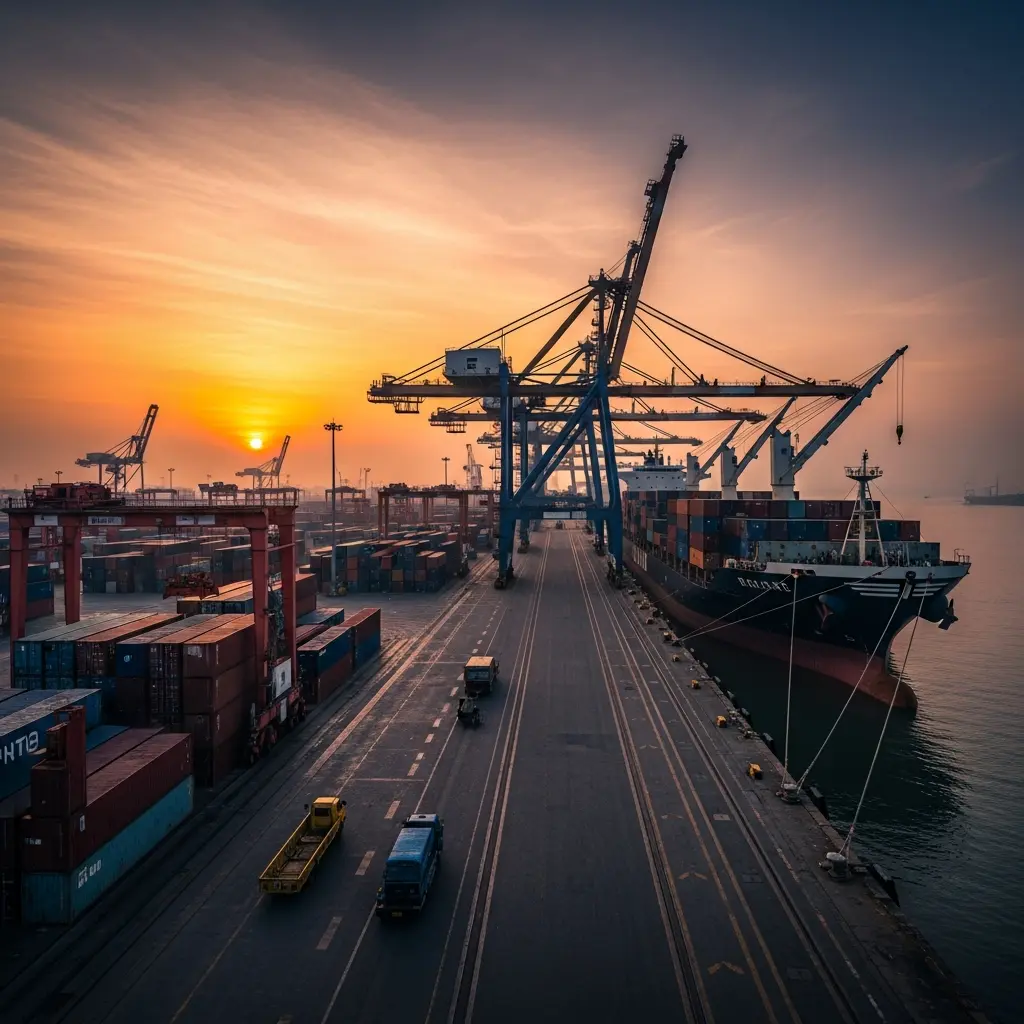
For years, the world watched China dominate global manufacturing and supply chains with a kind of quiet awe. But something has been shifting. Slowly at first, then all at once. India — with its vast workforce, growing technical capabilities, and increasingly confident foreign policy — is stepping into a role that many analysts have been predicting for over a decade. And across Asia, governments are starting to take that very seriously.
Recent rounds of diplomatic engagement between India and several Asian economies have moved well beyond handshakes and photo opportunities. These are substantive conversations about semiconductor cooperation, digital trade frameworks, and the kind of deep supply chain integration that takes years to build and even longer to undo. The message India is sending is unmistakable: it is open for business, and it intends to be a reliable partner.
Why Now? The Timing Isn’t an Accident
Global trade has been under enormous pressure. The COVID-19 pandemic exposed just how fragile hyper-concentrated supply chains can be. Geopolitical tensions — particularly between the US and China — have pushed multinationals to rethink where they manufacture, where they source components, and which countries they want embedded in their critical infrastructure. That rethinking has created an opening, and India has moved deliberately to fill it.
Production-linked incentive schemes have brought in big investment in electronics, pharmaceuticals and textiles, helping manufacturing in India to be on an upswing. The government has been vocal about its ambition to position India as a global manufacturing hub — not just for low-cost assembly work, but for high-value production. Semiconductor partnerships, in particular, represent this ambition clearly. Chips are the nervous system of the modern economy, and India knows it.
The Asian Dimension
What makes the current moment especially interesting is how India is engaging specifically with its Asian neighbors and regional partners. India trade deals with Southeast Asian nations, along with growing cooperation with Japan and South Korea on technology and investment, suggest a deliberate regional strategy rather than ad hoc deal-making.
Asian supply chains are being redrawn. Countries that once sent everything through a single regional hub are now looking for redundancy — backup options, secondary suppliers, diversified partners. India, with its scale and improving infrastructure, fits that requirement in ways that few other countries can match.
Digital trade agreements are also becoming a significant piece of the picture. With increasing commerce going online, and cross-border data flows becoming core to doing business, it is becoming increasingly important to have clarity in frameworks for digital trade. India has been working on creating these frameworks, conscious of the fact that the rules of digital commerce are still being written, and early movers have an edge in shaping them.
The Balancing Act India Has to Get Right
None of this comes without complexity. India has always had to balance its desire for foreign investment and market access against strong domestic industrial policy instincts. There are constituencies in India which are fiercely protective of local manufacturers and any trade agreement which opens Indian markets too wide too quickly will face political resistance.
The tension is being watched closely by international observers. India’s approach to global trade has historically been cautious — it famously walked away from the Regional Comprehensive Economic Partnership in 2019, citing concerns about import surges from China. That decision still echoes in trade circles. Partners want to know that India will follow through, that agreements will hold, and that market access will genuinely be reciprocal.
To its credit, India seems aware of these concerns. Recent frameworks have emphasized investment rather than just tariff reduction — attracting capital and technology while preserving space for domestic industry to grow. It is a harder needle to thread, but potentially a more sustainable one.
Energy and Technology: The Two Pillars
Alongside manufacturing and semiconductors, two other areas are defining India’s strategic trade posture: energy and technology partnerships. The global push toward clean energy has created new trade flows — in solar panels, battery components, green hydrogen — and India has positioned itself as both a producer and a consumer of scale in these sectors.
Technology partnerships, meanwhile, go beyond semiconductors. India’s large and talented software workforce has long made it a services powerhouse. What is newer is the push to become a hardware and deep-tech player as well — in areas like defense electronics, space technology, and advanced manufacturing. Partnerships with Asian economies that have complementary strengths are central to that ambition.
The Long Game
It would be a mistake to read India’s current trade push as a sprint. This is a country that thinks in decades. The investment frameworks being discussed today will shape the structure of Indian industry five and ten years from now. The semiconductor partnerships being built will take years to bear fruit. The digital trade agreements will create regulatory certainty that compounds over time.
What is clear is that India’s strategic intent is serious, its economic fundamentals are improving, and its geographic position — sitting at the center of the Indian Ocean trade corridor — gives it structural advantages that no amount of policy can replicate elsewhere.
Asia is reconfiguring itself economically. India intends to be at the center of that reconfiguration. Whether it fully delivers on that potential will depend on execution — on infrastructure, on regulatory consistency, on follow-through. But the direction is set. The question is no longer if India becomes a central node in Asian supply chains. It’s how quickly.
India Is Quietly Becoming the World’s Next Big Trade Powerhouse — And Asia Is Paying Attention.