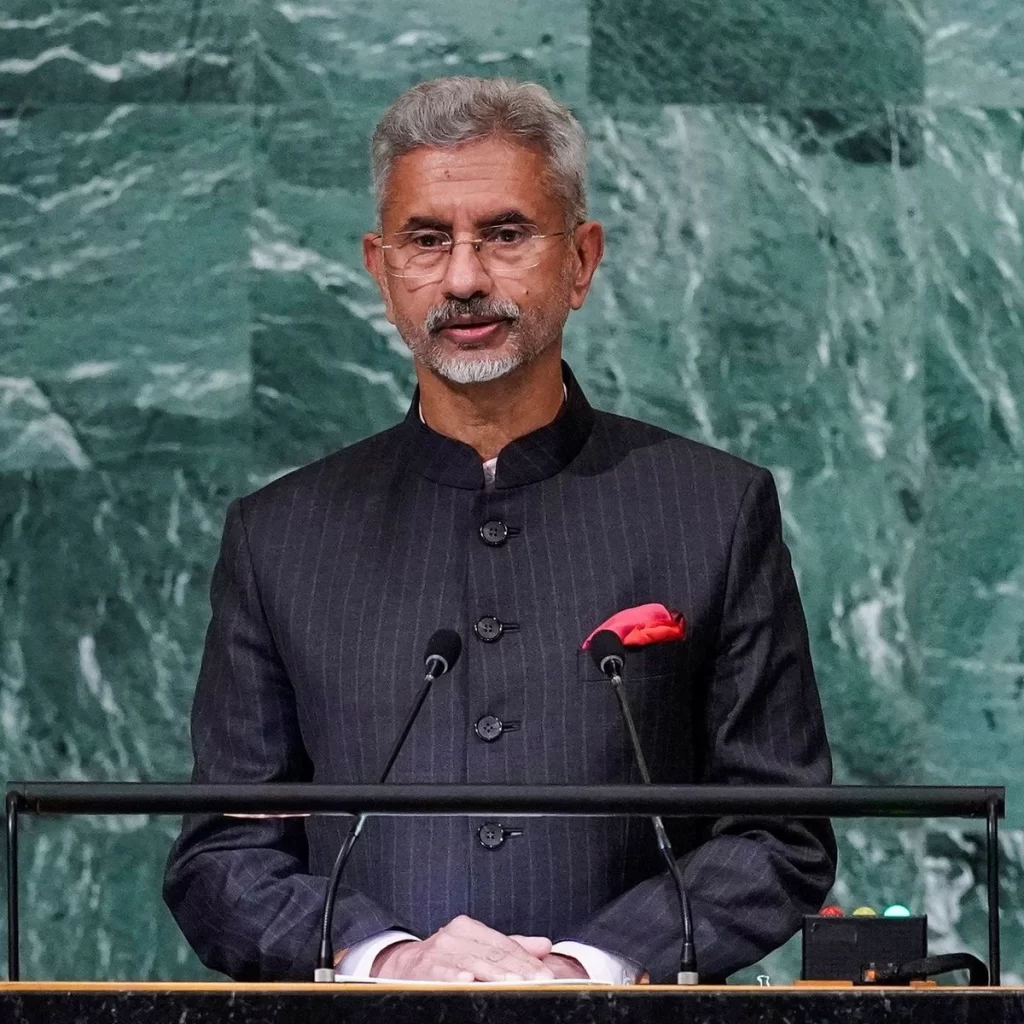
New Delhi’s BRICS meeting this week became more than a routine diplomatic gathering. When External Affairs Minister S. Jaishankar met Iranian Foreign Minister Abbas Araghchi on the sidelines of the BRICS Foreign Ministers’ Meeting, the conversation quickly pointed to a bigger question: how far can India and Iran work together to steady a region still rattled by conflict, shipping fears, and energy uncertainty?
Why this meeting matters
The timing is hard to ignore. India is hosting the BRICS Foreign Ministers’ Meeting on May 14–15 under its chairship, and the agenda includes global and regional issues of mutual interest. Against that backdrop, the Jaishankar-Araghchi engagement was not just a bilateral handshake moment; it was part of a wider effort to address regional stability at a time when West Asia remains on edge.
Araghchi’s visit also comes after months of repeated India-Iran contact over the worsening security situation in West Asia. Earlier this year, the two foreign ministers had already spoken multiple times, with India stressing dialogue, stability, and safe shipping while Tehran pushed for stronger BRICS engagement on the crisis.
What was discussed
The main theme was regional stability, but the conversation likely touched several closely linked issues: the war-driven tensions in West Asia, security of maritime routes, energy supply disruptions, and the future of India-Iran cooperation inside BRICS. Reports from the meeting and related official briefings indicate that these talks were expected to focus on the deteriorating security situation involving Iran, the United States, and Israel, along with broader consequences for regional and global stability.
This matters because India has consistently framed its West Asia policy around de-escalation rather than confrontation. In practice, that means keeping communication open with Tehran while also protecting economic and strategic interests in the Gulf and beyond. That balancing act is getting harder, not easier.
BRICS and the West Asia question
The BRICS platform has become a useful stage for countries like Iran to seek diplomatic support and political visibility. Tehran has argued that BRICS should play a larger role in responding to the conflict in West Asia and in supporting global stability. India, meanwhile, has kept its own message focused on dialogue, freedom of navigation, and regional calm.
That difference is important. It shows BRICS is not a bloc with one voice on West Asia. Iran wants the group to act more decisively, while India is trying to keep the grouping broad enough to preserve consensus. Can BRICS really speak credibly on regional security if its members disagree so sharply on the crisis at hand?
India’s balancing act
For India, the Iran relationship has never been just about diplomacy for its own sake. It sits at the intersection of energy security, connectivity, trade routes, and strategic access to Central Asia. That calculus has become more sensitive in 2026. The Chabahar Port project, long seen as a flagship India-Iran connectivity initiative, has faced fresh pressure because of sanctions uncertainty. Reports this spring suggested India was weighing options on its stake in the port, including a temporary transfer to an Iranian entity, while earlier budget decisions showed no new funding allocation for the project.
That does not mean the relationship is collapsing. It does mean India is being forced to improvise. Strategic projects rarely die in one clean stroke; more often, they get slowed, reassessed, and restructured. Chabahar is a good example of that reality.
Energy and shipping security
One of the biggest reasons this meeting drew attention is the importance of energy routes and maritime security. The Strait of Hormuz remains one of the world’s most sensitive shipping corridors, and any disruption there can ripple through oil markets, freight costs, and supply chains. Indian reporting and diplomatic briefings around the BRICS meeting indicated that safe passage for shipping and energy stability were part of the broader conversation with Iran.
For India, that is not abstract geopolitics. It affects fuel prices, import costs, and the security of sea lanes that matter to the Indian economy every day. For Iran, the Strait is both a strategic lever and a pressure point in its wider confrontation with the West. That overlap is exactly why the Delhi meeting mattered.
The Chabahar factor
Chabahar Port remains the clearest symbol of India-Iran strategic cooperation, even now. The port gives India an alternate route to Afghanistan and Central Asia that bypasses Pakistan, which is why it has long been treated as a project of geopolitical significance rather than just infrastructure.
But the project is under strain. Reports in recent months said India had not allocated fresh budget funds for Chabahar in 2026, and there were also discussions about managing the port stake in a way that avoids direct sanctions exposure. The exact future of the project is still evolving, but its presence in the background of any India-Iran conversation is impossible to miss.
In that sense, the Jaishankar-Araghchi meeting was about more than crisis management. It was also about keeping one of India’s most important long-term regional gateways from slipping into political paralysis.
India’s diplomatic message
India’s line through all of this has been consistent: dialogue, stability, and restraint. During earlier conversations with Araghchi, Jaishankar emphasized the need for safe merchant shipping and the strengthening of regional stability. India also signaled that it was open to widening bilateral and multilateral cooperation, provided the region moved toward calm rather than escalation.
That is classic Indian diplomacy in West Asia. It avoids dramatic declarations, prefers open channels, and tries to preserve room to work with multiple sides at once. The challenge now is whether that middle path can still hold under the weight of a far more volatile regional environment.
What to watch next
Several threads are worth watching after the Delhi meeting. First, whether India and Iran can produce any concrete follow-up on trade, connectivity, or maritime cooperation. Second, whether BRICS can agree on a common language on West Asia, even if that language is limited and carefully worded. Third, how India handles the pressure points around Chabahar and sanctions without damaging its long-term strategic interests.
There is also a wider geopolitical story here. India is trying to project itself as a responsible power that can speak to both the Global South and the major players in a fractured international system. Iran, for its part, wants recognition, leverage, and a diplomatic opening. Their interests do not fully overlap, but they intersect often enough to keep the relationship relevant.
The Delhi meeting showed that the India-Iran channel is still alive, still useful, and still politically sensitive. In a region where one shock can quickly become a bigger crisis, those channels matter more than they sometimes get credit for. And as BRICS wrestles with how to speak on conflict, energy, and security, the India-Iran dialogue may end up being one of the meeting’s most consequential diplomatic subplots.
India-Iran Diplomatic Reset? Jaishankar, Araghchi Meet in Delhi as West Asia Tensions Test BRICS Unity