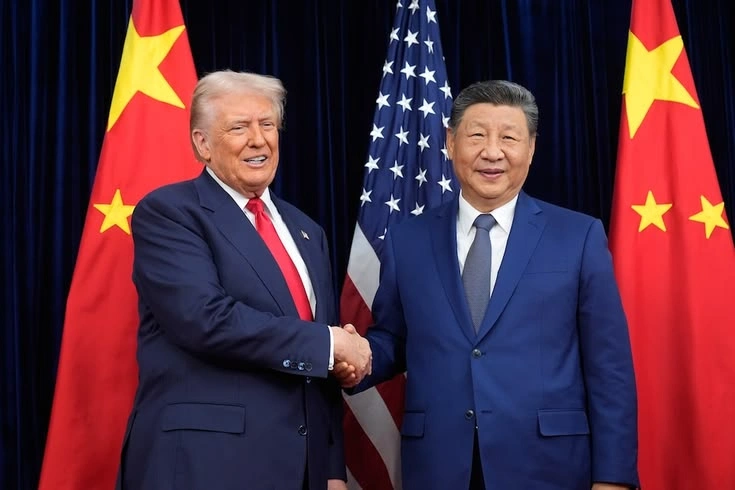
Beijing — President Donald Trump landed in Beijing Wednesday evening for a two-day meeting with Chinese President Xi Jinping, the first visit by an American president to China since 2017, at a moment that has sent ripples through global markets and political circles. President Xi called the visit “historic.” And as the two world leaders prepared to address some of the most pressing issues of our time — rising trade tensions, the volatile situation in Taiwan, the ongoing conflict in Iran and the rapidly changing landscape of artificial intelligence — they adopted a tone of cautious optimism.
This isn’t just another diplomatic trip. How the meeting turns out might change the lives of athletes, farmers, tech businesses and everyday Americans and Chinese, on both sides of the Pacific, in ways that are yet hard to completely anticipate. What’s at stake in these closed-door talks? Much more than most people know.
Back to the Table After Years of Tension
Trump came to Beijing on Air Force One One is over nine years without a presidential visit from the United States to China. Trump’s 2017 visit was a state visit during his first term, but the relationship turned sour and became a harsh trade battle of tariffs, tech restrictions and mutual suspicion. Trump is now back in the White House for a second term, returning to a China that observers characterize as “stronger and more assertive” than ever.
Timing is everything. Trade relations between the world’s two largest economies have been tense for months, with border tariffs threatening to disrupt supply chains and push prices higher for consumers. The trade truce agreed in October helped to ease matters temporarily, but tensions have been bubbling just below the surface. Both presidents recognize that a collapse might be disastrous for the stability of the world economy.
“Economic relations will be the main focus of the summit,” officials familiar with the agenda said, with both sides discussing a possible extension of the current trade truce. American farmers, who have traditionally relied on Chinese demand for soybeans and meat, have extremely high stakes.
On the Agenda: Trade, Tech, and More
It is a vast and complicated list of items to discuss. This is what’s anticipated to dominate the talks:
Trade and Tariffs: Trump is asking China to “liberalize” its market for big tech companies and to buy more U.S. agricultural products, such soybeans and cattle. He is also demanding assurances on Boeing airplane orders and energy exports. Meanwhile, Xi is expected to seek no fresh taxes and concessions on the Taiwan issue.
Taiwan: Still one of the most sensitive flashpoints. Washington has kept its policy of strategic ambiguity, while China has long called on the U.S. to stop selling armaments to Taiwan. This is likely to be a priority for Xi.
Iran And Global Energy: Iranian Conflict And Stability Of The Strait Of Hormuz Remain At The Forefront Of Global Energy Security. In a stunning early breakthrough, the U.S. and China have already agreed to keep the Strait open for free flow of energy. Trump claimed he does not need China’s support to end the Iran dispute but said Xi has been “relatively accommodating.”
AI and Rare Earths: As AI development accelerates, both countries are vying for technological domination. Talks are expected to touch on export limitations on advanced chips and China’s dominance in rare earth minerals gives it a lot of leverage.
**Mutual Trade Forums**: The U.S. and China are anticipated to agree to new forums to facilitate trade and investment, setting the stage for more stable relations for the next three years and beyond.
A Fine Balance
Both leaders, despite the stakes being so high, seem keen, at least publicly, on avoiding a total breakdown. Prior to the summit, the Trump administration had stated it would seek a rise in Chinese purchases of U.S. goods, while Beijing had indicated that Taiwan would be off limits. But there is a healthy dose of practicality on all sides.
Analysts say a plausible outcome is “stabilization” of U.S.-China ties, if not a breakthrough. The summit follows an earlier meeting between Trump and Xi last year in South Korea that started a thaw in the trade battle. Can two leaders who fought so publicly find common ground now? The answer will impact geopolitics for years to come.
Xi called the visit “historic,” which is important. Such word is hardly used lightly in Chinese diplomatic parlance. It shows that Beijing considers this encounter as a milestone, rather than an ordinary diplomatic engagement. Trump’s problem is to provide concrete gains for his base while not seeming to back down on basic issues like Taiwan and tech limits, all while maintaining the “America First” decisiveness that has formed his political brand.
Implications for India and the World:
Although the focus is on Washington and Beijing, the ramifications of this summit will be felt well beyond the two states. The stakes could be high for India, which has been carefully managing its own fraught relationship with China while strengthening ties with the U.
A stable U.S.-China relationship could relieve global supply chain tensions, to the benefit of Indian exporters and importers. On the flip side, if tensions escalate, India could find itself stuck in the middle and compelled to pick sides in a bipolarizing globe. The deal to keep the Strait of Hormuz open is particularly excellent news for India, which is highly dependent on Middle Eastern energy.
The stakes are as great around the world. The US and China jointly account for approximately 40% of world GDP. An escalation of the trade war would rattle financial markets, drive up inflation and affect everything from smartphone supply chains to food pricing. Still, a successful stabilization might open up new chances for cooperation on climate change, public health and technological governance.
Behind the Curtain: Diplomacy in the Age of Social Media
What is remarkable about this summit is that it happens in the age of the 24-hour news cycle and quick social media updates. Trump’s impromptu tweets and his flair for the theatrical are now being deployed in a more formal diplomatic environment. Will he keep to the playbook? Will he go off script?
Xi, on the other hand, is recognized for his methodical, long-term approach. His team has spent months preparing for this meeting, making sure that every aspect, from the welcome ceremony in the Great Hall of the People to the language of joint statements, is well orchestrated.
The elaborate welcoming ritual that greeted Trump in Beijing was a clear display of respect, even if there are difficulties underneath. The question is, will ceremony translate into substance?
What we’ve learned so far
But even as the negotiations drag on, several early developments stand out:
Already, the U.S. and China have agreed to keep the Strait of Hormuz open — a rare unanimity on a key global issue.
The two sides are working to create forums to boost commerce and investment between the two, and are seeking long-term stability.
China is likely to announce big buys on American agricultural, energy and Boeing airplanes.
The summit intends to lay the groundwork for the next three years and beyond for “strategic stability” in China-U.S. ties.
Future Outlook: Realistic Expectations, Optimistic yet Cautious
The world is watching as the conference continues. Will Trump and Xi achieve a breakthrough that defuses global concerns, or will old grudges bubble to the surface and sabotage the talks? The response will influence not only the future of U.S.-China ties but the form of the global order in the 2020s and beyond.
For the moment, a cautious hope. Just having the two leaders at the table is a triumph in itself. After years of enmity, the decision to engage directly is a reminder that diplomacy, however imperfect, is still the finest tool we have to handle disagreements.
But lets be clear this is no miraculous remedy. Structural challenges like as tech competitiveness, Taiwan and ideological divisions aren’t going to disappear suddenly. At most we can aim for a structure that prevents escalation and allows opportunity for cooperation where possible.
Few, as regular people around the world go about their daily lives, may know how closely their futures are related to what transpires in these meeting rooms in Beijing. But they ought to. The choices made here will effect everything from the price of groceries to the stability of world peace.
Historic Beijing Summit: Trump, Xi Make Hopes on US-China Relations Stabilization Amid Trade, Taiwan, Iran Tensions