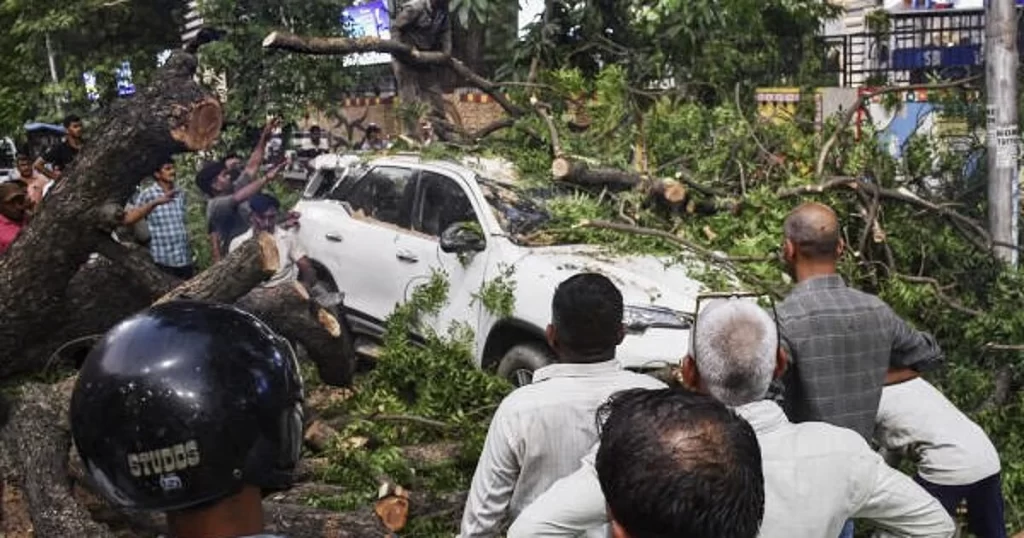
Unseasonal storms and heavy rain have left at least 111 people dead across Uttar Pradesh, with lightning, hail and collapsing structures causing widespread destruction in 26 districts. The scale of the damage has turned this into one of the state’s most serious weather-related tragedies in recent memory, and it is also a reminder of how quickly extreme weather can overwhelm both homes and local response systems.
The immediate human cost is heartbreaking: 72 people were injured, while livestock losses and damage to houses were also reported. For many families, the storm did not just disrupt daily life; it wiped out breadwinners, destroyed shelter, and left communities scrambling for safety and support.
What Happened
According to official reporting cited by multiple outlets, storms, rain, hailstorm and lightning struck Uttar Pradesh on May 13 and into May 14, triggering deaths across several districts. The Relief Commissioner’s office said reports of fatalities came from 26 districts, while damage to homes and livestock continued to be assessed.
The weather system brought violent conditions in a short span, with some reports describing winds strong enough to uproot trees and damage houses. That combination of high wind, heavy rainfall, hail and lightning is especially dangerous because it creates multiple threat points at once — falling debris, electrocution risk, roof collapse, road disruption and flash flooding.
Districts Hit Hard
Early reports showed severe damage in places including Prayagraj, Fatehpur, Bhadohi, Budaun, Sonbhadra, Pratapgarh, Unnao, Kanpur Dehat and Chandauli. Prayagraj was repeatedly flagged among the hardest-hit areas in initial coverage, with many casualties linked to the intensity of the storm there.
The spread across so many districts matters because it suggests this was not a localised event. When a storm front hits a large and densely populated state like Uttar Pradesh, emergency services, district administrations and hospitals can all come under pressure at the same time.
A rough snapshot of the reported impact looks like this:
Deaths: 111
Injured: 72
Districts affected: 25 to 26, depending on report timing
Livestock losses: 170
Houses damaged: 227
Relief And Compensation
The state government has moved to announce compensation of Rs 4 lakh for the families of those who died in the disaster, according to reporting on the crisis. That kind of ex-gratia support is crucial, but for grieving families, money can only partly soften the blow after a sudden death caused by an extreme weather event.
Authorities also said the situation was being monitored through the Integrated Control and Command Centre, showing that the state has been trying to keep track of the unfolding damage in real time. Still, the speed and spread of the storm mean that full recovery will take time, especially in rural and semi-rural areas where damaged homes, fallen trees and destroyed crops can quickly deepen the crisis.
Why This Matters
This disaster is about more than one bad weather day. It reflects a broader pattern of severe weather events becoming more disruptive, more frequent and harder to predict with precision on the ground. For Uttar Pradesh, where agriculture, outdoor labour and fragile housing are deeply tied to daily survival, even a few hours of extreme weather can become deadly.
There is also a public safety lesson here. When thunderstorms, lightning and hail warnings are issued, the gap between warning and action can determine whether people stay safe or not. How many lives could be saved if alert systems reached every village faster, and if people had stronger shelter options before the storm arrived? That is now an urgent question for district administrations, disaster managers and local communities alike.
The incident also highlights the importance of better storm preparedness, especially in the pre-monsoon season when dust storms, squalls and lightning often intensify across north India. For states with large rural populations, the challenge is not only forecasting weather, but making sure the warning actually changes behaviour in time.
Larger Weather Pattern
Reports describe the event as an intense spell of unseasonal storms, heavy rain, hail and lightning hitting the state over roughly 36 to 48 hours. That timeframe helps explain why the toll climbed so sharply across multiple districts, with new figures being updated as more local reports came in.
Some early coverage showed a lower death count before the number rose as additional district reports reached the state government. That kind of rapid revision is common in major weather disasters, especially when communication lines are strained and rescue teams are still reaching remote areas.
For journalists and for readers it is a reminder that the first number is not always the last number.
Human Cost On Ground
Behind every statistic is a family dealing with shock, loss and uncertainty. In storm tragedies like this, deaths often happen in ordinary settings — at home, on the road, or in fields — making the event feel even more abrupt and unfair.
The destruction of houses and livestock also matters because it affects survival long after the storm has passed. A damaged roof can be repaired; a lost animal, in many rural homes, may mean the loss of milk income, farm support or an essential part of the household economy.
That is why disaster reporting should not stop at casualty figures. It must also ask who lost shelter, who lost work, and who will struggle most in the coming weeks.
What Comes Next
The next phase is likely to focus on relief distribution, compensation claims, damage assessment and restoring normal life in the worst-hit districts. Officials will also need to verify losses to homes, livestock and infrastructure so that aid reaches the right families without delay.
This tragedy will almost certainly sharpen attention on lightning safety, storm alerts and local disaster response in Uttar Pradesh and beyond. If extreme weather is becoming more erratic, then preparedness can no longer be treated as a seasonal formality. It has to become a daily public safety priority.
Uttar Pradesh Storm Death Toll Rises to 111 as Unseasonal Rain, Lightning and Hail Batters 26 Districts