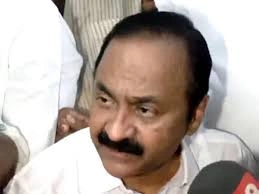
After days of intense behind-the-scenes maneuvering, V.D. Satheesan was publicly announced as the next chief minister of Kerala by the state Congress party. The selection culminates a contentious leadership contest that left political watchers and the public guessing and signals a new phase in Kerala’s politics at a time when the state faces serious economic, social and governance difficulties.
Why this is important now
Kerala has long been noted for its peculiar political culture: high literacy, active civic engagement, and rotating power between two large fronts – the Left Democratic Front (LDF), led by the Communist Party of India (Marxist), and the United Democratic Front (UDF), led by the Congress party. Here, the choice of a chief minister is almost never a purely party matter. It determines policy goals, coalition politics and the state’s relations with New Delhi. Now under the leadership of VD Satheesan, the voters and stakeholders are eager to see how he intends to convert campaign rhetoric into government, and whether his leadership will steady the Congress front after a bruising leadership struggle.
A political snapshot in the flash
New chief minister: V.D. Satheesan, prominent Congress leader and MLA.
Electoral and organizational woes lead to hard-fought leadership battle in UDF.
Immediate expectations: To build a solid cabinet, outline economic recovery measures and resolve core local issues such as unemployment, public health and infrastructure.
The leadership battle: behind the scenes.
The declaration came after weeks of intense lobbying, meetings with party veterans and a careful evaluation of the strength of factions. The Congress in Kerala has various centres of power – veterans with deep institutional memory, regional powerbrokers and newer faces hungry for change. These competing interests don’t always line up, and that tension was on display as party committees gathered to plot the next course.
Satheesan’s emergence was not preordained. His appointment came after private meetings with national leadership, assessments of electability and negotiations over cabinet posts. Senior party strategists seemed to be counting on Satheesan as a unifier and an electability, who could bridge splits within the party and offer a credible alternative to the state’s ruling left.
Who is V.D.Satheesan?
V.D. Satheesan is an experienced politician, practical about politics and has a stable public image. Over the decades he has held many roles in the state parliament and party bodies, forging alliances that have come in handy at this juncture.
Key points on his political profile:
Grassroots connect. He is noted for his constituency work and outreach to the grass roots.
Legislative experience: Years in assembly in Kerala with record of debates and committees.
Image: He projects himself as a consensus-builder rather than a polarizer.
These qualities presumably reassured party elders and coalition partners seeking a leader who could manage intra-party divisions and the larger UDF partnership.
Day one challenges
As Satheesan walks into the chief minister’s office, he will have a long list of problems that need short-term repairs and long-term initiatives.
Economic headwinds
Kerala’s economy confronts headwinds on a few fronts. There is a sluggish post-pandemic recovery, budgetary strain on account of welfare promises and dependency on remittances from a big expat population. There has been pressure on the state’s budget with little fiscal space to spend without further borrowing. Populist expectations versus economic prudence, a tricky act to pull off financially and politically.
Expectations for Youth Unemployment
Youth unemployment is still a nagging concern. Young people with university degrees often find it difficult to get acceptable employment, prompting calls for industrial development, skills training and improved connections to India’s expanding digital and service industries. Policies designed to solve skill mismatch, spur business investment and boost startups will be crucial.
Environment and infrastructure
The nature of Kerala with hilly areas, crowded settlements and a vulnerable coastline belt makes infrastructure development expensive and challenging. Immediate policy domains requiring attention are flood recovery, landslide mitigation and sustainable tourism. Any administration will be judged on how it balances development with environmental protection.
Coalition and government
The UDF is a coalition of parties with diverse agenda. Satheesan will have to build a cabinet that represents those balances and keeps allies happy. At the same time, he has to contend with a strong opposition from the LDF, which has ruled Kerala for numerous years and has a significant presence in the legislature.
Signals from the new government are instant
In his first public address, Satheesan stressed the need for unity and service. His cabinet would include people who can work across party lines, he vowed, saying he will lead in a consultative style. Political experts say the first days will be spent putting together a team, releasing a clear program for the first 100 days and expressing priorities to the public.
near-term possible policy priorities
Economic relief measures for vulnerable people to cope with immediate adversity.
Package for recovery of small businesses, tourism and service sector for employment generation
Strengthening basic health care and health emergency preparation.
Steps to cut red tape in government and fast track stalled infrastructure projects.
These would be pragmatic steps to indicate action and gain time for longer-term improvements.
How this will play out nationally
The politics of Kerala very often defines the national narrative, especially inside Congress. A stable and credible electoral State unit can raise the stature of the national party in south India. A chaotic or fractured state leadership, by contrast, would raise issues about the party’s capacity to show unity ahead of future national elections.
Also, Kerala’s status as a state where the development indicators are high — literacy, health and social advancement — but the economic dynamism is perceived to be lacking, makes it an ideal testing ground for policy experiments that the national party would want to repeat. The party circles in Delhi would be keenly watching how Satheesan revives growth without sacrificing on social welfare.
Real stakes for the people of Kerala
For the average citizen, the leadership switch is more than political drama. It decides how quickly help arrives at households hit by floods or job losses, how well public services run, and whether long-term investments in education and technology pay off.
Here are some common life impacts:
Coastal towns might get their jobs back by reviving tourism policies, but the package needs safeguards against overtourism and ecological damage.
Targeted skill development initiatives for digital occupations could help university graduates find work closer to home and reduce migratory pressure.
“Better health infrastructure will not only equip the state for future calamities but also make access to care easier on a daily basis in remote places.
Will Satheesan be able to achieve real results? What would success in his first year look like? The observers will be seeking concrete gains: reduced waiting times for government services, fresh investments announced, tangible employment-generating projects and a cabinet functioning without incessant public bickering.
The opposition’s response and political approach
The LDF , predictably , responded with criticism and a willingness to confront policies . Opposition leaders said the leadership change was a Congress internal affair but pledged to keep the incoming government accountable on development outcomes. It will also be for Kerala’s dynamic civil society and media to take on watchdog duties, scrutinising pledges against performance.
In the months ahead, political strategy will probably center on:
UDF projecting unity, delivering early gains.
LDF identifying any gaps in policy and rallying public opinion where government falls short.
Regional players and smaller coalition partners jostling for clout in the next administration.
How the public narrative might shift
Much will depend on two things: the visible responsiveness of the new government and the framing of early programs by the media. Kerala’s electorate knows, knows; symbolic gestures count; but content counts more. If Satheesan’s government can swiftly prove that it is both capable and caring — fixing damage, maintaining livelihoods, and keeping services operating — public opinion may turn in its favour. Otherwise the impatience may build very quickly.
A few signs to watch for over the next three months
Announce action plan for 100 days with timelines.
The formation of the Cabinet and the allocation of portfolios.
Any quick fiscal measures, relief packages.
First initiatives to generate employment such as incentives for MSMEs or Start-ups.
Early reactions to infrastructure and environmental issues, especially flood prevention measures.
A political process in a human moment
Often, leadership transitions are about strategy, numbers and power balances. But they also entail human decisions: how leaders frame issues, who they include, how they respond to individual stories of hardship. Satheesan’s style – reputedly low-key and consultation-driven – may come in handy in such times, enabling quieter consensus-building rather than noisy public disputes.
unanswered questions
Satheesan would connect Kerala’s social successes with fresh economic impetus in a different manner from his predecessors. How? Can he unite a divided party machine, offer pragmatic leadership that speaks to the concerns of ordinary citizens? But these are not rhetorical. These are real exams that will determine the next many years of the state.
Concluding thoughts
The important chapter in Kerala starts with the nomination of V.D. Satheesan as the chief minister. The immediate aim is to calm party and coalition dynamics, put in place a clear governing agenda and demonstrate capacity to address economic and environmental concerns. For the citizens, success will be defined by services that work, jobs that come back and policies that balance growth with Kerala’s hard-won social achievements. For the Congress party, it is a chance to prove its ability to rejuvenate itself and govern well in a state that typically sets national expectations.
The people of Kerala will be watching intently as the new administration takes small moves towards great promises. Will it be the turning point that will revive the state’s economy while preserving its social fabric? Or will historical faultlines re-emerge to render governance more difficult? Only time will tell – and a few key policy moves. How about a quick follow-up on the first 100-day promises and how they compare with the past governments in Kerala?
After Fierce Leadership Contest, VD Satheesan Takes Over as Kerala Chief Minister