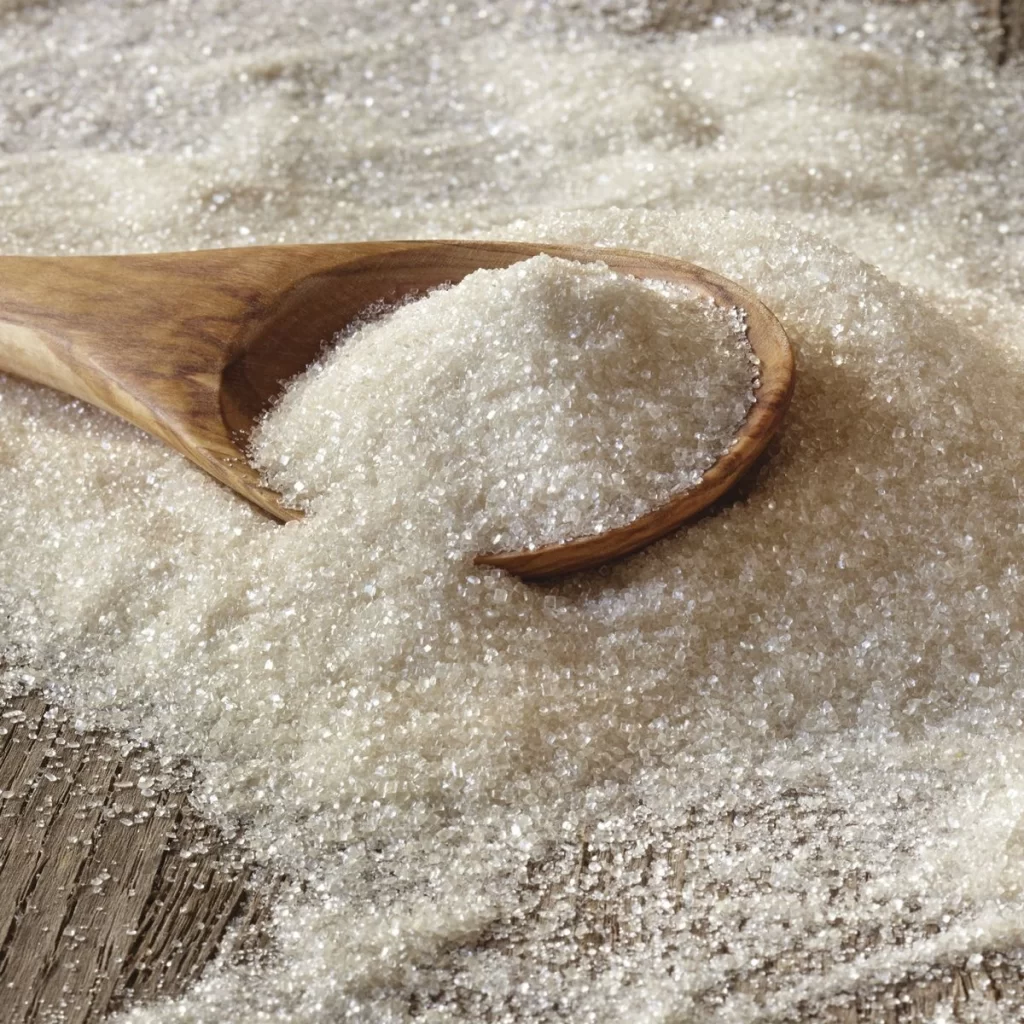
Late Wednesday, India’s government quietly but decisively hit the pause button on one of its most important agricultural exports: sugar. In a notification that rippled across trade desks, mandis, and global commodity screens, New Delhi announced an immediate ban on all sugar exports—raw, white, and refined—until September 30, 2026, or until further orders. The move is being framed as a domestic‑first strategy to protect availability, cool prices, and build buffer stocks in a year where monsoon uncertainty and El‑Niño‑linked weather worries are already weighing on farmers and policymakers alike.
What the ban actually covers
At its core, the order stops mills from shipping sugar out of India for roughly the next 16 months, starting from May 13, 2026, with only a narrow set of exceptions. The rule applies across formats—raw sugar used in food processing, white crystal sugar for retail, and highly refined sugar used in industrial applications—reflecting just how seriously the government views supply risks. Shipments that had already begun loading before May 13, or consignments that had already reached customs authorities, are allowed to roll through, but anything freshly booked after that threshold is effectively frozen.
Notably, India has carved out a carve‑out for existing commitments: exports to the European Union and the United States under tariff‑rate‑quota arrangements will still be allowed, provided they operate within the agreed‑up‑front limits. This is both a nod to trade obligations and a sign that New Delhi wants to avoid outright clashes with its major partners, even as it tightens domestic‑supply belts.
Why now? The fear of a tighter cane season
Behind the dry language of the notification lies a chain of worries that have been building since late 2025. India is the world’s second‑largest sugar producer after Brazil, and in recent seasons, it has also been one of the biggest exporters, often moving between 5 and 8 million tonnes a year. But this year’s cane outlook is far from bullish. Forecasts of a weak monsoon, coupled with lingering El‑Niño effects and patchy pre‑monsoon rains, have raised red flags over cane yields in key states like Uttar Pradesh, Maharashtra, Karnataka, and Tamil Nadu.
If the rains underperform, sugar production could dip below earlier estimates, and any shortfall starts to look more like a threat to domestic supply than just a cyclical soft patch. At the same time, domestic demand has been rising steadily—driven by population growth, expansion in processed foods, and a resilient sweets and beverages ecosystem. Throw in inflation nerves, particularly around food prices, and you have a classic “belt‑and‑suspenders” scenario: the government would rather lock in domestic availability early than risk a late‑season scramble or a spike in the sugar basket.
Could India have waited a few more months to see how the monsoon actually pans out? Maybe. But in policymaking, hesitation often costs more than over‑caution. By acting now, the Centre avoids the optics of a last‑minute emergency measure and gives millers a clear signal that they should prioritize domestic buyers and government‑linked sales discipline.
How domestic prices and inflation are expected to respond
The most immediate impact of the export ban is expected to hit the domestic market, although the effects will unfold in layers. In the short term, the elimination of export demand tends to increase the volume of sugar available inside India, which creates downward pressure on wholesale prices. For a government that has been battling stubborn food‑inflation pressures—milk, pulses, and edible oils all having shown volatility in recent months—this is a clear win.
Retail sugar prices, however, may not drop as sharply or as quickly. Middlemen, local distributors, and small‑town retailers often adjust their stocks cautiously, and many may hold back discounts until they see how the monsoon actually shapes up. Still, with mills now limited to the domestic market and mandated sales to the Food Corporation of India for buffer‑stock purposes, the overall balance of the market should tilt toward slightly softer prices or at least slower increases.
For a typical Indian household filling its pantry every month, the real question is: will this move actually make a difference in the price of a 1‑kg packet of sugar by Deepavali or Diwali? If the cane season ends up being tight despite the export ban, the government may still have to lean on price controls, ad‑hoc taxation, or quota‑based sales to keep inflation in check. But in the best‑case scenario, the ban gives policymakers extra breathing room to manage the sugar line without fuelling a broader food‑price spiral.
Millers, farmers, and the politics of quotas
For the sugar industry, the export ban is a mixed script. On one side, mills lose access to global markets at a time when world prices for raw and white sugar have been trending upward, driven by supply tightness in Brazil and Thailand and strong demand from Asia and Africa. That means fewer export‑linked contracts, lower foreign‑exchange earnings, and compression on realizations for some privately‑owned and co‑operative sugar factories.
On the flip side, the government has historically used such measures to negotiate better terms for farmers. By curbing exports, the Centre can push mills to clear cane dues faster and adhere to minimum support prices or state‑mandated payments, which are often delayed in seasons of weak global demand. In theory, this should reduce the backlog of farmer arrears and ease the financial strain on small and medium‑sized sugarcane growers, who are already vulnerable to price swings and weather shocks.
But the reality on the ground is rarely this clean. Some millers may argue that export restrictions cut into their profitability just when they need capital to invest in ethanol‑linked diversification—India’s push to blend more ethanol with petrol has already turned some sugar factories into ethanol hubs. Regulators, in turn, may lean on the same mills to ramp up ethanol production using surplus cane, which could further complicate the balance between sugar output, ethanol output, and farmer payments.
Global ripple effects: Brazil, Thailand, and beyond
Among policymakers, there is a quiet recognition that India’s export ban will not just reshape its own market—it will also redraw trade flows across the world. As the largest or second‑largest sugar exporter in many recent seasons, India’s absence from the global tender process creates space for rivals. Brazil, already the market leader, is likely to see more invitations to bid from Asian and African buyers; Thailand, one of Asia’s key sugar powerhouses, may also expand its shipments to fill the gap.
For import‑dependent countries that have relied on Indian sugar to keep their own prices in check—think parts of Southeast Asia, sub‑Saharan Africa, and the Middle East—the ban could mean costlier sugar contracts, especially if global prices remain elevated. Some buyers may switch partially to Brazilian or Thai sugar, but quality, logistics, and contractual timelines can all influence how smoothly that transition happens.
From a macro perspective, India’s move is also a reminder of how tightly linked global food‑security policy has become with domestic‑politics arithmetic. When a major producer decides to prioritize internal supply over external earnings, it sends a signal that food inflation is being treated as a first‑order risk, not just a secondary concern. How other large producers respond—through export taxes, domestic‑support measures, or new trade agreements—could reshape the sugar map for years to come.
Exemptions, trade commitments, and the EU–US angle
The exemption for EU and US quota‑linked exports is more than a technical footnote; it reveals how India is trying to balance sovereignty with stability in its trade relationships. Under existing tariff‑rate‑quota arrangements, India is allowed to ship a limited quantity of sugar to these markets at preferential rates, and the government has chosen not to unilaterally break those agreements.
This is partly a legal and diplomatic consideration and partly a commercial one. Shifting away from quota‑based exports could invite scrutiny at the World Trade Organization or trigger retaliatory measures, something New Delhi would rather avoid while managing a fragile macro‑inflation environment. For mills that have built long‑term contracts with EU and US buyers under these quotas, the carve‑out provides a predictable, if shrinking, window to earn foreign exchange and maintain relationships.
From a broader perspective, it also highlights a recurring tension: when does a food‑security measure cross the line into protectionism? India’s officials insist this is a temporary, supply‑driven move, not a permanent trade barrier. But if the ban is extended beyond September 30, or if similar restrictions crop up in other agricultural commodities, trading partners may begin to question the long‑term openness of India’s export stance.
What this means for Indian consumers and the economy
For the average Indian consumer, the sugar export ban is less about geopolitics and more about the sticker price in the nearby kirana store. If it works as intended, the move should help keep sugar relatively affordable during the current fiscal year, even if other food items continue to see volatility. That could provide some relief to households that have already been squeezed by rising fuel, transport, and non‑food‑grain costs over the past 18 months.
For the broader economy, the ban fits into a larger pattern of export‑curb measures that India has used in critical commodities—from sugar and rice to wheat in earlier years—whenever supply‑side risks or inflation fears rise. These steps are often reactive, but they are rarely unpopular domestically, especially when they are framed as protecting the “aam aadmi’s” pantry.
Still, one question many economists are already asking is whether this kind of intervention is sustainable in the long run. If India repeatedly shuts its doors to global markets whenever weather or inflation worries flare up, will traders and investors begin to see Indian exports as unreliable? And how will that affect the country’s ambitions to be seen not just as a price‑taker in global agriculture, but as a stable, rules‑based trading partner with predictable policies?
The bigger picture: Sugar, security, and the monsoon gamble
India’s decision to lock sugar exports until September 30, 2026, is ultimately a bet on the monsoon. If the rains behave, cane yields rebound, and production stabilizes, the domestic market may look well‑supplied by the time the ban is lifted, and the government will have buffered against a feared crisis. If the rains disappoint and the cane season turns out weaker than expected, the same buffer stock could be exactly what prevents a sharper price spike or a repeat of the sugar‑shortage anxieties seen in past dry years.
In that sense, the ban is less about stopping exports for exports’ sake and more about managing risk in a system where one bad monsoon can quickly translate into a year of food‑price stress. It also reflects how deeply India’s food‑security calculus has become tied to climate signals, El‑Niño patterns, and global commodity cycles.
For now, the sugar export ban will be watched by farmers, millers, importers, and central‑bank policymakers alike. How it plays out over the next 16 months will offer a telling glimpse into the limits and logic of India’s export‑curb playbook—both for the country itself and for the global markets that have come to depend on it.
India Slams Brakes on Sugar Exports Till September 2026: What It Means for Prices, Farmers, and Global Markets