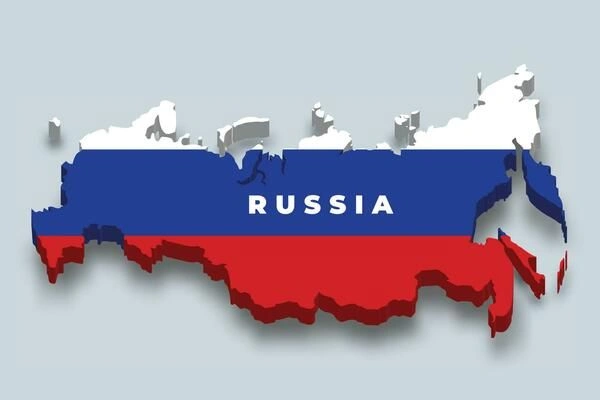
Russia has become the first country to officially recognize the Taliban regime in Afghanistan, a move that has sent shock waves across the worldwide diplomatic circuit. The announcement of the decision on July 3, 2025, comes nearly four years after the Taliban surged into Kabul as U.S. forces completed their pullout. The move is historic, shifting the balance of power in the area and compelling countries throughout the world to rethink their position on Afghanistan’s future.
Historic Diplomatic Achievement
The announcement was made crystal clear in the official statement released by the Russian Ministry of Foreign Affairs. “We believe that the official recognition of the Islamic Emirate of Afghanistan’s government will catalyze the advancement of fruitful bilateral cooperation between our nations across various sectors. The acknowledgment was made during a meeting in Kabul in which Russia’s envoy to Afghanistan, Dmitry Znov, formally informed Taliban Foreign Minister Amir Khan Muttaqi of Moscow’s decision.
Why is this moment so important? The Taliban regime has been diplomatically isolated for years. Though it took authority in August 2021, no country has yet formally recognised Afghanistan. The United Nations, rather than recognizing the rule as the legitimate government, continued to refer to the regime as the “Taliban de facto authorities.” Suddenly everything changed when Russia broke the standoff internationally.
When it does, it’s not a coincidence. Months before the recognition, Russia’s Supreme Court in April 2025 removed the “terrorist” status for the Taliban, setting the road for official diplomatic relations. It is a geopolitical step which reflects Moscow’s resolve to repair relations and enhance its regional influence in Central Asia.
Why Russia Did It
To understand what drives Russia, you have to look beyond the plain language of diplomatic convention. There are several strategic elements at play here.
First, Russia is seeking to cement its influence in Central Asia. The region has lengthy borders with Afghanistan and instability in that country directly impacts Russian security interests. Moscow hopes that by recognising the Taliban it may establish friendly connections which will help prevent extremists spilling over into Russian territory and the Central Asian countries.
Second, there are economic incentives. Acknowledgement would boost bilateral cooperation in trade and energy, the Russian Foreign Ministry said. Afghanistan is home to enormous natural riches and has a strategic location between Central and South Asia, making it a potentially attractive partner for Russia’s Belt and Road Initiative.
Third, there is a geopolitical angle. And with Western countries continuing their sanctions and non-recognition policies, Russia has an opportunity to grow its diplomatic clout. Moscow is the only country to have established full diplomatic relations with the Taliban administration, and is positioning itself as a vital participant in Afghan politics.
World Reaction: Anger, Alarm and Diplomatic Watching
The international response has been varied, ranging from harsh criticism to careful silence. In numerous nations, opposition leaders have voiced anger at the Russian move, saying it gives legitimacy to a dictatorship accused of serious abuses of human rights.
The United States still maintains its non-recognition policy. Although talks have been reported between Taliban leaders and U.S. diplomats to explore “bilateral ties,” the American government has not officially recognized the Taliban authority. That leaves Washington and Moscow with a grim diplomatic rift on Afghanistan.
India’s approach has been more pragmatic. India has not formally recognized the Taliban but has expanded its diplomatic links with the Taliban administration in Afghanistan. New Delhi’s readiness to interact without full recognition was illustrated by Indian Foreign Secretary Vikram Misri’s meeting with Taliban Foreign Minister Amir Khan Muttaqi in early 2025.
China, Iran, Pakistan and Qatar have kept their embassies in Kabul but have not yet formally recognised the Taliban until Russia’s announcement. Interestingly, one month later Kazakhstan followed Russia’s example and recognized a Taliban official as Chargé of Affairs at the Afghan Embassy in Astana.
What This Means for Afghans
This acknowledgment is a huge win for the Taliban administration. “They’ve been in charge for almost four years, with no international legitimacy, and now they have a major world power recognizing their authority. Taliban officials welcomed the development as a confirmation of their hold over Afghan land.
The meeting between Foreign Minister Amir Khan Muttaqi and Ambassador Znov was more than a regular diplomatic discussion. It was the first time any country had officially announced recognition of the administration of the Islamic Emirate of Afghanistan. This might create avenues for cooperation between the two countries on commerce, energy, infrastructure development and perhaps even security support.
But what about the people of Afghanistan? The recognition poses serious problems. Will improving contacts with the outside world translate into a better economic situation for ordinary citizens? Or will the Taliban keep crushing basic liberties and gain international clout? These are the issues Afghans themselves are asking as they negotiate life under Taliban rule.
Human Rights Issues Take Center Stage
Any discussion of Taliban recognition is incomplete without addressing the elephant in the room: human rights. The Taliban’s record since coming back to power has been widely condemned internationally. Women’s rights have been severely curtailed, with girls banned from secondary school and women largely excluded from the workforce. Religious minority suffer persecution and political opponents experience repression.
Critics say acknowledging the Taliban legitimizes these actions. They want to know whether diplomatic recognition should be conditioned on human rights reforms. How can the world deal with a state that routinely denies half its population any basic freedoms?
These worries have not deterred Russia but have complicated the calculations of other countries. Some governments are engaging while holding recognition as leverage for human rights reforms.
Local Ripple Effects
This acknowledgment is not just significant for Russo-Afghan ties. Central Asian countries are watching intently.” Tajikistan, formerly a strident critic of the Taliban, is now recalibrating its posture. Kazakhstan’s recognition of a Taliban envoy is part of a wider regional trend toward rapprochement.
Development is complicated in Pakistan. Islamabad has kept relations with the Taliban but is under pressure from its Western partners. Russia’s move may push Pakistan to seek more formal cooperation but Islamabad is also wary of alienating long-time friends.
India has its own strategic considerations. New Delhi was a key donor to Afghanistan before the Taliban takeover, investing heavily in Afghan development. The investments were disrupted by the Taliban’s emergence but India’s increased diplomatic contacts suggest pragmatism is winning. The Russian recognition could affect India’s own decision on official recognition.
The Future of Global Acknowledgement
Russia’s move poses an essential question: Will other countries do the same? Currently, no international institution has formally recognized the Afghan government. They are still called the “de facto authorities” by the UN. But Russia’s example could shift this dynamic.
Other countries will make their decision based on a number of factors:
Security concerns: Countries adjacent to Afghanistan put stability first
Economic interests: Nations looking for trade and investment opportunities might be more eager to interact.
pressure on human rights domestic pressure on western democracies to keep conditions
Geopolitical competition: Rivalry between the great nations could push for recognition
Some scholars advocate a more flexible strategy, involving the Taliban in various ways short of full diplomatic recognition. Others argue that unconditional recognition undermines international rules of human rights.
And what happens next?
The way ahead is still unclear. Russia’s recognition is only the beginning, not the finish, of Afghanistan’s diplomatic journey. The Moscow-Kabul bilateral collaboration may grow in trade, energy and perhaps in the security sector.
Now other countries must decide whether to follow the Russian lead or to stay where they are. As regional neighbors move towards interaction, the United States and European Union under pressure to rethink their non-recognition policy.
For Afghans, the hope is that diplomacy would provide concrete gains: economic opportunity, humanitarian assistance, and perhaps even a slight easing of the Taliban’s rigid social rules. But history shows diplomatic recognition is no guarantee of change in policy.
Russia Becomes First Nation to Recognize Taliban Government in Afghanistan