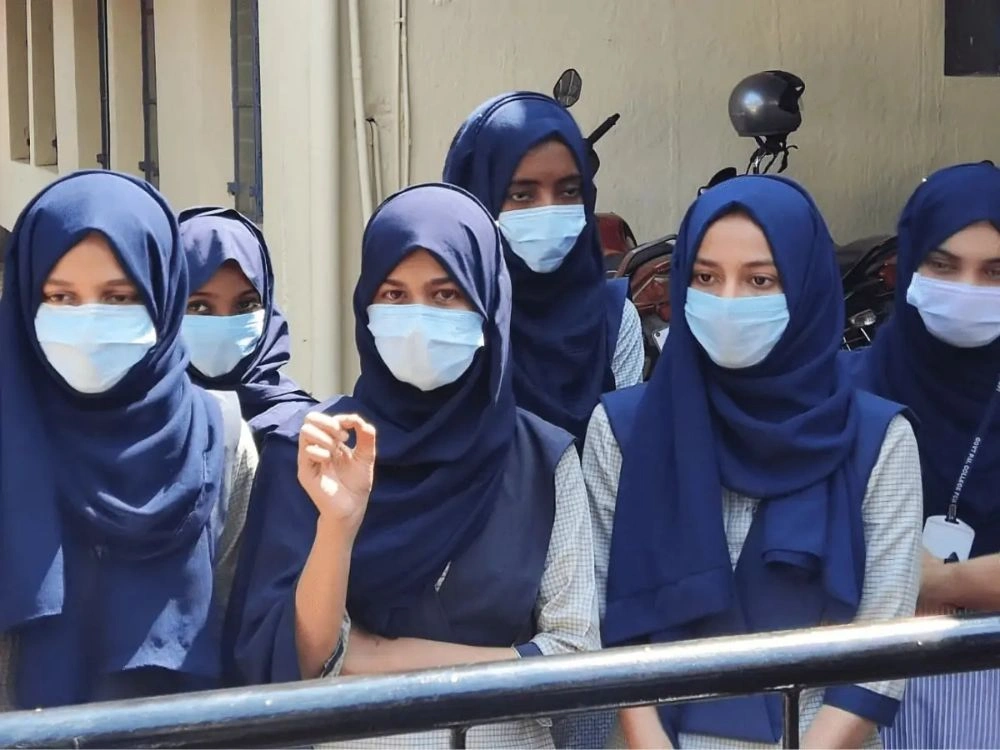
Karnataka’s state administration has quietly but firmly overturned the 2022 decision that prohibited pupils from wearing hijabs and other prominent religious symbols in schools where uniforms are imposed. The announcement of the policy change this week restores the legal status of visible religious expression in classrooms and represents a major shift in the state’s approach to secularism, education and minority rights. The reversal will have obvious practical consequences for kids, school officials and communities across the state — and it raises bigger considerations about the balance between uniformity and individual freedom in Indian public life.
Why it matters today
The first order in 2022 led to protests, judicial fights and a fierce media debate. For many families and students, the restriction was a violation of personal dignity and religious freedom. School officials and parents supported the restriction as a way of enforcing uniform discipline and preventing any outward signs of conflict among the student bodies. The struggle was fought in colleges, high schools and eventually in the courts. Karnataka has lifted the prohibition and the state has decided to clarify the air — legally and administratively — and to let students wear religious symbols when they are part of their faith practice.
This reversal is relevant for a number of reasons:
It impacts thousands of children across the state studying in government, aided and many private schools following a uniform code.
It feeds into public arguments over secularism in India — whether secular administration demands visible neutrality or equal accommodation of religious expression.
It provides a precedent that other states may look to when dealing with similar problems, especially when courts or legislatures have been requested to weigh in.
What changed, and what it implies on the ground
Under the now-rescinded rule, schools that enforced uniforms could still limit “conspicuous” religious insignia. That terminology was imprecise, and in fact it resulted in inconsistent enforcement: some organizations allowed headscarves or minor religious objects, others demanded a rigid uniform silhouette. The misunderstanding compelled many kids to decide between going to school or freely sharing their faith.
The removal of the prohibition means students who were prevented from or coerced into removing hijabs and other conspicuous religious symbols will be able to attend class without concealing their faith. Now, administrators are having to modify dress code standards to fit the state’s perspective. This could mean in practice:
Revised uniform policies that either specifically specify allowable religious items, or contain a broad provision allowing religious symbols unless they represent a safety hazard.
Training of teachers and staff on non-discriminatory enforcement and courteous handling of religious issues
Fewer standoffs at school gates, which have characterised previous years and sometimes erupted into protests.
The ruling also impacts test centres and inter-school competitions where uniform requirements were rigidly enforced. Boards and other entities that organize will require clear guidance on how to incorporate religious dress alongside fairness and security.
Legal-constitutional context
India’s Constitution protects freedom of religion but the right is not absolute. The state may impose “reasonable restrictions” on the exercise of religion in the sake of public order, health, morality and other considerations. The earlier Karnataka order rested on the premise that a consistent policy may be justified on administrative and disciplinary grounds. Any such limits, critics said, would have to be carefully defined and not a form of indirect discrimination.
In effect, by lifting the restriction Karnataka admits that banning religious symbols in the sake of uniformity was more troublesome than advantageous. This approach is consonance with previous judicial decisions emphasizing protection of human conscience and religious practice particularly in educational institutions. The reversal lessens the odds of further litigation on the precise problem in Karnataka. But comparable cases may come up under different circumstances.
In big centres like Bengaluru, subdued celebrations and discussions on campus about pluralism and rights were seen among student groups. The impact will depend on how each school interprets the state’s instructions and whether local administration supports inclusive practices in small towns and rural areas. Impact on social harmony and secular administration The important question now is whether the policy shift would defuse communal tensions or ignite new flashpoints. For many viewers, these religious symbols in schools are a step toward the normalization of diversity and the reduction of alienation of minority kids. This means that the state recognizes multiple identities but does not impose any specific religion as the primary one in public life.
But there are dangers too. “If the schools or political actors view the subject as a symbolic gain or defeat and not a matter of day-to-day coexistence, it’s open to divisive rhetoric.” Now it is the state’s obligation to make sure that the new standards stimulate discourse, not division, through deliberate messaging and on-the-ground effort.
How schools can handle change constructively
Schools require specific practical actions for the policy change to work in practice. Practical measurements can be:
Written policies that clearly outline which religious items are permitted (e.g., headscarves, kara, small pendants), indicate safety exclusions (laboratory work, physical education, some vocational duties), and clarify grievance procedures.
Sensitivity training for teachers and administrators to decrease bias and to calmly resolve disputes.
These methods serve to avoid conflicts as much as possible and to avoid impairing the right of pupils to education. They also foster a culture where diversity becomes an asset and not a problem to be addressed.
Why this is important beyond Karnataka
The hijab controversy in Karnataka has become a barometer for how democracies respond to visible religious expression in public institutions and has been watched across India and worldwide. Similar questions have been asked in many states, and national rhetoric often serves to amplify local disputes. Karnataka’s reversal could prompt other governments to revisit tight dress-code policies or to introduce broader rights for religious expression in schools.
There is also an international dimension: concerns regarding head coverings, religious symbols and governmental neutrality in schools are disputed in many nations. Karnataka’s approach will be watched by human rights groups and education policy scholars interested in the balance between uniformity and individual rights.
SEO and trend keywords (naturally embedded in reporting)
This item is about high interest search terms that readers and policymakers are searching for: Karnataka hijab order, hijab ban lifted, religious symbols in schools, students rights Karnataka, school uniform policy india, freedom of religion india, Karnataka education news, hijab row. These terms show public interest and will assist readers identify relevant factual coverage.
Looking ahead: questions and implications
Here are some developments to watch in the next few months:
Will school boards publish model guidelines for the uniform accommodation of religious symbols?
How will security and fairness be maintained in examination centres and inter-school competitions if religious dress is accommodated?
Will this policy change impact the political calculus in the state, or encourage similar reversals elsewhere?
For families and students, the real question is what daily school life will look like. Will teachers be ready? Will schools spearhead the education of communities about the change? Whether the reversal brings about meaningful inclusion will depend on the answers to those concerns.
Karnataka Reverses Stance on School Dress Code Allows Religious Symbols like Hijab