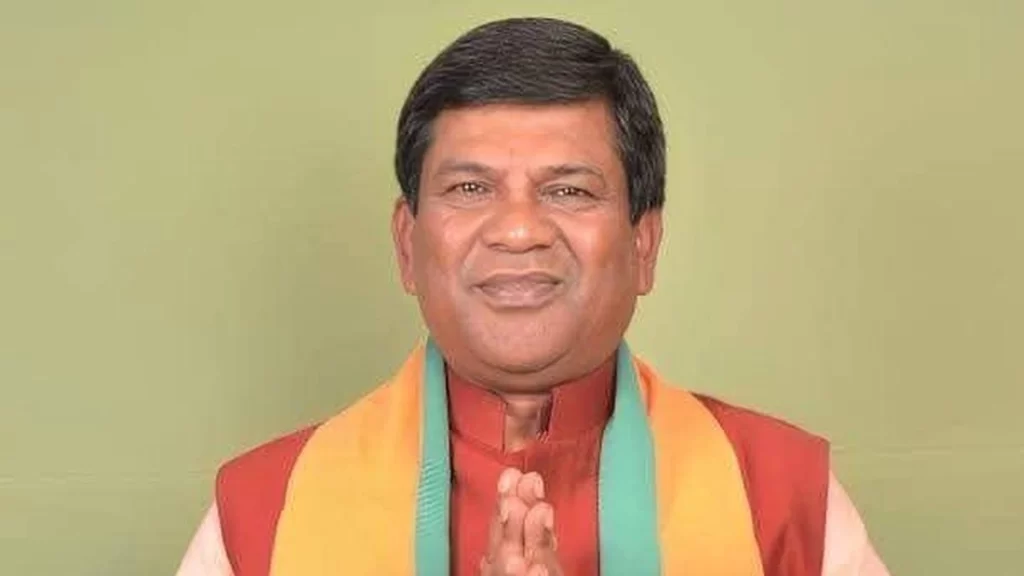
In a moment of more than ceremonial significance, BJP MLA Rathindra Bose was unanimously elected the Speaker of the newly constituted 18th West Bengal Legislative Assembly on Friday — becoming the first legislator from North Bengal to ever hold the prestigious constitutional chair since the state was formed after Independence.
The election in the jam-packed assembly hall in Kolkata went off without a hitch, but the politics behind it was intense. Bose’s rise, riding the crest of a landslide victory in the 2026 West Bengal assembly elections, was less a race and more a carefully calibrated political statement from a party now securely in charge of a state it had been hunting for almost a decade.
— #A Unanimous Election A Loaded Message
It went so fast. Chief Minister Suvendu Adhikari formally nominated Bose’s nomination in the House, which was followed by Pro-tem Speaker Tapas Roy conducting a voice vote. All the 207 BJP MLAs unanimously supported the candidature. The opposition Trinamool Congress, which was destroyed in the April 2026 polls, reduced to just 80 members in a 294-member assembly it formerly dominated, elected not to present a rival candidate, thereby letting the election to go without challenge.
This was not all that shocking. Before the session, Adhikari himself had appealed to the opposition reminding them that the West Bengal assembly had a tradition of electing its Speaker unanimously. In West Bengal, the election of the Speaker has been a unanimous affair. “I hope the Opposition will maintain this tradition,” he remarked on the eve of voting. The TMC, which is still licking its wounds after what is being called the most devastating electoral setback in the state’s post-Independence history, did not push back.
As per the long-standing custom of the assembly, CM Adhikari himself accompanied Bose to the Speaker’s chair after his election. The gesture was symbolic and was hailed enthusiastically on the treasury benches.
— ## About Rathindra Bose
At 65, Rathindra Bose is hardly your run-of-the-mill professional politician. He is a practicing Chartered Accountant, a professional background that is, significantly, a break from the attorneys and veteran lawmakers who have previously held the speaker’s chair in West Bengal. During the Left Front regimes, the role was inhabited by senior political leaders such Syed Abdul Mansur Habibullah and Hashim Abdul Halim, who had both strong roots in legislature and administration. Veteran politician Biman Banerjee was the speaker during the TMC’s long 15-year rule.
Bose does shatter that mould, perhaps purposely. He has been part of the BJP and RSS organisational apparatus in North Bengal for decades, eventually climbing the ladder to become the party’s state vice-president and the convener of BJP’s North Bengal division. In Cooch Behar he is not known as a news grabber but as a steady, behind-the-scenes worker who has maintained the party infrastructure working in the region through challenging political cycles.
His first electoral outing was outstanding. In the 2026 assembly elections, Bose fought from Cooch Behar Dakshin constituency and defeated Trinamool Congress candidate Avijit De Bhowmik by a massive margin of 23,284 votes, bagging 52.81% of the total votes polled – a clear personal endorsement from his district. But it was his organisational heft and his connect to the North Bengal belt and not simply his electoral numbers that made him the candidate for this constitutional post.
After the election, Bose adopted a more conciliatory tone, promising to serve with the philosophy of “Sabka Saath, Sabka Vikas” — which loosely means “development for all, together with all”. There will be careful scrutiny of that promise of impartiality for a Speaker who will be expected to oversee an assembly when the opposition is much diminished.
— ## The Signal of North Bengal
The geography of this appointment is one thing, above all, that political analysts are reading with particular interest: Rathindra Bose is the first Speaker of the West Bengal assembly, in the known post-Independence history, to hail from the northern section of the state.
North Bengal, with districts such as Cooch Behar, Jalpaiguri, Alipurduar, Darjeeling and Siliguri, has historically been a region that felt a little removed from the power centres in Kolkata. But in the recent decade, it has become one of BJP’s most potent strongholds in West Bengal, where the party has swept seats there, even in the 2021 elections when it lost the overall race to Mamata Banerjee.
Read with BJP’s larger approach to governing, this choice sends a clear message: that the new administration wants North Bengal to feel involved in, represented and part of the political destiny of the state. Is it a symbolic gesture, or does it indicate a more serious governmental focus on the region? Probably both of them. Senior party leaders have been careful to frame Bose’s nomination as a recognition of North Bengal’s contribution to the BJP’s historic majority, and that framing is unlikely to be lost on voters in Cooch Behar, Darjeeling and beyond.
— ## Background: BJP’s Historic Bengal Capture
To appreciate the full significance of the Friday proceedings, one must step back and view the wider political earthquake that preceded it. The 2026 West Bengal assembly elections were held in two phases on April 23 and April 29, and the results were such that few would have confidently predicted even three years before.
In the assembly, the BJP won 207 of the 294 seats. The All India Trinamool Congress, which had been in power since 2011 under Mamata Banerjee, was reduced to 80 seats. Mamata Banerjee lost her own seat. Voter turnout soared to a record-setting 93 percent — a historic high for the state. These are not trivial numbers. It was a resounding and unmistakable call for change.
Suvendu Adhikari, who had famously trounced Mamata Banerjee in the Nandigram constituency in 2021 and had since been leading BJP’s charge across rural and semi-urban Bengal, was sworn in as Chief Minister on May 9, with Prime Minister Narendra Modi and senior NDA leaders present at the Brigade Parade Ground ceremony. The 18th West Bengal Legislative Assembly, of which Bose is currently Speaker, is the first BJP-majority legislature in the state since Independence, a political milestone by any standard.
Key election takeaways to keep in mind:
– **BJP:** 207 seats, ~46% vote share
– **TMC:** 80 seats, over 41% vote share
– **INC and CPM:** Returned to assembly after winning zero seats in last election
– **Voter turnout:** Historic ~93% (highest in decades)
There were other reasons for BJP’s success. Anti-incumbency after 15 years of TMC government was a big factor. The school recruitment scam, nagging questions over law and order, the 2024 RG Kar Medical College rape and murder case that sparked statewide protests, tardy industrial investment and a steady exodus of young Bengalis to other states in search of jobs – all fed into a growing disillusionment with the Banerjee government.
— ## The Speakership’s Future
The Speaker of a state legislative assembly is not merely a procedural officer. The function is fundamentally important – the Speaker selects which measures are approved as money bills, keeps order during discussions, rules on points of order and has the right to reject members under the anti-defection law. In a parliament where the ruling party has more than 70% seats, the Speaker’s impartiality and conduct will be under the scanner.
Bose’s education as a Chartered Accountant offers a certain analytical rigour to the post and his long stint in party organisation implies he is no stranger to managing competing interests under pressure. But the real test will be when the assembly settles into its legislative groove – when budgets are debated, when opposition voices seek to be heard, when the institutions of parliamentary democracy are set to operate under the new political order.
For his part, Chief Minister Adhikari was effusive in his commendation. “He is a Chartered Accountant and has the required abilities to take this task. “We want cooperation from all sides for his leadership,” said Adhikari — a statement that gestures toward the kind of balanced speakership that West Bengal’s assembly arguably needs right now, in its request for cross-party cooperation.
— ## A New Chapter in West Bengal’s Legislature
West Bengal has always been a politically charged state and its legislative history is replete with ideological fights, from the Left Front’s 34-year hegemony to the TMC’s populist disruption to the BJP’s hard-fought entry. The 18th assembly, with Rathindra Bose now occupying the Speaker’s chair, is the start of yet another chapter in that long story.
There is something quietly noteworthy about a first-time MLA from Cooch Behar Dakshin, a Chartered Accountant with profound organisational roots, occupying a seat once held by seasoned legal geniuses and political veterans. It is a reflection of how dramatically the political landscape of Bengal has changed, not just in terms of who rules, but in terms of who the BJP thinks represents the future of the state.
The questions that will determine history’s judgment of this time are whether Bose can live up to the impartial, authoritative standards that the Speaker’s office demands — and whether the new assembly can function as a true democratic forum despite the opposition’s diminished state. The numbers in the 18th West Bengal assembly are emphatically in BJP’s favour. How Rathindra Bose conducts the House from his newly occupied chair, and what the party does with that majority, is a drama that has only just begun.
—
West Bengal Assembly Speaker: BJP’s Rathindra Bose Elected Speaker; First Time For North Bengal