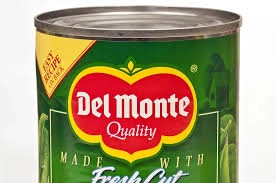
Del Monte Foods’ demise is more than a story of corporate reorganization. It’s a warning about changing consumer preferences, the crushing weight of acquisition debt, and the uncertain future of packaged food brands that once seemed invincible. **
— ## A Household Name Goes Into Chapter 11
For most people who grew up in the U.S., Del Monte was just part of the kitchen. Yellow-label cans of maize, green beans and peach slices were pantry staples for centuries. Thus, when Del Monte Foods Corporation II Inc. filed for Chapter 11 bankruptcy in the U.S. on July 1, 2025. Bankruptcy Court for the District of New Jersey, the news was a quiet bombshell.
It wasn’t a total surprise for many who had been closely observing the corporation. Del Monte had been struggling for years with a crushing debt load that only grew over the years. But the size of the collapse — more than $1 billion in obligations, 10,000 to 25,000 creditors, and employees in several states and countries — made it one of the largest food industry bankruptcies in recent American history.
The corporation was quick to spin it as a strategic decision, not a tragedy. “After careful review of all options, we determined that a court supervised sale process is the most effective method to expedite our recovery and build a stronger, lasting Del Monte Foods,” said President and CEO Greg Longstreet in a statement with the filing. The company also got $912.5 million in debtor-in-possession financing from existing lenders to fund its operations during the proceedings — a lifeline that allowed it to continue manufacturing through the peak canning season as its destiny hung in the balance.
— #The Long Road to Breakdown
In many ways, Del Monte’s narrative is a cautionary tale about leveraged buyouts and the hazards of spending large on a brand in a changing market.
The company’s roots date back to 1899 when eleven California canners joined together to form the California Fruit Canners Association. Over the next century it became one of the best-known names in packaged food around the world. But the seeds of its financial demise were sown much more recently, in 2014, when Del Monte Pacific Limited, a multinational food and beverage corporation headquartered in Singapore and the Philippines bought Del Monte Foods’ consumer products sector for $1.675 billion. The acquisition was financed with approximately $745 million of stock and $930 million of long-term credit.
That debt never really disappeared Industry study predicted yearly interest payments rising from $66 million in fiscal 2020 to $125 million by fiscal 2025 — almost tripling in only five years. The corporation was under great financial duress, with the added burden of more than $1.2 billion in secured debt on its books.
The pandemic made things worse in ways that weren’t immediately clear. Canned goods were in high demand in the early months of COVID-19 as shoppers bought up shelf-stable food. Del Monte accordingly ramped up. But when demand settled, then declined, the company was left sitting on mounds of excess inventory – stuff it had to warehouse at significant expense, then sell with heavy promotional discounts that degraded margins even further.“Del Monte has had to shoulder increasing costs connected to extra inventory it has had to warehouse and try to sell off shelves with greater promotional spending, while consumer demand has declined,” said Sarah Foss, global head of litigation and restructuring at Debtwire. ““Consumer preferences have moved away from preservative filled canned food to healthier alternatives,”
That change in consumer behavior is likely the single biggest structural challenge facing Del Monte – and one that no amount of debt restructuring can truly fix by itself.
— ## The Consumer Trend That Changed It All
Here’s a question to consider: When was the last time you deliberately reached for a canned vegetable instead of a fresh or frozen one?
The numbers speak for themselves. Global canned fruit and vegetable sales fell from 2019 to 2024. Fresh has shown growth in dollar and unit sales for the last two years, whereas canned has seen unit sales decline for the same time. It’s easy to see why: increased consumer awareness around nutrition, the rise of fresh food delivery services, and a general cultural shift toward “clean eating” have all eroded the canned food market in ways brands like Del Monte weren’t quick enough to adapt to.
Persistent supply chain issues, rising operating expenses and the growing power of private-label offerings on supermarket shelves added to the strain. The major grocery chains have steadily developed their own store-brand canned goods, often beating the price of branded products and closely matching the quality. That left Del Monte in a jam – confronting consumers who wanted either fresher options or cheaper ones.
— ## Communities Shaken by Lost Jobs
Del Monte’s bankruptcy has had a steep human toll. In many communities, factory closings and layoffs have reverberated through towns that relied on the company for good jobs.
In Modesto, Calif., home to a large food processing plant run by Del Monte, the closing left as many as 1,800 workers, including seasonal and full-time employees, without jobs. The corporation shut down its factory at 4000 Yosemite Boulevard on April 7, 2026, and 765 employees received their final layoff notices. There was no bidder for the factory, and its destiny was sealed.
In Washington, Del Monte closed its Yakima processing plant, cutting hundreds of seasonal and full-time employment directly related to the fruit business in the region. The Pacific Northwest has been particularly heavily struck, long a center of agricultural food processing.
These closures aren’t only affecting the workers inside the factories. They reverberate in rural farming communities, transportation systems, and the small businesses that gravitate around large industrial employers. Those rippling effects are just the ones that don’t show up neatly in bankruptcy papers but are very real on the ground.
— ## A Three-Way Brand Split
Yet the Del Monte story, for all the magnitude of the collapse, is not one that ends in total breakdown. In a court-led auction process through late 2025 and early 2026, the company’s assets were broken up and sold to three independent buyers, one taking a different chunk of the Del Monte empire.
The biggest acquirer was Fresh Del Monte Produce Inc., which agreed in January 2026 to buy the prepared and packaged foods companies for $285 million. That acquisition comprised the Del Monte and S&W packaged vegetable brands, the Contadina and Take Root Organics tomato brands, the Del Monte refrigerated fruit line and the JOYBA beverage brand. The deal also included operational facilities in Texas, Illinois, Wisconsin, Washington, two sites in Mexico and one in Venezuela.
What makes this especially significant is the symbolism of it: the deal put the Del Monte name back together under one owner for the first time in almost four decades. “The acquisition brings together the Del Monte brand under one owner for the first time in over four decades,” industry newspaper Blue Book said in its coverage of the sale. “It brings together fresh and shelf-stable foods under one integrated strategy.”
B&G Foods, which owns brands including Crisco and Ortega, stepped in to buy the broth and stock business, which includes the College Inn and Kitchen Basics labels, for about $110 million.
The third part, canned fruit and packaged fruit sauce goods under the Del Monte and S&W names, went to Pacific Coast Producers, an agricultural co-op. That deal included licensing rights for the U.S., Puerto Rico and Mexico and industry analysts noted that Pacific Coast Producers may be well-positioned to explore growing export opportunities in Asian markets, where demand for canned fruit is actually increasing along with urbanization and rising middle-class purchasing power in countries such as India and across Southeast Asia.
— #Implications for the Packaged Food Industry
It wasn’t as if Del Monte fell from grace in a vacuum. 2025 was a terrible year for American consumer brands, in general. Total U.S. bankruptcies surged 11% over the year, with 24,737 business files registered — driven by a confluence of rising borrowing rates, changing consumer tastes and the leftover consequences of pandemic-era overextension.
The restructuring of the canned food sector is particularly tough. The sector as a whole is grappling with consolidation to fewer, larger processors; loss of branded market share to private-label competitors; and a continuing consumer preference for fresh or barely processed food over shelf-stable canned products.
The story is a bit more convoluted for global markets, including India. Urbanisation, a burgeoning middle class and a higher demand for handy, shelf-stable items in tier-2 and tier-3 cities has led to consistent growth in India’s packaged food business. Asia-Pacific is expected to be the fastest growing regional market for canned fruits in 2026, with a 15.3% share and a robust growth rate. This is exactly the sort of market dynamic that could offer the reconstituted Del Monte brands a fresh lease on life – if their new owners put their money into the right markets with the right products.
— ## A Legacy Brand Rebooting Itself
What emerges from the ruins of Del Monte Foods is not necessarily an end — more like a forced regeneration. Consumers know the brands won’t be vanishing from shop shelves. Fresh Del Monte has pledged to provide continuity for retailers, foodservice partners, suppliers, and consumers, with no immediate changes planned to items on store shelves.
But the bigger lesson from Del Monte’s bankruptcy is one the food sector — and investors more broadly — would do well to heed. Having a brand name alone won’t keep a business alive when debt levels become out of hand and the underlying market is heading in another direction. A brand that used to signify reliability and comfort for millions of kitchens must nevertheless change, stay financially disciplined, and listen carefully to what consumers truly want.
We’ll see if the Del Monte brand, now split among three separate corporate owners, can find consistency and growth in this new setup. But for the workers who lost jobs in Modesto and Yakima, and for the farming communities that depended on those processing factories, the cost of getting here has already been very real and very human.” And that aspect of the tale is worth remembering too — not just the balance sheets and the auction bids.
—
Del Monte Bankruptcy: What Happened to a 139-Year-Old Food Giant — And What’s Next