Football has always been its own spectacle. Ninety minutes of raw tension, last-minute drama, and the kind of collective joy — or heartbreak — that very few things in human life can replicate. For decades, FIFA resisted the idea of interrupting that purity with anything resembling entertainment in the American mould. The game was the show. End of story.
That chapter just closed.
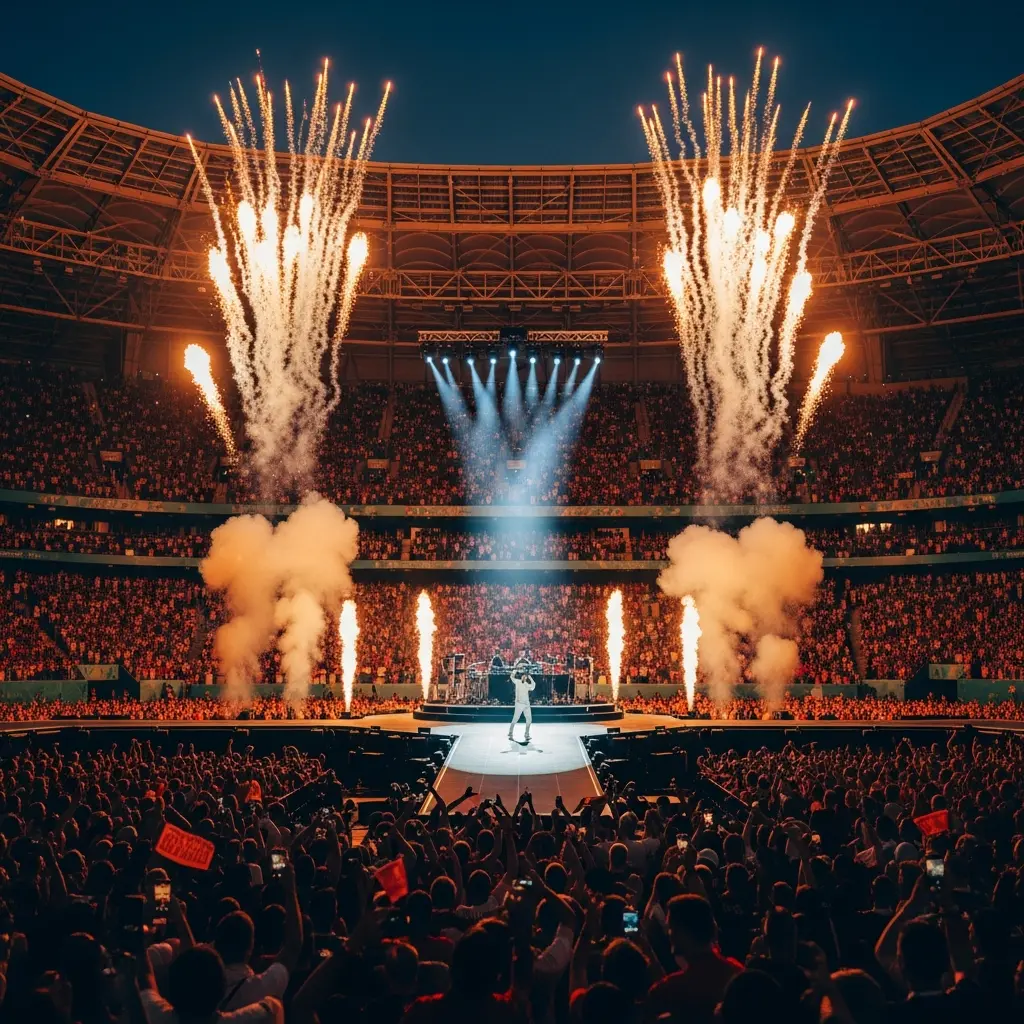
FIFA confirmed this week that the 2026 World Cup final will feature the tournament’s first-ever official halftime entertainment show — and they did not ease into the idea quietly. Madonna, Shakira, and BTS are scheduled to take the stage during the July 19 final at MetLife Stadium in East Rutherford, New Jersey. Three of the most globally recognized acts in the history of popular music, on the world’s biggest sporting stage, in what is already being described as a landmark moment for football and entertainment alike.
Whether you’re a football purist or a pop music devotee, this announcement is hard to look away from.
A First, Decades in the Making
FIFA and Global Citizen jointly announced that Madonna, Shakira, and BTS will co-headline the historic FIFA World Cup 2026 Final Halftime Show, with the performance set to be curated by Chris Martin of Coldplay. The announcement itself was made in a characteristically playful way — a social video starring Coldplay’s Chris Martin alongside Sesame Street’s Elmo and Cookie Monster, as well as Kermit, Miss Piggy, and more from The Muppets.
It was the kind of lighthearted reveal that signals something more serious underneath: FIFA is serious about making this work, and they wanted the world to pay attention.
The show will clock in at approximately 11 minutes — brief by Super Bowl standards, but long enough to leave a mark on an audience that will number in the hundreds of millions worldwide.
Three Icons, One Stage
Let’s take a moment to appreciate what this lineup actually represents.
Madonna is the undisputed architect of modern pop spectacle. She’s been doing this — reinventing herself, commanding stages, making headlines — for over four decades. Madonna previously headlined the Super Bowl halftime show in 2012, an appearance that remains one of the most watched in that event’s history. Now she brings that experience to a FIFA World Cup final stage. She enters this performance while preparing for her Confessions II album release on July 3, which means her World Cup moment arrives at the peak of a new creative chapter.
Then there’s Shakira — a name so intertwined with World Cup football that hearing it almost triggers muscle memory. She sang Waka Waka at the 2010 tournament in South Africa, a song that became the most-watched World Cup anthem in history. Shakira co-headlined the Super Bowl with Jennifer Lopez in 2020. Now, her FIFA World Cup final performance is expected to centre around “Dai Dai,” the official 2026 World Cup song she created with Burna Boy. For Shakira, this isn’t just another performance. It’s a homecoming of sorts — back to the tournament that helped define her global identity.
And BTS. There’s simply no contemporary equivalent to what BTS represents in global music. The South Korean group commands a fanbase that stretches across every continent with an intensity that other artists simply cannot match. BTS member Jungkook famously performed his single “Dreamers” at the 2022 FIFA World Cup opening ceremony in Qatar, becoming the first Korean artist to perform at the event. The group’s inclusion in the FIFA World Cup 2026 halftime show is a statement about where global music — and global audiences — actually live in 2026.
More Than Just a Show
What gives this moment genuine weight, beyond the celebrity wattage, is the purpose behind it. The FIFA World Cup 2026 Final Halftime Show will support the FIFA Global Citizen Education Fund, an initiative aiming to raise USD 100 million to expand access to quality education and football opportunities for children worldwide. More than USD 30 million has already been raised.
FIFA President Gianni Infantino framed the show as a celebration of football, unity, and shared humanity, saying the historic event will “resonate far beyond the final whistle.”
The artists themselves have been equally direct about why they signed on. Madonna said that performing at the World Cup final in support of the FIFA Global Citizen Education Fund is “deeply meaningful,” adding that without education, children are denied opportunity before they even have a chance. Shakira, a FIFA Global Citizen Education Fund Board member, said her hope is that on the world’s biggest stage, the importance of investing in children’s education “steals the show.”
That’s not standard press release language. These are artists who have each, in their own ways, used their platforms for causes beyond music. The alignment here feels real.
Football Meets Entertainment — Finally
Sports and entertainment analysts have been predicting this convergence for years. The Super Bowl figured it out long ago — that the halftime show is as culturally significant as the game itself, sometimes more so. FIFA, traditionally more conservative and protective of football’s identity, held back. But the numbers are simply too compelling to ignore.
The World Cup final halftime show will take place July 19 in New Jersey, broadcast live to a global audience. The show will be broadcast on Fox and Telemundo reaching audiences in North America and beyond.
The 2026 tournament is already historic in its own right — the first World Cup hosted across three nations (the United States, Canada, and Mexico), and the first World Cup to be hosted on North American soil since 1994. Adding a halftime show of this scale to the final simply amplifies what is already shaping up to be the most-watched sporting event in history.
Why This Matters Beyond the Music
There will be purists who grumble. There always are. Football, they’ll say, doesn’t need embellishment. The game speaks for itself.
They’re not entirely wrong. But they’re also missing the point.
The BTS halftime show, Shakira FIFA performance, and Madonna World Cup appearance aren’t about replacing football — they’re about expanding the conversation around it. They’re about the family watching the final in Seoul who stays glued to the screen through halftime. The teenager in Lagos discovering Shakira’s music for the first time because she heard it between two halves of football. The kid in New Jersey watching from the stands, experiencing something they’ll tell their grandchildren about.
Football entertainment at this scale is a bridge — between cultures, between generations, between people who arrive through sport and people who arrive through music, all landing in the same place at the same moment.
That’s what FIFA is building. And on July 19, the world will be watching.
The World Cup Just Got a Halftime Show — and It’s Bigger Than Anyone Expected.