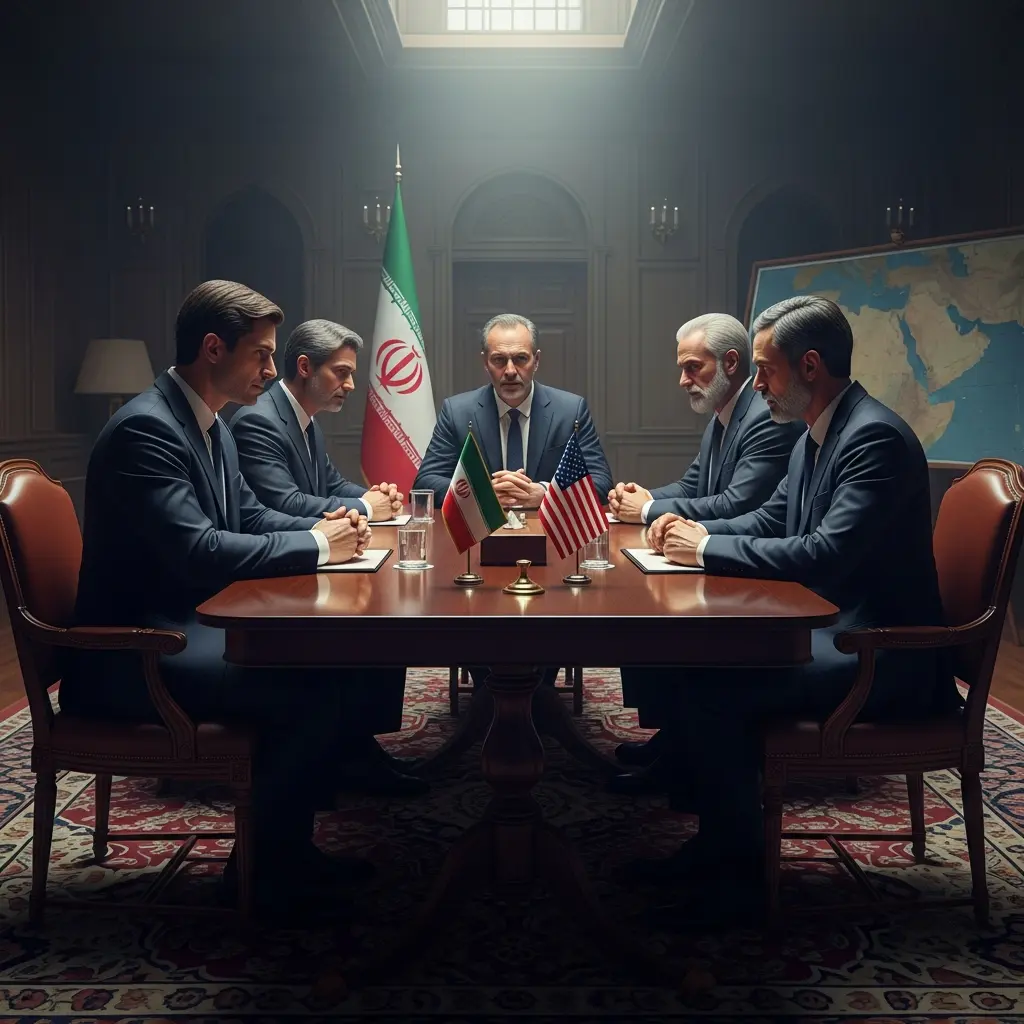
Nuclear disagreements, regional military posturing, and decades of mutual distrust have turned diplomacy between Tehran and Washington into one of the world’s most complicated — and consequential — high-wire acts.
60%+ Uranium enrichment level reported by IAEA inspectors
~4% Civilian reactor-grade enrichment under the 2015 JCPOA
$80–$90 Estimated oil price range (USD/barrel) sensitive to Iran risk
Diplomacy between Iran and the United States has never been comfortable, but it has rarely felt quite this fragile. Across negotiating tables in Europe and back-channel conversations relayed through regional intermediaries, the two sides are still talking — and that, given everything, is itself worth noting. Iran–US talks have survived domestic political upheaval in both countries, military strikes and counter-strikes, and the collapse of at least one major nuclear agreement. The talks continue not because trust has been restored, but because neither side has yet decided that the cost of failure is acceptable.
At the heart of the current impasse are two issues that have refused to yield to diplomatic pressure: Iran’s nuclear programme and the broader question of regional security. On the nuclear side, the disagreement is technical in form but existential in substance. Iran maintains that its enrichment activities are entirely civilian in nature and protected under international law. The United States and its allies, supported by successive reports from the International Atomic Energy Agency, argue that enrichment levels have far exceeded what any civilian energy programme could justify. The gap between those two positions is not merely a matter of verification or inspection schedules — it reflects a fundamental disagreement about what kind of Iran the international community is willing to accept.
“The gap is not merely technical — it reflects a fundamental disagreement about what kind of Iran the international community is prepared to accept.”
Nuclear negotiations have gone through several distinct phases since the original Joint Comprehensive Plan of Action was signed in 2015, only to be unilaterally abandoned by Washington in 2018. Efforts to revive a deal — under different administrations, with different parameters — have repeatedly reached the edge of agreement before collapsing under the weight of domestic politics on both sides. Iran’s hardliners see any meaningful concession on enrichment as a strategic capitulation. American legislators, for their part, remain deeply sceptical of any framework that does not permanently foreclose Iran’s path to a nuclear weapon. Neither population is particularly forgiving of leaders who appear to give too much away.
The regional security dimension adds a further layer of complexity that pure nuclear diplomacy cannot resolve. Iran’s network of allied militia groups across Iraq, Syria, Lebanon, and Yemen is simultaneously a source of strategic leverage for Tehran and a primary cause of American reluctance to offer meaningful sanctions relief. Washington wants Iran to pull back from proxy engagements across the Middle East; Tehran views those relationships as non-negotiable — both as instruments of deterrence and as the product of decades of geopolitical investment it has no intention of surrendering at a negotiating table. The result is a negotiation that keeps running into its own boundaries.
“Tehran’s regional alliances are simultaneously its greatest source of leverage and the principal reason Washington won’t fully open the door.”
Meanwhile, military activity in the region continues to keep governments and markets on edge. Incidents involving tankers in the Persian Gulf, drone interceptions over Iraq, and sporadic exchanges of fire near contested borders have not escalated into open conflict — but they have maintained a persistent low-grade tension that conditions every diplomatic move. Each incident, however contained, reminds both sides of how quickly the situation could deteriorate, and that awareness cuts in both directions: it creates pressure to reach an agreement, but it also makes concessions harder to justify to domestic audiences already primed for confrontation.
Global security analysts have grown increasingly vocal about the downstream consequences of prolonged uncertainty. Energy markets are among the most sensitive indicators. The Strait of Hormuz — through which roughly 20 percent of the world’s traded oil passes — sits squarely within the zone of potential disruption. Any major escalation involving Iran could cause sharp swings in oil prices that would reverberate through every major economy, pushing up energy costs, straining supply chains and adding to inflation figures that many governments are still trying to get a handle on. The Middle East tensions are not a regional story; they are a global economic variable.
International trade routes compound the concern. Shipping insurers, cargo companies, and energy importers have already begun adjusting their risk calculations in anticipation of potential disruptions. Some vessels have rerouted. Some contracts have been renegotiated. The uncertainty itself carries an economic cost that accrues quietly even when no shots are fired. Analysts estimate that a serious escalation could push oil prices well above current levels, with cascading effects that no major economy would be immune from.
“The uncertainty itself carries an economic cost — one that accrues quietly, even in the long silences between crises.”
And yet, the negotiations persist. Diplomats on both sides understand, even when they cannot say so publicly, that the alternatives to a negotiated framework are considerably worse. A nuclear-armed Iran would fundamentally alter the security calculus of every country in the region and trigger a proliferation dynamic with no clear endpoint. A military strike — even one that succeeded on narrow tactical terms — would almost certainly accelerate rather than halt Iran’s nuclear ambitions while igniting a broader regional conflict with unpredictable consequences. The logic of negotiation, however frustrating, remains more compelling than the logic of either of the alternatives.
What the Iran–US talks ultimately reveal is something that diplomacy always eventually surfaces: that the hardest conversations are the most necessary ones. The disagreements are real, the grievances are deep, and the domestic politics on both sides punish compromise. None of that is new. What is new is the recognition, growing slowly on both sides, that the world cannot afford for these talks to simply drift into permanent failure. The tightrope is narrow and the footing is uncertain — but the two sides are still, for now, walking it.