The 69th All India Police Duty Meet arrives in Nagpur — and behind the competition and ceremony lies a serious conversation about the future of Indian policing.
Policing, at its core, is a human job. Behind the uniform, the baton, and the badge is a person who woke up that morning, drank their chai, and went out to manage the messy, unpredictable business of public safety. It is a job that rewards preparation, punishes complacency, and demands — above almost everything else — the ability to work alongside others under pressure. Which is precisely why an event like the All India Police Duty Meet matters far more than its formal title might suggest.
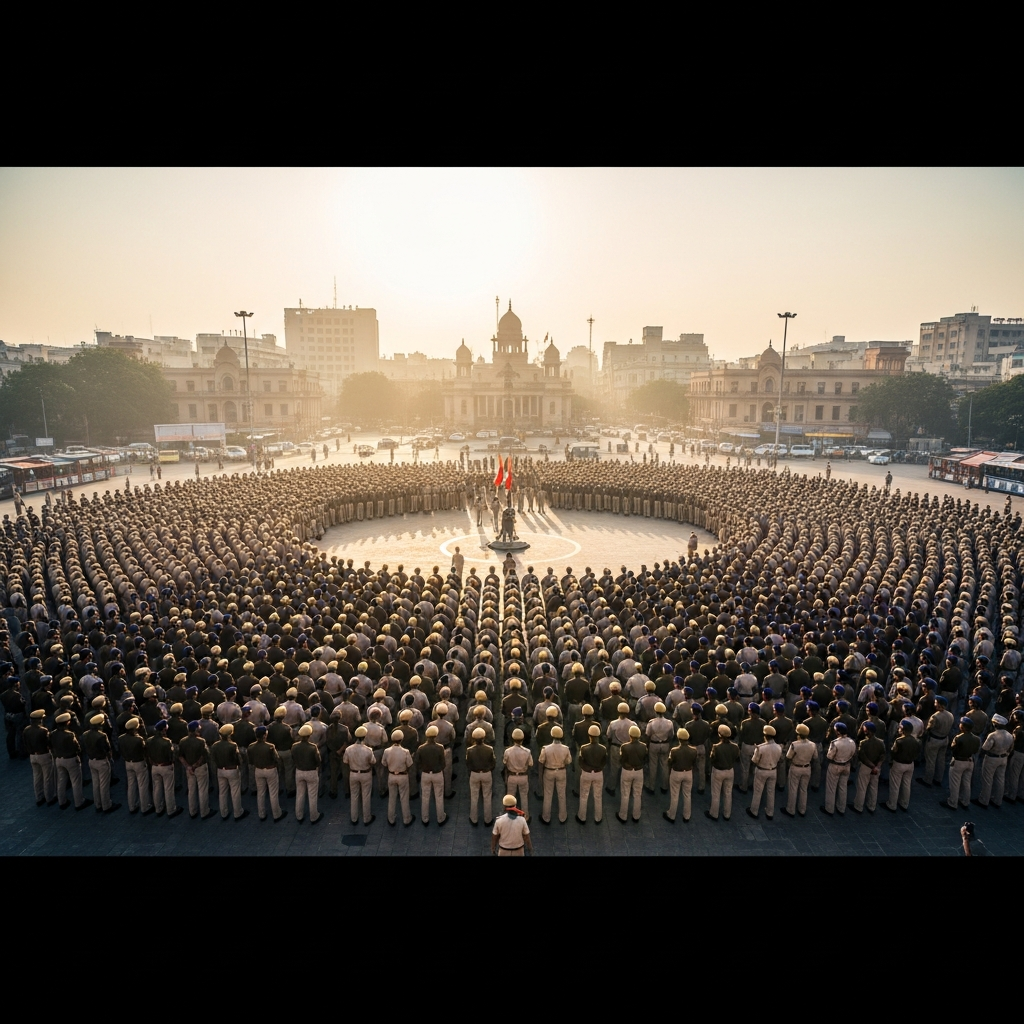
Nagpur, the geographical heart of India, is set to host the 69th edition of this prestigious gathering — and the city is preparing to receive over 1,300 officers from police forces across every state and union territory in the country. It is one of the largest convergences of law enforcement personnel on Indian soil, and for those who understand what actually happens at these meets, the significance runs much deeper than competition.
The All India Police Duty Meet is, on the surface, a series of competitive events — obstacle courses, weapon handling drills, map reading exercises, dog squad demonstrations, and a range of other skill-based challenges designed to test the operational readiness of officers in simulated real-world conditions. Teams representing different state forces go head to head, and the results are tracked, ranked, and celebrated. There is genuine competitive pride at stake. Officers train for months in advance, and a strong showing at the meet carries weight back home — in appraisals, in morale, in the quiet institutional pride that holds a force together.
“You realise very quickly that the challenges you thought were unique to your city are being faced, in different forms, by everyone in that room.”
But speak to officers who have attended previous editions of the meet, and a different layer of value emerges. Across dinner tables, during breaks between events, and in the informal conversations that happen when professionals from different regions find themselves sharing space — something useful is exchanged. A sub-inspector from Kerala compares crowd management techniques with a counterpart from Punjab. An officer from a northeastern state describes how her unit has adapted standard protocols to difficult terrain. A veteran from Rajasthan shares hard-won wisdom about desert patrol operations. None of this appears in any official agenda. All of it feeds directly into better policing.
“You realise very quickly that the challenges you thought were unique to your city are being faced, in different forms, by everyone in that room,” one officer who attended a previous edition of the police meet recalled. “And sometimes, the person sitting across from you has already figured out a better way to handle it.” That informal transfer of knowledge — peer to peer, force to force — is one of the most underappreciated outcomes of an event like this. India’s police forces are vast and varied, operating under different state laws, different terrains, different community dynamics. Events that bring them together create the connective tissue that formal training alone cannot.
For Nagpur, hosting the 69th edition is both an honour and a logistical undertaking of considerable scale. The city — Maharashtra’s second capital and a major administrative hub — has experience managing large state events, but receiving 1,300-plus security personnel from across the country, along with their equipment, their K9 units, and their competitive apparatus, requires months of coordination. Local authorities have been working closely with the Maharashtra Police to ensure that the infrastructure — venues, accommodation, transport, communication — is ready to deliver an event worthy of its national standing. As a piece of Maharashtra news, it has drawn attention well beyond the law enforcement community.
The Nagpur event also arrives at a moment when Indian policing is under considerable public scrutiny. Questions about modernisation, accountability, community relations, and the role of technology in law enforcement are being debated openly — in courtrooms, in Parliament, and on social media. Against that backdrop, an event focused on skills, coordination, and professional excellence sends a signal that is worth paying attention to. The forces represented at this meet are not abstract institutions. They are made up of individuals who, on most days, are doing an extremely difficult job with limited resources and limited recognition.
The Duty Meet, at its best, gives those individuals a moment to measure themselves against the best in the country — and to come away sharper, more connected, and more aware of what policing can look like when it is practiced at its highest level. That aspiration matters, both for the officers themselves and for the communities they serve.
There is also something quietly symbolic about Nagpur as the host. Situated at the centre of the country — equidistant, roughly, from every corner of India — it is a fitting meeting point for forces that guard a nation as diverse and complex as this one. Officers will arrive from the Himalayan north and the coastal south, from dense urban centres and remote tribal districts. For a few days, they will compete on the same ground, eat in the same mess halls, and navigate the same challenges. That shared experience, small as it sounds, is part of what holds a national institution together.
Policing is, in the end, a profession built on trust — trust between officers, trust between forces, and trust between the uniform and the public it serves. Events like the All India Police Duty Meet are one of the ways that trust is built and renewed, one contest, one conversation, one handshake at a time. Nagpur is ready. The officers are coming. And the work, as always, continues.
1,300 Officers, One City: What Nagpur’s Big Police Gathering Is Really About.