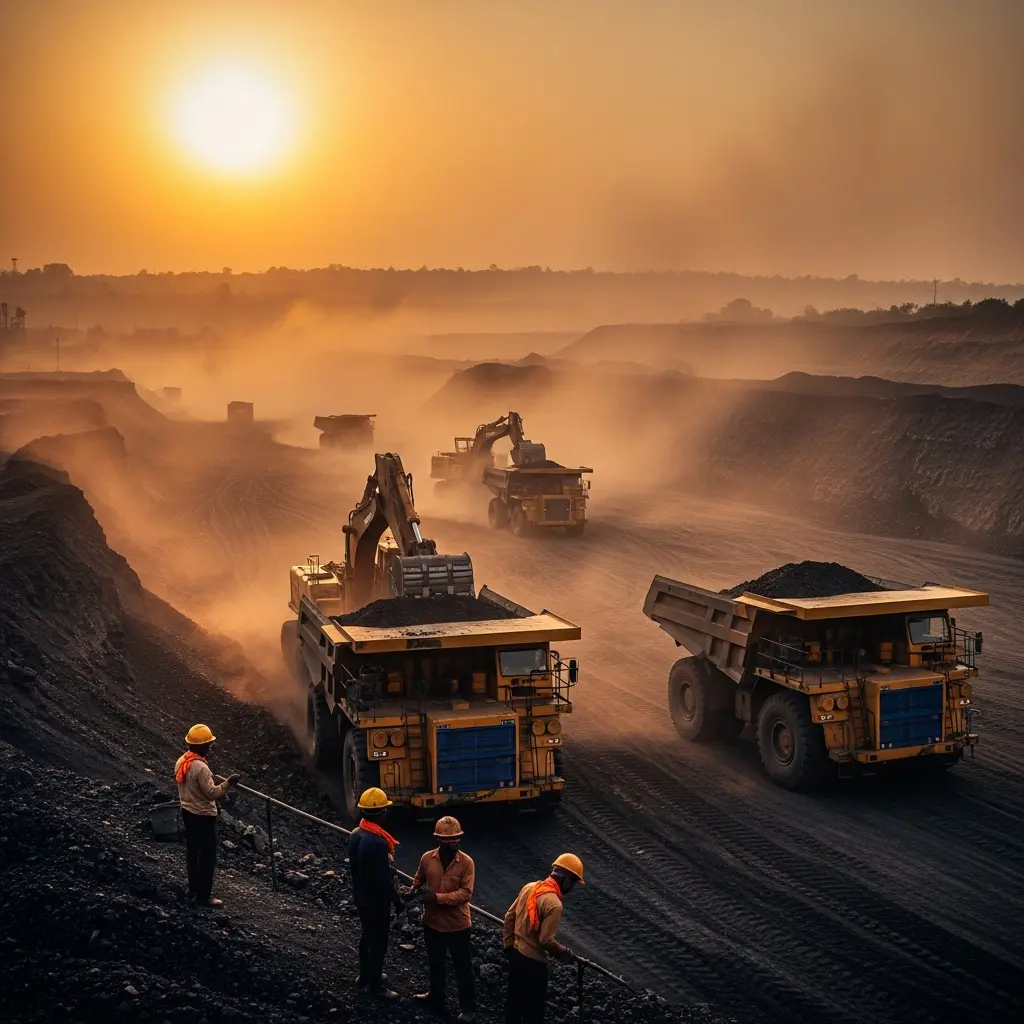
With temperatures climbing and power grids under mounting stress, India is doubling down on coal production — a pragmatic, if complicated, answer to a nation that simply cannot afford the lights to go out.
very year, as April folds into May across the Indo-Gangetic plains, something quietly predictable turns urgent: fans spin faster, air conditioners hum louder, and India’s power grid begins to sweat. But the summer of 2026 feels different. The heat warnings have come earlier, the demand forecasts are steeper, and the government is taking no chances. India is significantly increasing its coal output, a move that speaks volumes about both its immediate needs and its determination. The message is unmistakable: ensuring a stable power supply for 1.5 billion citizens leaves little room for uncertainty.
Coal is not India’s preference — it is India’s reality, and the government is managing that reality with both eyes open.
The India coal production push isn’t a last-minute scramble. It’s the result of careful, if sobering, planning. Coal India Limited, the world’s largest coal mining company, has been directed to sustain full-throttle output, ensuring that stockpiles at thermal power stations remain healthy well before the mercury peaks. The Ministry of Power has simultaneously ordered power plant operators to run at full capacity — no scheduled maintenance windows, no idle turbines. The country is essentially putting itself on standby mode, ready to handle whatever the season throws at it.
Why Gas Can’t Fill the Gap
Part of what makes this summer particularly complicated is the global backdrop. Ongoing conflicts in Eastern Europe and the Middle East have disrupted liquefied natural gas supply chains, driving prices to levels that make gas-fired electricity generation economically unsustainable for a country that still subsidises power for hundreds of millions of households. Energy security in India has long meant maintaining a diverse fuel mix, but when alternatives falter, coal — abundant, domestically available, and relatively affordable — becomes the backbone the country leans on hardest.
India boasts the world’s fifth-largest confirmed coal reserves. Unlike imported gas, which exposes the country to shipping interruptions and currency value swings, coal is a resource that India can largely manage according to its own priorities.
That strategic reality doesn’t make it a beloved choice — environmentalists have long raised serious concerns about air quality and carbon commitments — but it makes it an indispensable one for now.
The Human Stakes Behind the Numbers
It’s easy to discuss power demand in 2026 as an abstract policy challenge. A closer look, though, uncovers the real stakes. In cities like Delhi, Lucknow, and Nagpur, the summer blackouts aren’t just an inconvenience; they could be deadly.
The elderly, young children, and outdoor workers face genuine health risks when cooling systems fail during a heat wave. Small businesses that depend on uninterrupted power for refrigeration or machinery absorb losses that can take months to recover from. Farmers who depend on electric pump sets to irrigate their crops face the real risk of losing everything if the power supply falters. Maintaining a reliable power supply during the summer months goes beyond simple bureaucratic tasks; it’s about protecting the livelihoods of those affected.
That’s why the government is taking a hard line on plant outages. The Central Electricity Authority is holding frequent meetings with state utilities, keeping a close eye on any thermal station that falls below an 85% plant load factor. They’re demanding fixes within two days. The situation is serious, and the state’s machinery is responding.
Balancing Pragmatism with a Longer Vision
None of this means India is walking away from its renewable energy ambitions. The country’s solar and wind capacity has expanded dramatically over the past five years, and there is genuine political will — backed by international climate commitments — to keep pushing that growth forward. The honest reality, however, is that renewables alone cannot yet provide the kind of firm, dispatchable power that a country of India’s scale needs during a peak-demand emergency. Storage technology is improving but hasn’t yet reached the cost and scale to replace baseload coal generation overnight.
What India is doing — deliberately and unapologetically — is managing its energy transition with the pragmatism that a developing economy of its size demands. Electricity supply cannot be sacrificed on the altar of an idealised transition timeline. The government is essentially saying: we are moving toward cleaner energy, but we will not let people suffer in the meantime.
A Nation Holding Its Breath
As the first heat waves begin rolling across the subcontinent, the real test of all this preparation begins. Power plant stockpiles are being watched daily. Transmission lines are under inspection. State utilities are on alert. And somewhere beneath the soil of Jharkhand, Chhattisgarh, and Odisha, coal is being extracted at a pace rarely seen outside wartime production drives.
India’s relationship with coal is complicated, layered with economic necessity, environmental guilt, and the sheer weight of human need. But this summer, complexity takes a backseat. What matters is simpler and more immediate: that when a grandmother in a Varanasi flat switches on her ceiling fan, the electricity is there. That when a child sleeps through a 45-degree night in Bhopal, the cooler hums without interruption. Coal, for all its contradictions, is how India keeps that promise — for now.
Fuelling a Nation: India Bets Big on Coal as Summers Grow Fiercer.