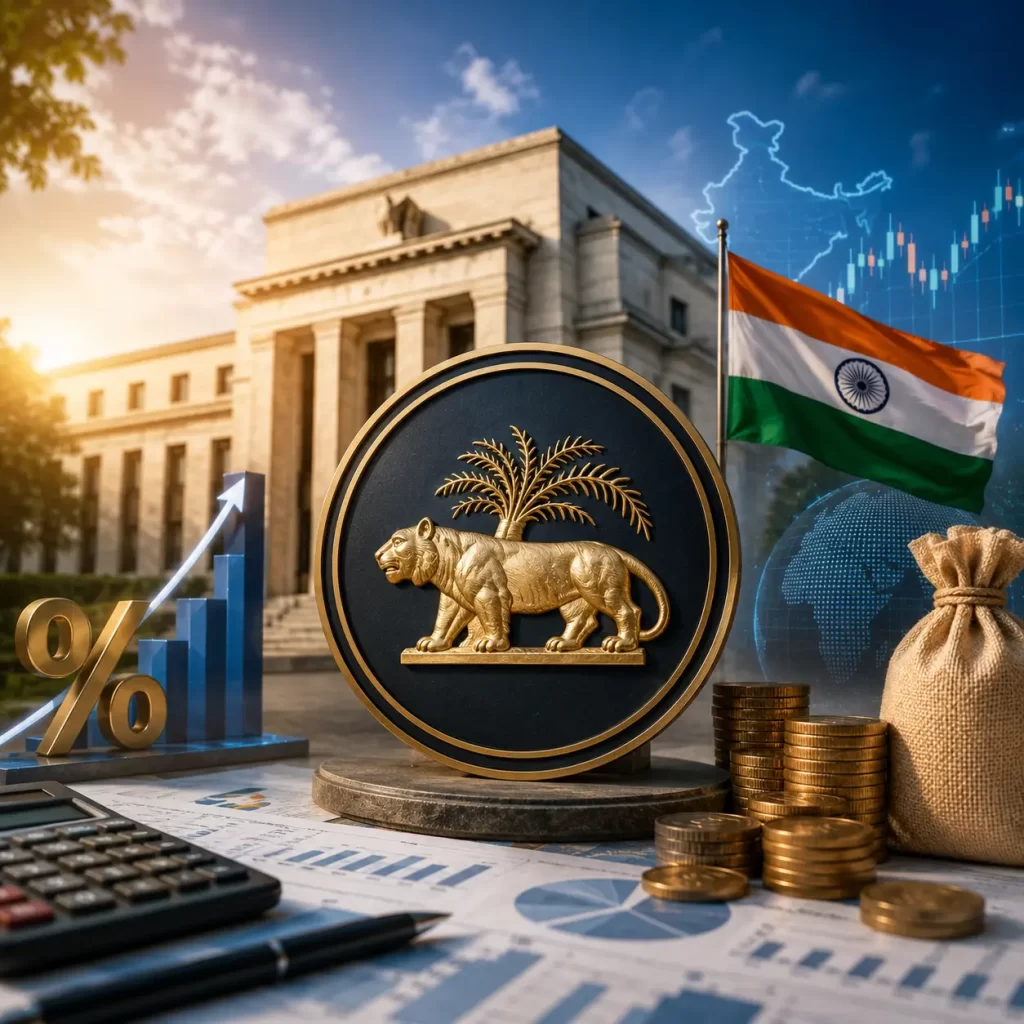
On the surface, a central bank doing nothing sounds like the least interesting story in finance. No dramatic cut, no hawkish hike — just a committee of economists and policymakers looking at the data and deciding that where things stand is, more or less, where they need to stay.
But when the Reserve Bank of India held its repo rate steady at 5.25% this week while maintaining a neutral policy stance, the decision carried more meaning than the absence of movement might suggest. In monetary policy, sometimes the most consequential thing a central bank can say is: not yet.
What Actually Happened
The RBI decision to keep the repo rate at 5.25% was widely anticipated by markets, but anticipation doesn’t always mean understanding. The repo rate — the rate at which the RBI lends short-term money to commercial banks — is the lever that influences everything from home loan EMIs to corporate borrowing costs to the general availability of credit in the economy.
When the RBI raises it, borrowing becomes more expensive, demand cools, and inflation typically softens. When it cuts, the reverse happens: credit flows more freely, businesses invest, consumers spend, and growth gets a nudge. Holding it steady means the central bank believes neither of those interventions is needed right now — that the economy is walking a line it doesn’t want to disturb.
The monetary policy committee cited several factors in its deliberation: inflation trends, global uncertainties, oil price movements, and growth expectations. Each of these is, on its own, a moving variable. Together, they create the complex, sometimes contradictory landscape that RBI policymakers have to navigate every six weeks.
Why Inflation Still Has the RBI’s Attention
Inflation is the word that sits at the centre of any RBI policy discussion, and for good reason. India’s retail inflation has been on a moderating trend, which is welcome news — but moderation is not the same as comfort. Food prices remain sensitive to monsoon patterns, and with global commodity markets still responding to geopolitical pressures, there’s no clear signal that the job of managing prices is finished.
Oil is a particularly critical variable for India, which imports the vast majority of its crude requirements. When global oil prices rise — as they have tended to do in response to Middle Eastern tensions and OPEC production decisions — it feeds directly into transportation costs, manufacturing input costs, and eventually, retail prices across the board. The RBI’s caution on this front is less about pessimism and more about the recognition that one bad quarter of oil prices could undo several months of careful progress on inflation management.
A rate cut in that environment would risk reigniting price pressures before they’re fully contained — something the RBI has clearly decided it isn’t willing to risk.
The Growth Side of the Equation
Here’s the tension that makes RBI policy genuinely difficult: the Indian economy needs growth, and growth needs credit. Businesses looking to expand, entrepreneurs planning new ventures, and homebuyers calculating whether now is the right time to commit to a loan — all of them are watching repo rate 2026 decisions as a proxy for whether economic conditions are tilted in their favour.
The current neutral stance is the RBI’s way of saying: we haven’t closed the door on easing. If inflation comes down sustainably and global conditions stabilise, a rate cut becomes more plausible. Markets have been pricing in this possibility for several months, and the steady hold — rather than a hawkish pivot — keeps that option alive.
For the Indian economy, this matters more than it might seem. Business investment decisions are rarely made in isolation; they depend on expectations about future borrowing costs, currency stability, and the overall direction of policy. A central bank that signals consistency and data-driven patience tends to inspire the kind of investor confidence that a surprise decision — in either direction — can quickly undermine.
What Markets Were Really Watching
Financial markets had been closely tracking this RBI decision, and not just for the rate number itself. The language of the policy statement, the tone of the governor’s press conference, and the voting breakdown within the monetary policy committee all carry information that professional investors parse carefully.
A unanimous hold is different from a split decision. A statement that emphasises downside risks to growth reads differently from one that leads with inflation concerns. Such signals help market participants calibrate their expectations for future moves and in the process shape bond yields, currency moves and equity valuations in real time.
The neutral stance retained by the RBI in this cycle suggests the committee is genuinely data-dependent — not committed to any particular direction, but responsive to how conditions evolve. For a financial market that has sometimes been wrong-footed by central bank communications, that clarity is itself a form of policy.
What This Means for You
If you have a floating rate home loan, your EMI stays unchanged — for now. If you’re a business owner weighing the cost of a working capital loan, the calculus hasn’t shifted. And if you’re a saver watching fixed deposit rates, the current yield environment is likely to persist a little longer.
The broader message from this RBI policy cycle is one of watchful stability. The Indian economy is growing, inflation is being managed, and the central bank is holding its position until the picture becomes clearer. That’s not indecision — it’s discipline.
In a world of economic noise, a steady hand is underrated
The RBI Held Rates Again. Here’s Why That’s Actually Saying a Lot.