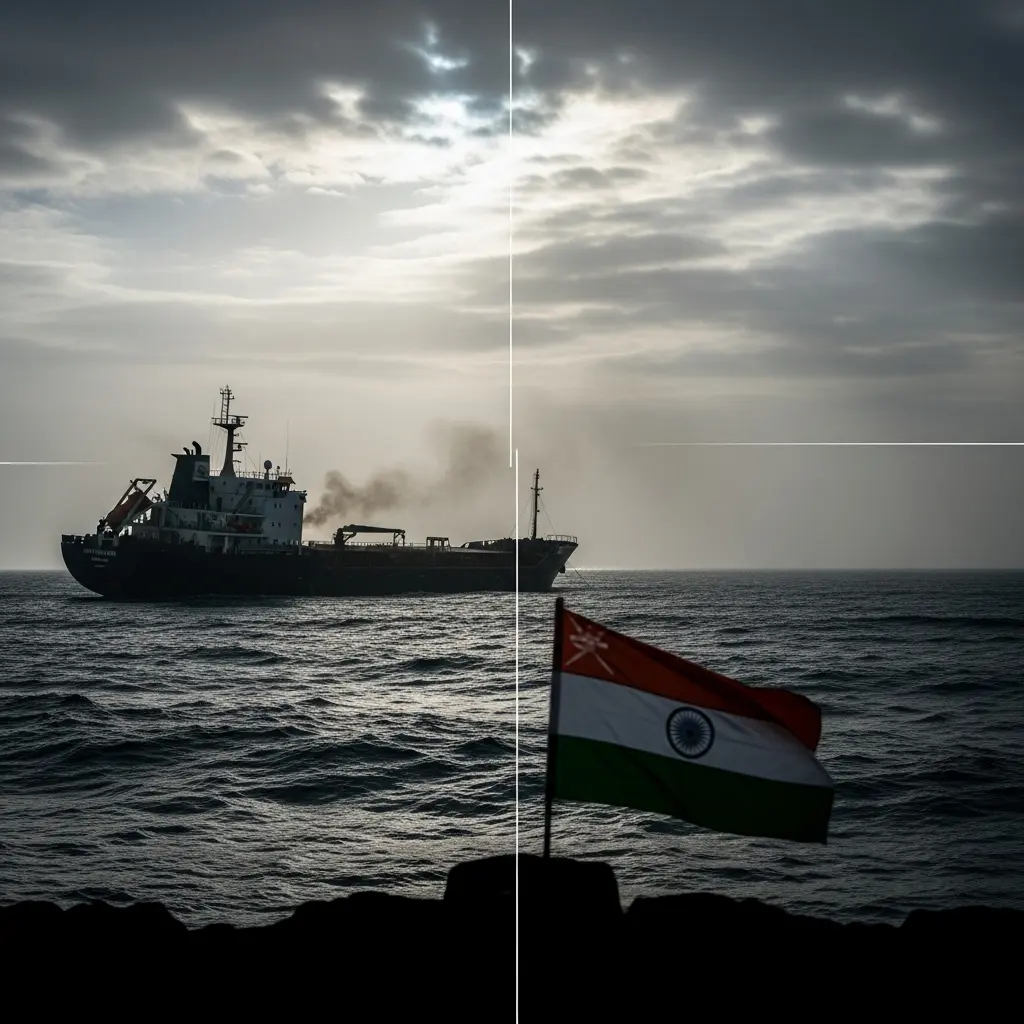
shipping security The waters off Oman have never been far from the headlines in recent years. But when reports emerged that Indian crew members were among those affected in the latest attack on a commercial vessel operating in the region, New Delhi’s response was swift, firm and deeply personal.
India has strongly condemned the attack on the commercial ship, with the Ministry of External Affairs (MEA) wasting no time in making its position known. In a rare and pointed diplomatic move, the US chargé d’affaires was summoned to the MEA and asked to explain what exactly happened — and why. It’s the kind of action that’s louder than words, suggesting that India doesn’t want to make the safety of its citizens abroad a footnote in some other country’s geopolitical standoff.
Gulf crisis threatens Indian lives
The Gulf is not just a geographical location for millions of Indian families – it is where fathers, brothers and sons go to earn a living. There are over nine million Indians working across the Gulf countries, many of them employed in the maritime industry. When a vessel is attacked, the anxiety does not stay at sea. It travels home.
The Indian government’s concern over its nationals working in the region is therefore not just diplomatic language. It is a direct response to real fear. Indian authorities have confirmed they are actively monitoring the welfare of Indian crew members caught up in the incident, and the MEA has been in contact with the relevant authorities to ensure their safety and quick return.
A Region Already on Edge
The attack did not happen in a vacuum. It comes at a time when the Gulf is experiencing some of its most volatile moments in recent memory, with renewed military exchanges between the United States and Iran adding fresh layers of tension to an already fragile security environment. The ripple effects of that confrontation are being felt well beyond the battlefields and briefing rooms — they are being felt on the water.
Gulf shipping security has been a growing concern for years. The Strait of Hormuz, one of the world’s most critical chokepoints for oil and gas, sits in close proximity to the waters where this latest attack occurred. When commercial vessels are at risk in this corridor, the effect is felt far beyond the vessels themselves: energy supplies, insurance rates and global trade routes all feel the pinch.
This latest India-Oman attack on a vessel is a grim reminder that the human toll of regional conflict rarely gets the same media attention as the strategic calculations made in far-away capitals.
India’s Diplomatic Balance
What makes India’s response all the more remarkable is that it chose to summon the American diplomat rather than simply issuing a statement condemning the incident. It bodes well for a broader shift in the manner in which New Delhi handles maritime incidents involving its nationals, with greater confidence and less diplomatic toe-treading.
For a long time, India has followed a policy of strategic autonomy and has been cautious not to be seen taking sides in conflicts between major powers. But when Indian lives are at stake, that calculus changes. The MEA’s statement was a clear signal that India expects accountability—not just from those who carry out such attacks, but also from powers whose military actions may be feeding the broader instability.
This is not the first time India has had to confront the dangerous overlap between great power competition and the daily lives of ordinary Indian workers abroad. It likely will not be the last.
The Bigger Picture: International Shipping Under Threat
The security of international shipping lanes has become one of the defining challenges of the current decade. Commercial vessels are increasingly becoming collateral damage in conflicts they have no stake in, from the Red Sea to the Gulf of Oman. Shipping companies, insurers, and seafarers are all recalibrating their risk assessments in real time.
The broader implications for energy supplies are also hard to ignore. A significant portion of the world’s oil passes through Gulf waters. Any sustained disruption to Gulf shipping security not only drives up prices at the pump — it weakens the economic lifelines of dozens of countries that depend on stable, affordable energy imports, India being very much among them.
What Comes Next
As Indian authorities continue to monitor the situation and push for answers, the focus remains on getting its crew members home safely. “Diplomatic channels are open, pressure is being brought to bear and the government has been very clear that the welfare of Indian nationals in the region is not a matter that it will treat lightly.
But beyond the immediate crisis is a larger conversation to be had — about how the international community protects civilian maritime workers, about what rules still apply in increasingly contested waters, and about who is responsible when those rules break down.
India’s voice in that conversation is getting louder. And in the wake of incidents like this attack on a vessel near Oman, that voice carries a message that is both urgent and unmistakable: Indian lives matter, and India will not be silent when they are put at risk.
India condemns attack on commercial vessel near Oman: What it means for Gulf.